

Hungarian Prime Minister Viktor Orban is polling far behind his opposition rival heading into next month’s presidential election, but a glut of undecided voters could make the final results a nail-biter.
Orban’s conservative-nationalist party, Fidesz — Hungarian Civic Alliance, is polling behind the pro-European opposition, the Respect and Freedom Party, or Tisza.
Tisza sits at approximately 38% support among all voters, compared to 30% support for Fidesz, according to a poll conducted between Mar. 2 and Mar. 6 by Hungarian firm 21 Research Centre.
It’s the most significant challenge Orban has faced in his 16 years at the helm of the country — a political project defined by support for nationalist policies, propagation of traditional values, and opposition to meddling by the European Union.
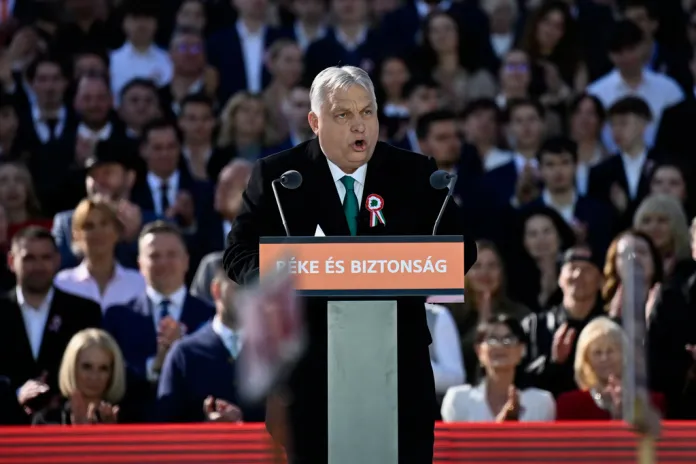
Orban has leaned heavily on the EU’s approach to mass migration and the Russia-Ukraine war in his political campaign, characterizing the international body as a bloated and misguided alliance that would lead Hungary toward civilizational “slavery” if left unchecked.
Prognosticating a future in which the rampant immigration of foreign nationals by the European Union drags the continent into peril, Orban promised to preserve Hungary as an “island of security and tranquility even in such a turbulent world.”
The prime minister seemed to be referring to Tisza leadership when he warned his supporters that “Brussels has dressed up as a Hungarian man.”
“We will defend the family support programs for mothers, we will defend our children, and we will not let our national flag be replaced by a Ukrainian or a rainbow flag,” the prime minister told supporters at a rally on Sunday. “Long live the Hungarian freedom.”
Respect and Freedom is led by European Parliament member Peter Magyar — an arch-critic of Orban’s administration. Tisza is not particularly progressive, and its platform is generally considered center-right, eschewing cultural issues for a campaign laser-targeted on corruption in government.
Magyar, with a firm background inside the European Union’s legislative body, has characterized the Hungarian government’s continuous feuds with Western Europe as a crisis for the nation.
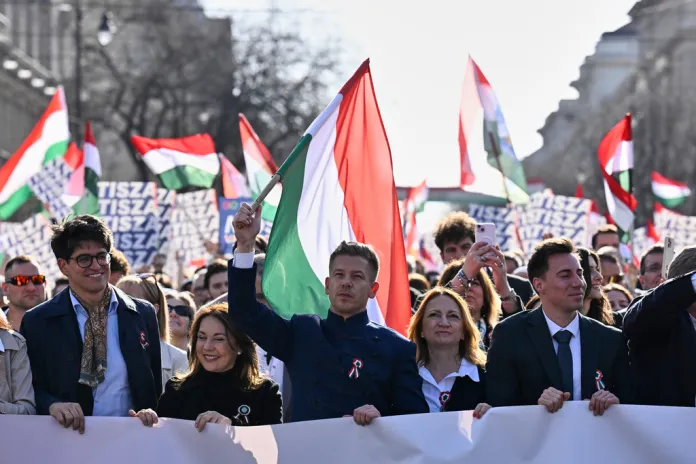
“Our homeland is part of the West, our homeland is part of the European community, our country is part of NATO,” Magyar told his supporters at a Tisza rally on the same day. “And not because of treaties or charters, but because it is written in our destiny.”
Allegations of corruption within the Orban government are foundational to Magyar’s campaign, as well as skepticism over Hungary’s amicable relationship with Russia amid its invasion of Ukraine.
He has accused the prime minister of “stoking war” and “holding onto power at all costs” while fostering a climate of rampant exploitation for his allies.
Zoltan Tarr, the second-highest leader in Tisza, told Politico in a piece published Monday that his party hopes to draft business leaders, outside experts, and other technocrats without political experience for their hypothetical government.
“We mostly go to the business world to find names because we have certain rules,” Tarr said. “We cannot deal with people with certain government ‘baggage.’ And that really limits the possibilities for us.”
Hungary’s alliance with Russia remains a headache for the rest of the European Union as it stands athwart other countries’ attempts to economically isolate the Kremlin.
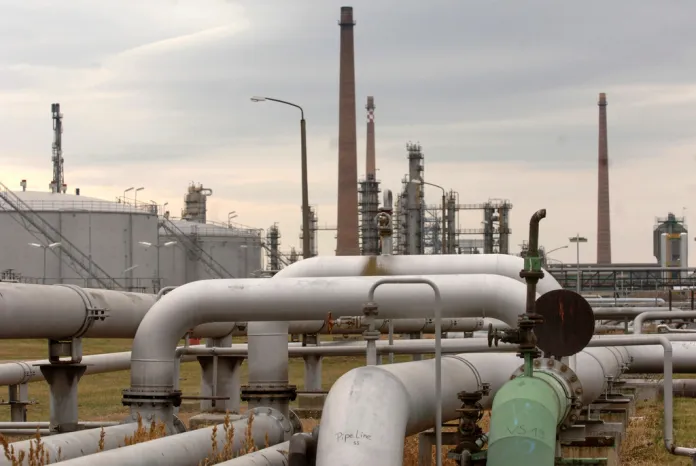
Budapest is threatening to block a $103 billion loan to Ukraine unless Kyiv reactivates the Druzhba pipeline, a piece of Soviet-era infrastructure that has been out of service since it was damaged by a Russian attack in January.
FOREIGN-BACKED GROUP SERVES AS BRIDGE BETWEEN GOP AND RUSSIA-FRIENDLY EUROPEANS
Ukrainian President Volodymyr Zelensky has been less than eager to see the pipeline reconstructed, which would allow Russian oil to be pumped into Europe. But the threat of being cut off from crucial support from the EU will likely force the president to capitulate.
“If they impose conditions that Ukraine won’t receive weapons, then I’m afraid I’m powerless on this issue,” Zelensky told reporters this week. “I told our friends in Europe that this is called blackmail.”
