

The People’s Republic of China is unlikely to invade Taiwan by the end of 2027, U.S. intelligence officials claim in a new report.
Director of National Intelligence Tulsi Gabbard released this year’s Annual Threat Assessment of the U.S. Intelligence Community on Wednesday, which found that Beijing would rather not resort to belligerence to bring the island under its control.
“The [intelligence community] assesses that Chinese leaders do not currently plan to execute an invasion of Taiwan in 2027, nor do they have a fixed timeline for achieving unification,” the report asserted.
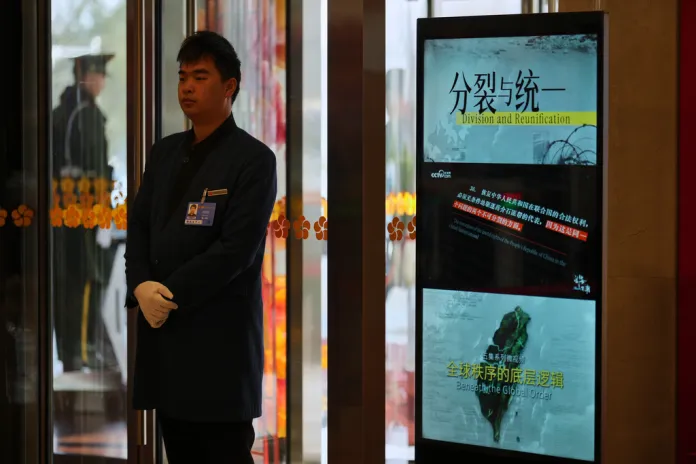
The document noted that China still “publicly insists that unification with Taiwan is required to achieve its goal of ‘national rejuvenation’ by 2049” — the centennial anniversary of the communist regime’s founding.
Intelligence experts claim that despite the regular saber-rattling seen in the strait between Taiwan and the mainland, the Chinese Communist Party would much prefer a unification strategy that did not require military belligerence, as an invasion would be “extremely challenging and carry a high risk of failure, especially in the event of U.S. intervention.”
The Chinese have long claimed that their desire for unification with Taiwan is a peaceful one, characterizing the island as a wayward province that has been politically captured by separatist radicals.
“Beijing probably will continue seeking to set the conditions for eventual unification with Taiwan short of conflict,” the report asserted. “China, despite its threat to use force to compel unification if necessary and to counter what it sees as a U.S. attempt to use Taiwan to undermine China’s rise, prefers to achieve unification without the use of force, if possible.”
The same day that the intelligence report was published in Washington D.C., China’s Taiwan Affairs Office spokesman Chen Binhua told reporters that “peaceful reunification” would offer the island energy security amid the global crisis posed by the Iran conflict.
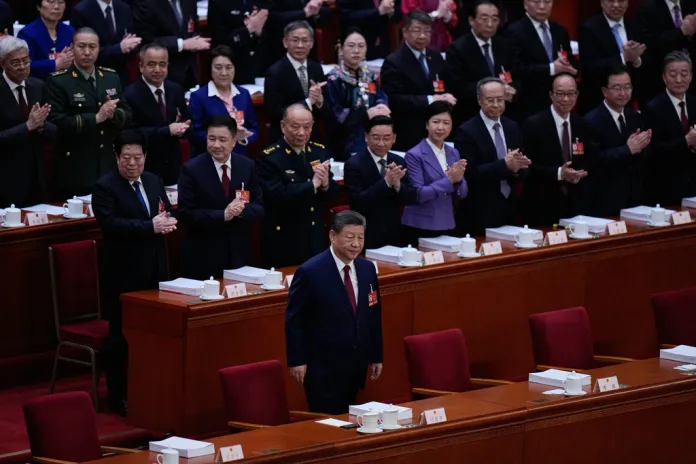
“We are willing to provide Taiwan compatriots with stable and reliable energy and resource security, so that they may live better lives,” Chen said.
A Taiwanese official told the Washington Examiner that clandestine efforts to bring the island under Beijing’s control include “subtly penetrating Taiwan’s political, media, and social spheres to cultivate support for eventual reunification.”
“China’s non-violent strategies for reunification primarily focus on economic integration, political incentives, social influence, and covert infiltration, including promoting cross-strait trade, investment, cultural exchanges, and leveraging pro-Beijing networks,” the official told the Washington Examiner.
If the Chinese are selling a friendly coming-together, the Taiwanese public isn’t buying.
CHINA HOPES TRUMP’S GAMBLE ON IRAN AND CUBA LOSES THE US MORE THAN IT GAINS
The vast majority of Taiwanese citizens prefer to maintain the “status quo” — neither provoking China by seeking international recognition, nor entertaining the idea of joining the mainland.
A poll in November of last year found that even if the ambiguous “status quo” of Taiwan could not be maintained, only 21% of Taiwanese would favor unification with the mainland compared to a whopping 61% who preferred formal independence.
But what the Taiwanese believe about the fundamental identity of their country remains muddy and complicated by their unique geopolitical history.
The right-wing Kuomingtang, which founded the Republic of China and settled the island of Taiwan as an escape from the Chinese Communist Party, agrees with Beijing that there is indeed only “one China.” Their strategy is to prolong the process of unification — smile and wave from across the Taiwan Strait while building up defensive infrastructure — hoping that the Communist government will collapse or reform.
The ruling Democratic Progressive Party, headed by President Lai Ching-te, considers Taiwan already independent and sovereign.
President Donald Trump’s administration has maintained a cold but supportive position on the Taiwan issue since January 2025.
The president accepted a phone call from then-President Tsai Ing-wen after winning his first election in 2016, which roiled the Chinese Communist Party. After winning in 2024, he conspicuously avoided answering the phone when Lai called.
WESTERN-STYLE PROGRESSIVISM COMES TO TAIWAN, CHALLENGING ITS NATIONAL IDENTITY
Yet Trump has not hesitated to sell the island military technology necessary for deterring a Chinese invasion.
The U.S. government is in the process of finalizing a massive weapons deal that would provide Taiwan with $11 billion worth of military resources. Provisions include Javelin systems, anti-tank missiles, howitzers, and Javelins.
