

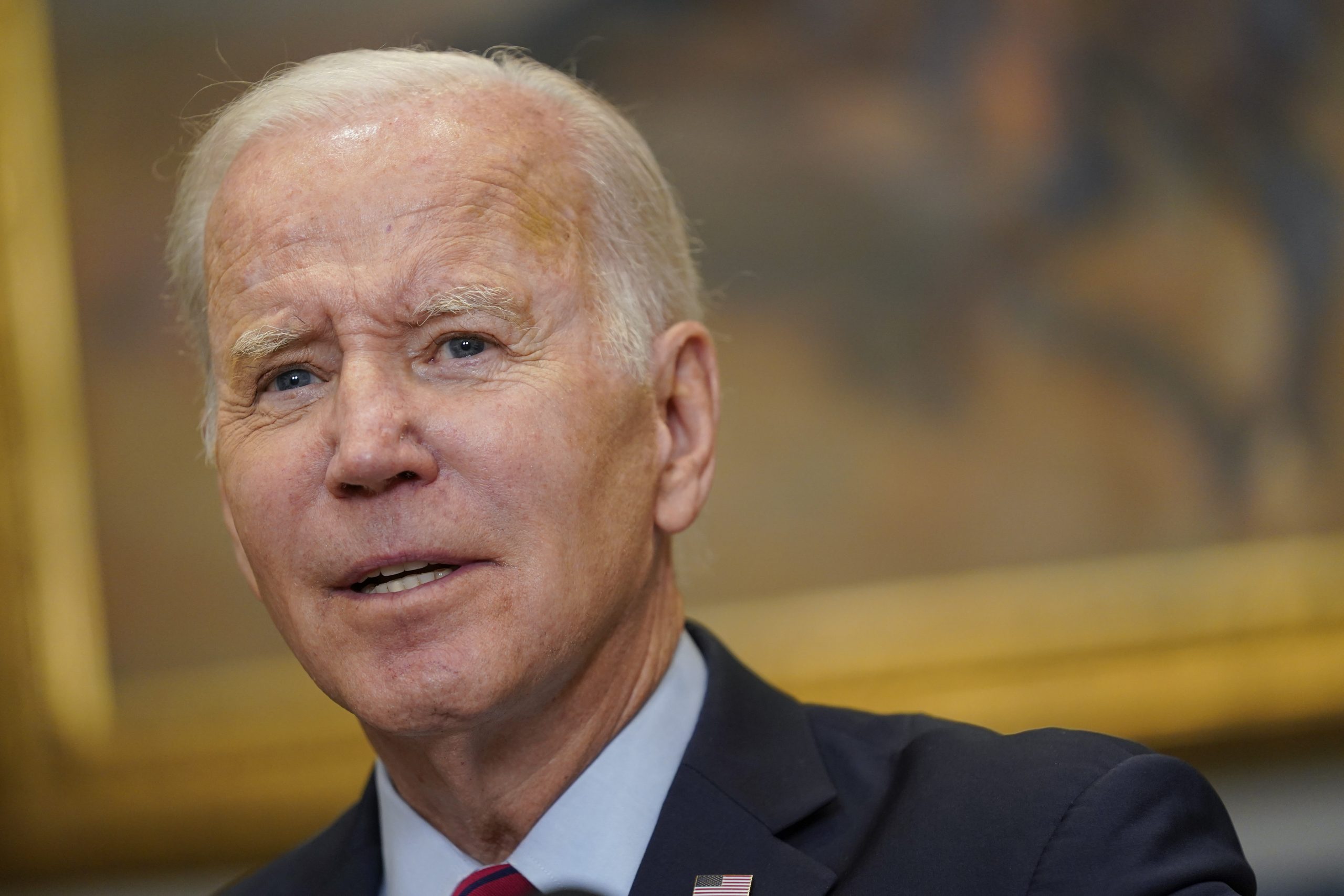
President Joe Biden‘s chances of muscling bipartisan legislation through Congress have become further diminished under the House rules package deal struck by Speaker Kevin McCarthy (R-CA) for the Republican votes for the gavel.
Recommended Stories


The most conservative House Republicans’ political squeezing of McCarthy has jeopardized the longevity of the speaker’s tenure. But it has also rendered the House an even more unreliable partner for the White House.
IMMIGRATION ISSUES TO DOMINATE BIDEN’S ‘THREE AMIGOS’ SUMMIT IN MEXICO
Despite Biden’s past legislative successes, bipartisan legislation will be almost “impossible” for the House to pass during the next two years, particularly after McCarthy’s speakership impasse, according to Darrell West, Brookings Institution governance studies vice president and director.
“McCarthy gave away so many promises to GOP extremists that it will be difficult to keep his own party in line, let [alone] work out any compromises with Democrats,” West told the Washington Examiner.
The proposed changes include reserving three of the nine House Rules Committee seats for Freedom Caucus members, the panel deciding what, when, and how bills are considered on the chamber’s floor. Additional proposals are reforming the House’s “motion to vacate” parliamentary procedure to empower a single Republican lawmaker to start the process of deposing McCarthy and restricting discretionary government spending to 2022 levels, which would reduce Pentagon funding by 10%.
“Several Republican conservatives want to cut the defense budget, which is not popular even within the GOP caucus,” West added, with critics including Rep. Tony Gonzales (R-TX). “It will be very hard to move any piece of legislation.”
The White House has seized on the Republican division over defense spending, contending that “this push to defund our military in the name of politics is senseless and out of line with our national security needs.”
“There is bipartisan opposition to defense cuts because making us less capable of keeping the American people safe and advancing our national security interests would be a profound mistake that our nation cannot afford,” Biden spokesman Andrew Bates told reporters on Monday.
The overture to Republicans is part of the White House’s legislative strategy of appealing to GOP lawmakers who have supported bipartisan bills during the first two years of Biden’s presidency, from the $550 billion Infrastructure Investment and Jobs Act in 2021 to last month’s $1.7 trillion omnibus government funding agreement. The White House will only require five House Republican votes if the Freedom Caucus does not prevent measures from reaching the floor after Democrats held the GOP to a historically narrow majority. The White House has, too, been pitting Senate Republicans against their House counterparts, especially during the speakership stalemate.
Senate Intelligence Committee Chairman Mark Warner (D-VA), for one, has identified the potential for bipartisan legislation addressing cybersecurity concerns or the technology competition with China, even as both parties pivot toward the 2024 elections. But although Democrats did reinforce their control of the Senate for the 118th Congress, their 51-person conference still falls short of a filibuster-proof supermajority of 60. Democrats deployed the reconciliation procedure to overcome the filibuster during the 117th Congress, yet that is no longer an option without House cooperation.
More broadly, the House speakership battle has, at least temporarily, damaged Republicans, making Biden and the “Defund the Police-Open Border Democrats” appear “relatively competent,” according to GOP strategist Duf Sundheim. Other Republicans argue the country will benefit from McCarthy’s speakership fight in the long run after Rep. Nancy Pelosi‘s (D-CA) iron-grip leadership.
“Kevin is fond of the Churchill quote, ‘Americans can be counted on to do the right thing — after they have exhausted all other possibilities,'” Sundheim said. “Hopefully that will be the case here.”
The White House repeated Biden’s hopes of collaborating with Republicans “in good faith … in 2023 and beyond” after his first phone call with McCarthy as speaker last weekend following the House’s historic 15 rounds of voting.
“Let’s not forget: In November, that’s what they said. That’s what the American public said. They want to see us working together to continue to deliver and build upon the president’s economic policy,” press secretary Karine Jean-Pierre told reporters en route to El Paso, Texas.
In the meantime, the White House plans to promote its accomplishments, some of which are being implemented. For example, the Inflation Reduction Act provision capping the out-of-pocket price of insulin for Medicare recipients at $35 started on Monday. The White House announced this week it had invited a bipartisan group of mayors to the executive mansion next Friday as well to celebrate “the achievements of the past 18 months,” days after he and Senate Minority Leader Mitch McConnell (R-KY) traveled to Kentucky to tout a $1.6 billion bridge upgrade.
CLICK HERE TO READ MORE FROM THE WASHINGTON EXAMINER
But Jean-Pierre demurred on Air Force One when she was asked about McCarthy’s rule concessions, specifically their consequences for the coming debt limit crisis. The debt ceiling was lifted in 2021 by $2.5 trillion to $31 trillion, which is expected to cover the country’s obligations until about July.
“Congress is going to need to raise the debt limit without conditions,” the press secretary said. “Attempts to exploit the debt ceiling as leverage will not work. There will be no hostage-taking. The full faith and credit of our country is too important to allow any of that because to default would be to force extraordinary costs on the American economy and American families.”
