
For too long, decisions that shaped the health of our forests, the safety of our communities, and the prosperity of rural America were made in Washington by officials far removed from local realities. That distance created policy gaps and unnecessary delays in service. It also silenced too many voices in rural communities.
Since Day 1, President Donald Trump has made returning common sense to government a top priority. And at the Agriculture Department, we are again heeding his call. The announcement that the Forest Service is relocating its headquarters to Salt Lake City represents a long-overdue shift toward improving stewardship, strengthening operations, and saving taxpayer dollars.
Recommended Stories
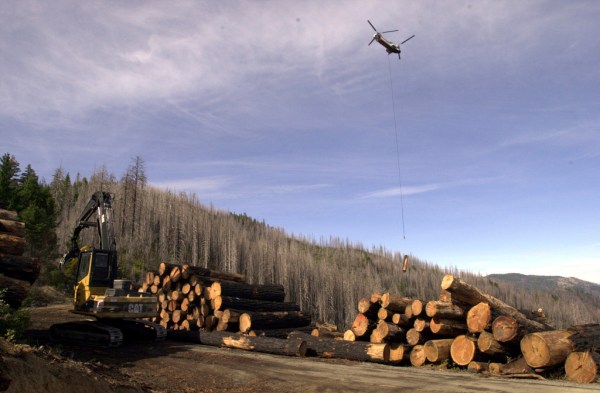

For communities across the West, our national forests are not distant abstractions. Ninety percent of Forest Service land lies west of the Mississippi River. These forests represent jobs, recreation opportunities, and vital watersheds, but also an unfortunate source of risk.
FOREST SERVICE MOVE TO UTAH RETURNS GOVERNMENT TO THE PEOPLE
Catastrophic wildfires have become more frequent and more destructive, threatening homes and local economies. Yet for years, the people living closest to these challenges have had to navigate a system in which key decisions were filtered through layers of federal bureaucracy thousands of miles away. Empowered by Trump, we are correcting these mistakes by moving expertise and operational leaders closer to the resources and landscapes we manage and the citizens who depend on them.
To be clear, the Forest Service is not ceding its authority. The purpose is to improve mission delivery, not delegate federal decision-making.
Moving the Forest Service’s headquarters out of the national capital and into the communities we serve also unleashes a new, flatter state-based model that creates direct, senior-level points of contact for governors, tribal leaders, and local partners. These state directors, who will be career employees and subject to federal hiring standards, will serve as national leaders with the authority to work alongside local partners, accelerate decision-making, and tailor solutions to meet local needs.
Instead of a bloated and redundant regional structure of 400 or more employees per region, each state office will include key support staff and will focus its mission on field delivery, accountability, performance, and building relationships. National and regional functions will consolidate into a network of six operational service centers — distributed across the country. These teams will provide focused expertise for national forests and grasslands by delivering immediate capacity and specialized technical support, reducing layers of bureaucratic oversight.
And while the Forest Service must operate within its financial constraints, it is not ending research. This reorganization does not eliminate scientists, terminate research programs, or reduce broader geographic presence. It simply consolidates its real estate footprint.
The new structure renews Trump’s commitment to understanding the unique perspectives of ranchers, farmers, loggers, and others who live off the land.
This isn’t theoretical. Even with the constraints of the past, over the past year, our common-sense and community-focused approach allowed us to return the Forest Service to its rightful place as the leading forestry and fire management organization in the world.
Our national forests and grasslands generated more than $1.1 billion in revenue in 2025. We use these funds to support mission delivery and reinvest in states and counties. Hundreds of millions of dollars will also return to the Treasury — reinforcing the nation’s fiscal strength and supporting communities across America — a commitment we will continue to build on in the years ahead.
Simply put, we are doing right by the customer — the American taxpayer — by ensuring management of our greatest natural resources is handled by an organization that is nimble, effective, and a good steward of Americans’ hard-earned dollars.
WHITE HOUSE RIPS REPORT OF FOREST SERVICE DISMANTLING: ‘MORE LIES FROM THESE LOSERS’
As we take this first step, the essential work of caring for our forests and supporting our communities will continue uninterrupted, including our critical wildfire response teams. What will change is that (1) our employees will be more empowered to deliver services with the speed, clarity, and accountability the people deserve and (2) more of those decisions will be made at the local level.
It is time for those who know the most about each individual forest to be the primary decision makers. With this reorganization, that time begins now.
Stephen Alexander Vaden is the deputy secretary of agriculture.