Don’t put taxpayers on the hook for subsidizing low-budget airlines

Published May 1, 2026 7:00am ET


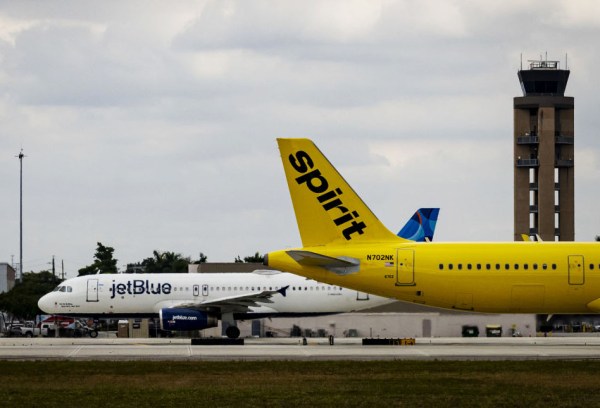
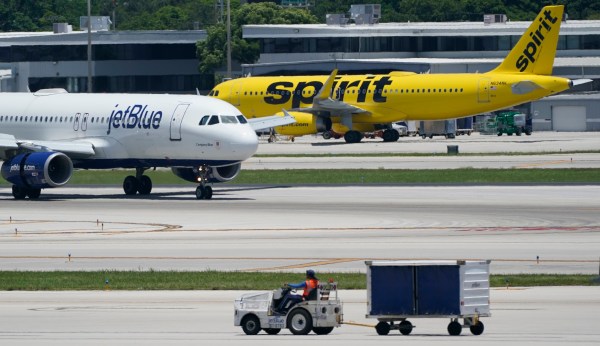
The downfall of Spirit Airlines has mushroomed from a routine business failure into a far messier test case against government intervention in the free market.

The unfortunate series of Spirit’s government-facilitated events began three years ago, when the Biden administration blocked Spirit’s merger with JetBlue on the grounds that absorbing a low-cost carrier would reduce fare competition and raise prices. That decision removed what was, at the time, the company’s most viable path to stability.

Left to navigate a difficult operating environment on its own, Spirit instead drifted toward insolvency. Bankruptcy followed, and as of two weeks ago, the company was in discussions with creditors over the possibility of liquidation.

SMASHING PUMPKINS FRONTMAN BILLY CORGAN JUST OFFERED A GREAT LESSON IN ECONOMICS

That should have been the end of it. Instead of taking the outcome as a signal that intervention had already gone too far, the Trump administration is now considering a bailout that could leave taxpayers owning most of the company.

In other words, the administration appears poised to respond to a problem created by government intervention by extending that intervention further — simply reinforcing the same underlying mistake that led to this mess.

Predictably, this proposed bailout is already prompting other businesses to lobby for extra government handouts. A slew of budget airlines, seeing the Trump administration’s willingness to step in, are now lining up with requests of their own.

Frontier, Avelo, and others have together placed a bid for $2.5 billion in federal relief tied to rising fuel costs, calling it “a necessary and targeted measure to stabilize operations and keep airfares affordable.”

What began as a single intervention is now reshaping expectations across the industry, with taxpayers left to absorb losses that would otherwise have remained with the companies.

Government intervention rarely stays contained. Instead, it generates cascading deleterious effects across the economy and creates a tidal wave of unsustainable policy, all because the government decided it knew better than the market and acted on that belief at each step.

In the U.S. economy, risk is supposed to be part of the bargain and companies are expected to deal with it in real time. Some businesses manage that better than others, and over time, the difference is measured in who expands, who contracts, and who ultimately gives way to stronger operators that can make better use of the same assets.

It is not always a clean process but it keeps industries competitive and responsive. Intervention from Washington alters that process.

Companies can still make decisions about pricing, investment, and operations, but those decisions no longer rest solely on market signals, competitive pressures, or customer needs. They begin to account for something else as well: whether government support might eventually offset the pressures they face.

In this case, it took less than a week for that effect to show up. Within days, the mere suggestion of a bailout prompted other airlines to pursue government support of their own.

They treated ordinary cost pressures as a reason for federal intervention and focused less on managing those pressures internally. Allowing this dynamic to take hold will leave the industry weaker.

Companies that would otherwise be forced to restructure will be able to hold on longer, while firms that have managed their costs more efficiently will find themselves competing alongside rivals propped up by the government and operating under a different set of expectations. Consequently, the signals that usually guide investment, expansion, and competition will become muddled.

As those inefficiencies build, consumers and taxpayers, who had no role in the decisions that produced them, will end up paying the price in higher costs and worse service. No need to study state-run economies; the airline industry may soon offer a live demonstration.

The appropriate response is not to expand intervention to additional carriers, but to recognize that the current situation is the product of prior interference and to avoid compounding the error. Free markets are capable of adjusting to difficult conditions.

THE ANALILIA MEJIA CAUTIONARY TALE: REPUBLICANS DESPERATELY NEED AN ANSWER TO SOCIALISM

Capitalism allows companies to fail, assets to be reallocated, and stronger firms to emerge. That process is not always comfortable, but it is essential to maintaining a competitive and efficient industry.

The answer is restraint. Allow carriers to bear the consequences of their cost structures and business models, and allow the market to work. That, more than any rescue plan, is what will best serve consumers and taxpayers.

Ken Blackwell is a former state treasurer of Ohio and president of the Council for National Policy in Washington, D.C.