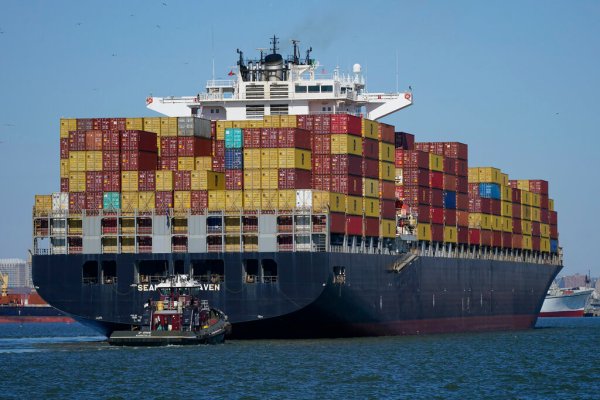
As the U.S. conflict with Iran continues to unfold, global energy markets are feeling the pressure. Escalating tensions have put the Strait of Hormuz, a chokepoint for roughly a fifth of the world’s oil supply, squarely at risk, sending price volatility surging and exposing the fragility of global energy systems. In moments like this, the lesson is unmistakable: Energy security is national security.
Since Russia’s invasion of Ukraine, the United States has proven its role as a stabilizing force in global energy markets. U.S. LNG exports helped keep Europe afloat after the collapse of Russian pipeline supplies. Now, as instability in the Middle East threatens to trigger another supply shock, that trans-Atlantic energy partnership is not just important, it is indispensable.
Recommended Stories
Now, a new regulatory mandate is threatening to overshadow the trans-Atlantic alliance. The European Union’s Corporate Sustainability Due Diligence Directive imposes broad, unclear, and unworkable due diligence and liability requirements on companies, extending beyond direct operation and infiltrating complex global supply chains. With significant legal uncertainty, compliance burdens, and financial risk, trans-Atlantic energy cooperation can be compromised, with American energy as a whole rendered vulnerable.
INFLATION ROSE TO 3.8% IN APRIL, HIGHEST SINCE 2023, AS IRAN WAR RAISED ENERGY PRICES
While the directive may be well-intentioned, a necessary regulatory framework needs to support U.S.-EU energy trade and investment while aligning with sustainability goals and energy priorities.
Realistically, companies are unable to monitor and ensure that multitiered global supply chains are consistently compliant with current directives. It’s a wildly unrealistic expectation. Multinational companies will be hit with very large fines, while also facing civil liability and unwanted legal attention.
The directive can hold companies responsible for impacts involving third-party suppliers, which include non-EU entities. Things like misleading certifications, vague eco-friendly labels, or exaggerated sustainability claims, even if the result of miscommunication between an external vendor, could result in significant financial penalties and backlash. CSDDD equates control and influence with actual liability, when in practice, the supply chain system is far too nuanced to take a black and white approach, the way that the directive does.
This has a significant impact on the future energy investment landscape. Regulatory uncertainty, legal backlash, and outstanding fines will reduce investor confidence, making it more difficult for long-term energy projects to find the financial backing that they need. The result? A declining economic relationship between the U.S. and the EU. Energy trade relies on clarity, standardization, and mutual trust. The CSDDD’s unclear benchmarks, vague diligence standards, and general overreach will complicate transatlantic cooperation if both the U.S. and EU are wary of the ramifications of trade or investment gone wrong, even if the result is a technicality. The directive effectively exposes companies’ entire global portfolios to lawsuits in EU courts, which could present a massive deterrent to doing business in the EU.
Continuous bureaucratic red tape poses significant threats to future innovation within the U.S. Companies will need to spend more money on litigation and compliance, taking away from pushing new ideas and projects out into the marketplace. Stringent standards will limit experimentation, with fear of legal consequences a major deterrent. National security standards are continuously evolving, and without expanding U.S. energy projects, the country becomes vulnerable to instability.
Sustainability in the global supply chain is undoubtedly important, but working with these companies to help them stay in compliance by setting realistic directives also needs to be prioritized. Today, only 24% of companies say that they are ready to meet sustainability reporting standards. The survey noted that many companies feel as if they don’t have the proper digital technology to implement a reporting framework, meaning they will need to continue investing money in order to ensure that they are compliant.
GAS PRICES: SECOND CONSECUTIVE WEEKDAY IN WHICH PRICES DROPPED
National security is fortified by energy security, and the CSDDD directly undermines both. At a time when global instability is rising, and the U.S.-EU partnership is more critical than ever, Europe cannot afford to impose a regulatory framework that deters investment, disrupts cooperation, and weakens energy resilience.
If the EU is serious about safeguarding its economic and security interests, it must go beyond minor revisions and abandon the CSDDD in its current form. Trans-Atlantic strength depends on policies that enable, not obstruct, the energy systems that underpin global stability.
Jeff Duncan served in the U.S. House from 2011 to 2025 and was chairman of the Subcommittee on Energy, Climate, and Grid Security. He served in the S.C. House from 2003 to 2011.