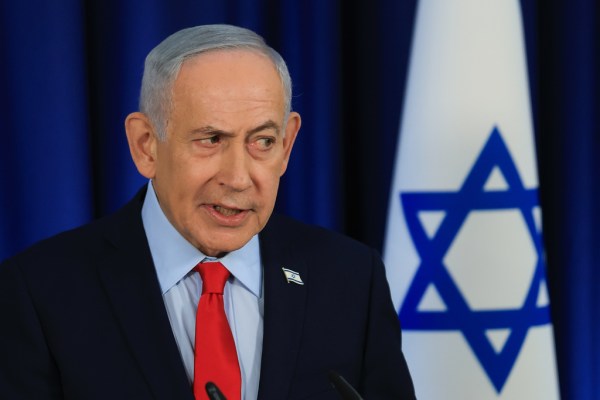
Israel’s cyber decapitation exposed Iran’s mullahs as paper tigers

Published May 14, 2026 6:00am ET


In late February 2026, Israel delivered a decisive blow that crippled Iran’s ballistic, nuclear, and geostrategic capabilities. It exposed the hollowness of the mullahs’ surveillance state and defeated the Russia-China-Iran axis threatening to encircle the West and export terrorism.

While American and Israeli forces struck physical targets, the decisive victory came from cyberspace. Mossad and Israel’s military signals intelligence units had spent years penetrating Tehran’s traffic cameras, municipal CCTV, mobile networks, and payment systems. Artificial intelligence fused this data with human intelligence to track then-Ayatollah Ali Khamenei and more than 250 senior regime and Islamic Revolutionary Guard Corps officials with lethal precision.
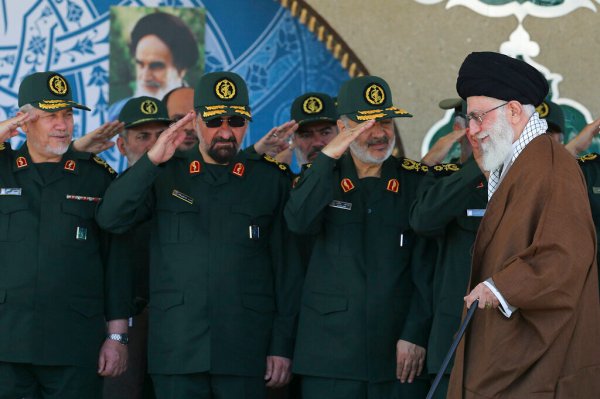
The result was a synchronized decapitation strike that eliminated much of Iran’s top leadership in one coordinated blow. At the same time, Israeli operators hijacked the popular BadeSaba prayer app — used by millions — and flooded it with messages urging soldiers and civilians to defect.

IRAN ISN’T A PROBLEM TO MANAGE — IT’S A THREAT TO END

Then came the digital knockout. Iranian internet access collapsed to 1% to 4% of normal levels and remained crippled for over 60 hours, with some regions blacked out for weeks. Revolutionary Guard command networks went dark. State television was seized and repurposed to broadcast calls for regime change. GPS and maritime tracking for more than 1,100 vessels were jammed. The mullahs’ own Orwellian surveillance apparatus had been turned into a weapon against them. Large-scale retaliation never came.

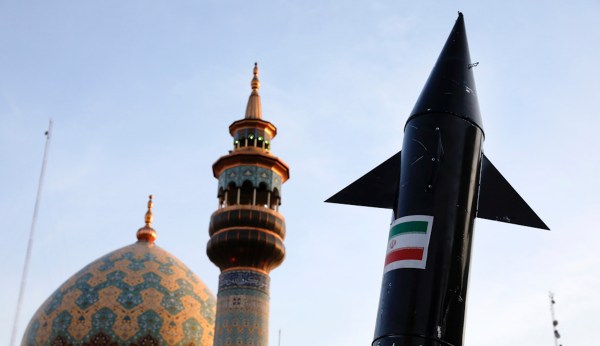
The strategic consequences are reshaping the Middle East. Iran’s ability to fund proxies such as Hezbollah, the Houthis, and Iraqi militias has been gutted. The Strait of Hormuz, through which 20% of the world’s seaborne oil passes, is suddenly far less menacing. A single cyber campaign proved that digital dominance can neutralize a critical maritime chokepoint without firing a shot at sea.

This power shift is accelerating the Abraham Accords. Quiet diplomatic channels with additional Arab and Muslim states have expanded rapidly. Governments that once kept Israel at arm’s length now recognize it as the indispensable counterweight to Iranian aggression — reinforced by Jerusalem’s deployment of Israeli soldiers to the UAE to operate the Iron Dome and Iron Beam laser defense systems.

Despite recent European Union sanctions on Israeli civilians and military embargoes, Europe has taken notice. Recent polling shows strong support for deeper cooperation and defense ties with Israel. Germany led the way in early 2026 with a comprehensive cyber and AI partnership protecting critical infrastructure. Capitals confronting Russian and Chinese hybrid threats increasingly see Israel as an essential partner.

For Jerusalem, the operation validates its national strategy. Its high-tech sector contributes 17% of GDP and employs 11.5% of the workforce. In 2025, Israeli cybersecurity firms raised a record $8.27 billion. This ecosystem serves as both an economic engine and a strategic asset.

The lesson is clear: Persistent digital access, AI-driven targeting, and integrated psychological operations allow a country 75 times smaller than Iran to achieve effects once reserved for great powers. Future conflicts against Tehran-backed forces will follow this template: blind the enemy in cyberspace first, then strike with precision. The Jewish state has turned its geographic and demographic constraints into a decisive asymmetric advantage.

TRUMP’S IRAN WAR IS PREVENTING A NORTH KOREA CRISIS

The February 2026 campaign accelerated a pragmatic realignment based on results rather than rhetoric. After decades of Western wishful thinking about Iran, the mullahs’ regime stands exposed as a paper tiger.

In an era of great-power competition, demonstrated capability matters more than diplomatic theater. Israel delivered that capability in abundance. The Middle East balance of power has shifted permanently, and it will not shift back.

Jose Lev Alvarez is an American–Israeli scholar specializing in Middle Eastern security policy. A multilingual veteran of the IDF special forces and the U.S. Army, he holds three master’s degrees and is completing a Ph.D. in Intelligence and Global Security in the Washington, D.C., area.