Conventional wisdom suggests that voter angst over healthcare affordability will haunt the party in power this November. But unlike the typical midterm election pattern — where dissatisfaction with the ruling party pushes voters toward the opposition — voters have not fully embraced the Democratic alternative.
That’s an opening for GOP candidates who have historically run away from healthcare. By leading on Alzheimer’s disease — an overlooked issue — they have a major opportunity to galvanize their base and show critical swing voters that Republicans care about America’s health.
Recommended Stories
A new Market Institute poll conducted by President Donald Trump’s pollster, Fabrizio Ward, reveals that a supermajority of voters are more likely to support candidates who back earlier diagnosis and expanded access to Alzheimer’s treatments — particularly candidates willing to challenge the coverage barriers standing between patients and their doctor-recommended care.
RESTORING AMERICA: AMERICA HAS AN ALZHEIMER’S PROBLEM. CAN TRUMP FIX IT?
The issue not only energizes the Republican base but also resonates strongly with independents and swing voters who increasingly feel disconnected from both parties.
Alzheimer’s may once have been perceived as a niche issue, but it is now a widespread voter concern. More than 7 million Americans are living with Alzheimer’s, more than half of voters have a friend or family member with the disease, and 70% worry they or someone they love could eventually be diagnosed. Seniors — the group most likely to be registered to vote — are especially attuned to the issue.
Voters’ concerns are twofold: they fear both the crushing emotional and financial burden of the disease and the growing difficulty of accessing diagnostics and treatment.
Financially, Alzheimer’s costs more than $400,000 over the course of a patient’s lifetime, with families shouldering roughly 70% of those costs through unpaid caregiving and out-of-pocket expenses. Unsurprisingly, 94% of voters say caregiving creates enormous emotional and financial strain on families.
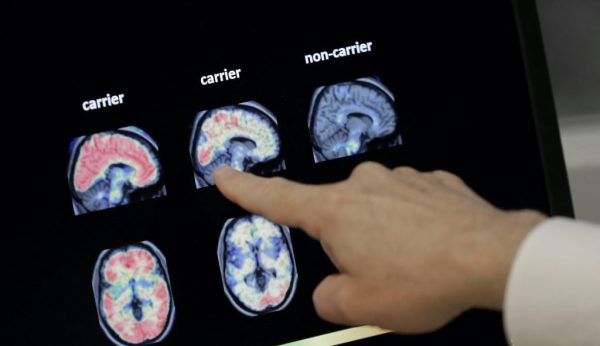
At the same time, Americans understand that early action matters: 92% say earlier detection and treatment can save families emotionally and financially. Lifestyle interventions such as exercise and diet can help preserve brain health, while newer treatments approved by the U.S. Food and Drug Administration have demonstrated the ability to slow Alzheimer’s progression, giving patients and families more time, independence, and stability.
But voters believe the healthcare system is failing to keep pace with this incredible scientific progress. Even when doctors and patients decide on the best course of action, Medicare and private insurers can still delay or deny coverage for diagnostics and treatments. That’s unfair to patients and families who don’t have time to jump through bureaucratic hoops. An overwhelming 89% say coverage restrictions and delays from Medicare and private insurers are blocking patients from FDA-approved treatments. Another 89% worry that doctors avoid prescribing tests or treatments because insurance companies may refuse to cover them.
These fears are too often a reality. Consider Michigan Alzheimer’s patient Lori Baetz’s story. Diagnosed at 62, Baetz began an FDA-approved treatment that helped stabilize her symptoms and preserve her independence. But after Alzheimer’s forced her into retirement, she lost her employer-sponsored insurance — and with it, access to the medicine that had been helping her. Her new insurer refused to continue coverage despite her doctor’s recommendation and clear evidence that the treatment was working. Without it, Baetz began declining.
For voters, stories like Baetz’s crystallize a larger frustration: that even when medical innovation exists, patients still cannot reliably access it because insurers and bureaucratic systems stand in the way. By a nearly 8-to-1 margin, voters say Americans deserve access to promising Alzheimer’s treatments now, even if those treatments slow disease progression rather than cure the disease outright.
Polling shows overwhelming bipartisan support for reforms that expand access. Ninety-two percent support the Alzheimer’s Screening and Prevention Act, which would allow Medicare to cover future FDA-cleared blood tests that screen for Alzheimer’s disease. Support remains above 85% among Republicans, Democrats, independents, and key swing states, such as North Carolina, Pennsylvania, and Ohio.
RESTORING AMERICA: IT’S TIME FOR BOLD ACTION ON NEURODEGENERATIVE DISEASES
The political opportunity is clear. In a fragmented election cycle dominated by noise, candidates who focus on the struggles families face in their own communities have a chance to break through.
Voters are looking for leaders willing to put patients before bureaucracy and insurance companies. Republican candidates who recognize that reality and wage the war on Alzheimer’s stand to gain a meaningful advantage among seniors, independents, and swing voters searching for candidates focused on fixing real problems.
Charles Sauer is president of the Market Institute.