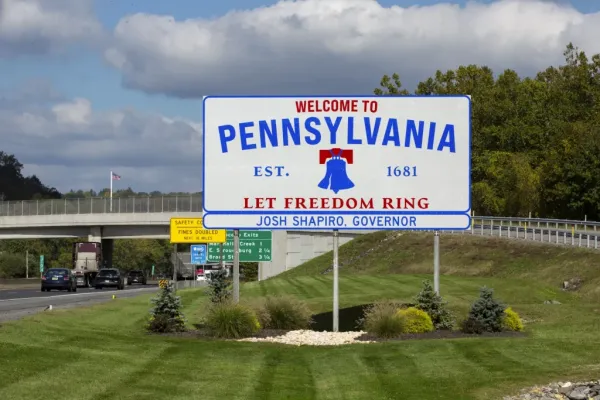
From May to July 1776, delegates from 13 disparate colonies sat in a stuffy room in Philadelphia, windows sealed against eavesdroppers, sweating through coarse wool coats in the summer heat.
They disagreed about nearly everything. Thomas Jefferson’s elegant and inspired draft was sliced by a quarter in debate. Delegates from the South threatened to walk unless an anti-slavery passage was removed. The 56 men (yes, all men) argued incessantly but did not leave until they had produced the most consequential political document in human history.
Recommended Stories
Eleven years later, after a brutal war of independence and through the collapse of the “loose confederation of states,” the delegates returned to Philadelphia. … The same building in the same summer heat. They argued again. Disagreed again. Sweated together (again). Then, they produced the Constitution by the same method: conflict followed, eventually, by compromise.
COLORADO SHOWS WHY WE NEED PERMITTING REFORM
This is the founding tradition we have abandoned. And America’s 250th anniversary is the moment for Congress to reclaim it because conflict without compromise is chaos.
The evidence is not hard to find. Consider what has happened (or rather not happened) with a single issue: federal permitting reform.
The failure of permitting reform is one of the most clarifying examples of bipartisan dysfunction in modern American history — clarifying because it cannot be blamed on ideology.
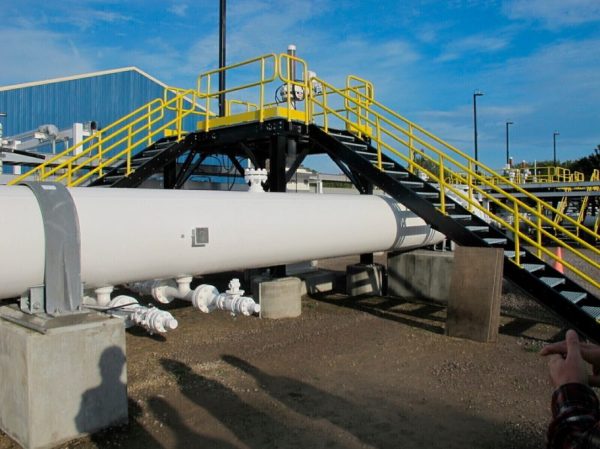
Republicans need permitting reform to accelerate gas pipeline construction, LNG terminals, and other infrastructure. Democrats need it because without it, the “clean energy transition” is just a planning exercise. Geothermal plants are approved but unable to reach the grid. Transmission lines stalled for a decade in endless review and litigation. Utility-scale solar projects that exist only on paper.
Everyone agrees that the existing system (if you can call it a “system”) is broken. Projects routinely wait seven to 10 years for final federal decisions. Seven to 10 years. The transcontinental railroad was built in six.
Congress has repeatedly gotten close — bills advancing through committee, bipartisan support coalescing — and then the delegates retreat to their separate taverns before the final work is done.
The result is an electric grid straining under rising demand, reliability eroding, costs climbing, and the U.S.’s global leadership threatened. Not because anyone decided this was acceptable, but because conflict without compromise has become the de facto operating standard of our time.
Word is starting to trickle out that 2026 may be different. A broad consensus seems to be emerging in the Senate on a relatively narrow (but critical) list of permitting-related items — such as the need to protect valid federal licenses from being revoked by either administrative fiat or judicial vacatur.
Unfortunately, with this being an election year, the time to reach a deal is relatively short. What may be needed is a “forcing mechanism,” and I have a modest idea.
Both the House and the Senate are expected to break for the July 4 recess on or about June 26, just three weeks from now. If the key permitting reform negotiators haven’t reached an agreement by then, we should put them in an Uber XL and send them up to Independence Hall in Philadelphia. No staff. No phones. No air conditioning. Close the windows. Lock the doors … and don’t let them out until they have a meaningful permitting reform deal.
The Founders didn’t have air conditioning. They had urgency. They had the summer heat pressing down on them from every direction. They argued. Disagreed. Sweated together. And they did not leave until the work was done.
That is the forcing mechanism. That is what Philadelphia provides that Washington never will.
Washington is a city organized around perpetuating the status quo — every committee room, every K Street office, every Thursday afternoon flight back home is designed to make doing very little feel as if they’re doing something quite substantial.
Philadelphia has a different memory. Philadelphia remembers what it felt like when survival required resolution — when the work had to get done because the alternative was dissolution.
The negotiators are close. The raw material exists. The bipartisan will, however tentative, exists. What has been missing is the condition that makes departure without resolution unthinkable.
SMALL OIL PRODUCERS NEED RELIEF FROM WASHINGTON’S ONE-SIZE-FITS-ALL REGULATIONS
At 250, America doesn’t need just grand ceremonies and spectacular fireworks (although those will be great). We need a real, substantive accomplishment. Pass permitting reform and we prove that the most representative of our key institutions still works. Fail again — retreat to the separate taverns one more time — and we have our answer about that too.
If Congress can’t get permitting reform done in Washington, maybe a change of venue is in order.
Fred H. Hutchison is the founder, president & CEO of LNG Allies, an organization dedicated to USLNG advocacy and international energy partnerships.