The panic over data centers is escalating.
If anti-growth activists and NIMBYs succeed in blocking the infrastructure behind artificial intelligence, cloud computing, and digital commerce, America won’t stop needing those services. It will simply build less of that infrastructure here and hand more of the strategic advantage to China.
Recommended Stories

That is the real trade-off.
WE’VE SEEN THE DATA CENTER HYSTERICS BEFORE
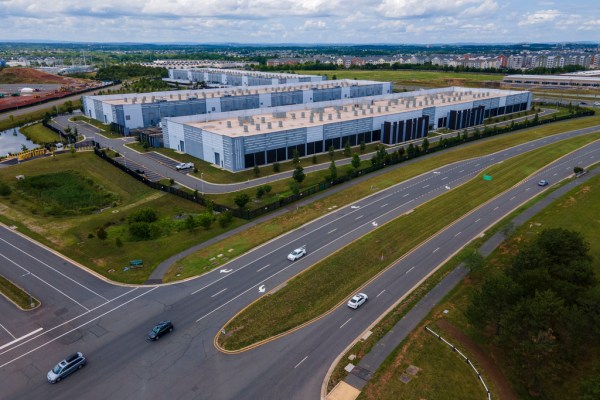
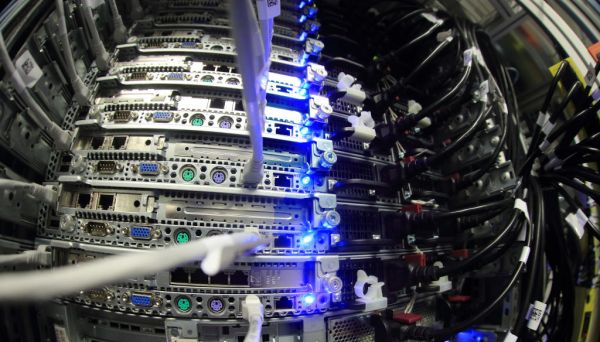
Data centers are the physical component of “the cloud.” They are not abstractions. They are buildings filled with servers, storage, networking gear, cooling systems, and power infrastructure that keep modern life running.
Cisco and Amazon Web Services both describe data centers as the physical facilities that house the computing and storage resources behind digital applications and data. The cloud has walls, wires, pipes, and payroll. It is infrastructure.
That makes data centers the factories of the digital age. In the 20th century, local leaders fought to bring in manufacturing plants because they meant jobs, a tax base, supplier networks, and long-term economic capacity.
In the 21st century, data centers play a similar role. They support AI, online banking, logistics, GPS, streaming, communications, and emergency systems, while also bringing large capital investment, construction activity, permanent operations jobs, and property-tax revenues to host communities.
Amazon and Microsoft both emphasize the local workforce and the tax benefits their projects generate.
Yes, there are trade-offs. Serious people should acknowledge them.
Data centers use electricity. Some use water. They can create local land-use and noise concerns. But those are not arguments for moratoria or fear-driven policy. They are arguments for honest pricing, better contracts, faster permitting, and more supply.
The resource critique often rests on flawed framing. Gross electricity demand is not the relevant question. The real question is whether firms internalize costs and whether the system allows supply to expand.
Data centers can secure power through private contracts, co-located generation, storage, demand management, and backup systems. And claims that they automatically raise prices for everyone else are far too simplistic. Some analyses note that stronger electricity sales can help spread high fixed grid costs across more kilowatt-hours, while regulatory design and supply constraints do more to explain price spikes.
Water arguments are often just as sloppy. Worst-case numbers are thrown around as if every facility used the same cooling system under identical conditions. But many newer facilities rely on more efficient designs, including closed-loop systems that sharply reduce ongoing freshwater needs. And where water or electricity is genuinely scarce, prices should reflect scarcity and force firms to bear the cost.
That is how markets allocate resources. It is not a loophole. It is the point. Policymakers should stop blaming data centers for problems created by bad utility policy.
The strategic case is even stronger. China is not slowing down. A recent Wall Street Journal article notes that Beijing is urging companies to embrace AI broadly while trying to avoid the social instability that can come from mass layoffs, a sign that Chinese leaders see AI adoption as economically and politically essential.
Another Wall Street Journal report described research findings that Chinese state-media content has significantly influenced AI training data and chatbot outputs, underscoring that this contest is not only about chips and models but about information ecosystems and technological leverage.
That should wake up American policymakers. If the United States makes it harder to build data centers, it does not freeze the future. It shifts the future. China gains when America strangles its own computing, energy, and infrastructure base with lawsuits, delays, and panic.
There is also some evidence that the Chinese government is directly paying specific anti-data-center groups. It would be naïve to ignore the incentives. If you were in Beijing, you would welcome any campaign that made Americans more fearful of the infrastructure needed to win the AI race. Even the suggestion by U.S. lawmakers that foreign adversaries could be amplifying anti-data-center narratives tells you how high the stakes have become.
This is why bad arguments matter. If local fears about power, water, or land use are real, address them honestly. Large users should do what they often already do and pay their way. There should be transparency, price competition, permit reforms, more generation and infrastructure, and stronger property rights. But do not turn exaggerated claims into anti-growth policy.
That would be the worst of both worlds: all the costs of modern digital life, but with less economic growth, fewer jobs, lower tax revenues, and fewer strategic gains because the infrastructure was built elsewhere.
America should stop being driven by fear and stop relying on the flawed precautionary principle to act now based on faulty projections.
FOREIGN INFLUENCE OPERATIONS ARE FUELING THE ANTI-DATA CENTER MOVEMENT
Data centers are not a nuisance to the real economy. They are part of the real economy. They are the factories of the digital age, the physical backbone of the cloud, and one of the clearest tests of whether we still know how to build.
If we do not build them here, China will be happy to see the advantage move there instead.
Vance Ginn, Ph.D., is a nationally recognized economist and one of America’s leading advocates for free-market policies that promote economic growth, expand opportunity, and ensure fiscal responsibility.