Lina Khan’s career rehab

Lina Khan’s career rehab

Published June 18, 2026 5:45pm ET | Updated June 18, 2026 5:45pm ET


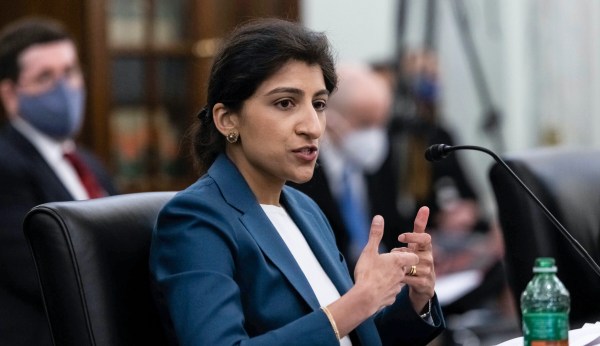
It’s been a busy couple of months for Lina Khan, former President Joe Biden’s head of the Federal Trade Commission, who waged a one-woman campaign against American businesses until President Donald Trump told her “You’re fired.”

First, Khan was spotted working on socialist New York City Mayor Zohran Mamdani’s transition team. Birds of a feather, as they say.

Then, she was granted her very own think tank at Columbia Law School, called the Center for Law and the Economy, which will “help train the next generation of legal and economic scholars and policy leaders.” The left-wing grant-industrial complex in action.

Khan has also become something of a guru among 2028 Democratic presidential hopefuls, fielding their phone calls and advising them on how to be more hostile toward businesses.

If nothing else, Khan’s rising star shows there will always be room for old progressive hands in academia and consulting, no matter how many jobs they destroy.

It also shows that Khan’s jihad against job creators and innovation is far from over. It might have migrated outside the federal government, but the anti-business regulatory crusade waged by the Biden administration is alive and well, hibernating alongside locusts until Democrats can capture some territory in Washington.

Before Khan, the FTC tended to intervene in a business merger or contract only if it would do demonstrable damage to consumers — the so-called consumer welfare standard.

Even before she came to Washington, Khan published an article in the Yale Law Journal titled Amazon’s Antitrust Paradox, arguing the consumer welfare standard “is unequipped to capture the architecture of market power in the modern economy.”

Instead, Khan proposed something more audacious. As the writer Hannah Cox notes, Khan “argued that Amazon should be targeted for monopolistic practices despite the fact that it wasn’t a monopoly at all.”

Under Khan’s approach, businesses were assailed not because they were monopolies, not because they hurt consumers, but simply because they were big or seeking to become bigger.

In fact, Khan wielded such a broad brush that she took actions that would have left consumers worse off. For example, she dusted off a Great Depression-era law called the Robinson-Patman Act and expanded its interpretation to sue both Pepsi and liquor distributor Southern Glazer’s for alleged “price discrimination.” Why? Both companies offer discounts to stores such as Walmart and Costco that are willing to buy in bulk — savings that are then passed along to shoppers.

To be clear, Khan wanted to abolish discount pricing for the public during mounting inflation. This only makes sense if you disregard the welfare of the consumer completely, focusing on smashing businesses at the expense of all else.

Such thinking is not consistent with antitrust law, but the law never stopped Khan. In her own words, if agencies believe “current law might make it difficult” to prove an antitrust violation, “there’s a huge benefit to still trying.”

In this sense, Khan didn’t modernize antitrust enforcement; she made it dumber. Whether assailing “rampant consolidation,” which lowers prices via scale, or going after “dominant intermediaries,” the bottom line was to attack companies because she deemed them too large.

Sadly, Khan may be out of office, but her legacy lives on.  

Take another antitrust lawsuit, which tried to stop a pending merger between tech companies Hewlett-Packard Enterprise and Juniper Networks. This one, though filed a week after Khan left office, is squarely in line with her thinking.

There was a very important national security reason for the HPE-Juniper merger, namely to create a new U.S. tech company with the scale to compete with Huawei, the Chinese conglomerate that engages in espionage against the United States. The Trump administration ultimately greenlit the deal with encouragement from the intelligence community, but Democratic politicians and attorneys general continue trying to unwind it.

Antitrust regulators need to see the whole picture and return to the consumer welfare standard that gave the government a verifiable measure to decide when to intervene and when not to.

Yank that measure away, and you’re left with the unbridled whims of regulators. At one point, the Biden administration had 40% of the companies under the S&P market cap under investigation. That isn’t antitrust; it’s anarchy.

ONE LAST BIDEN FTC LAWSUIT THREATENS BULK DISCOUNTS AMERICANS DEPEND ON

Khan is gone from the government, but the rehabilitation of her career shows there’s still a thirst for her authoritarian flavor of policy. It’d be interesting to get some of the 2028 Democratic hopefuls she’s been talking to on the record: would you kill deals that lower prices for consumers or no?

Trump has largely moved on from the Khan way of doing things. The rest of America should, too. 

Peter St. Onge, Ph.D., is a senior economist at the Heritage Foundation and earned his doctorate in economics from George Mason University.

```