How BUILD America 250 Act would create massive risk and costs to the public

Published June 24, 2026 9:00am ET


Why would Congress consider a bill that massively tilts shipping methods toward trucking — the deadliest, most polluting, congestion-causing, and heavily publicly subsidized mode, while punishing rail, the cleaner, safer, and financially self-sufficient mode? That is what the bill the House Transportation and Infrastructure Committee passed last month does. The Building Unrivaled Infrastructure and Long-term Development for America’s 250th Act now could head to the House floor.

The proposed legislation showers the trucking industry with an array of benefits. The bill funds more truck parking and writes the first federal framework to let driverless trucks scale. On the verge of approval was also a push to allow 91,000-pound rigs on the interstates. One trucking association called it the most pro-trucker reauthorization in memory. 
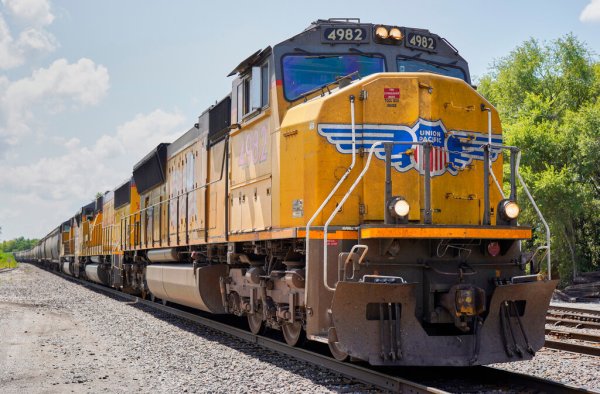
On the other hand, the bill would increase regulatory strictures on rail, even though shipping goods via railroads is much safer and more environmentally sound. The committee attached the Railway Safety Act to the bill, which would raise rail costs, slow service, and make service less reliable. For example, requirements to deploy aged technology would cost the rail industry billions of dollars when more effective alternative technologies exist. 

But the most irreconcilable problem with the legislation is its utter inconsistency on automation. Trains are the easiest mode of transport to automate; they run on a closed, fixed network, are already governed by satellite-based control, and they literally have no steering wheel — they can’t change lanes. Trucks operate on open roads and in a far more unpredictable environment, surrounded by unpredictable drivers and a far less stable wheel-to-surface technology. 

The reauthorization bill expansively advances truck automation, but it moves in the opposite direction for rail by mandating a minimum two-person crew. While the sponsors of that provision claim that this is a response to the 2023 derailment at East Palestine, Ohio, an insufficient crew size had nothing to do with that accident, given that the train carried three crew members. It’s telling that the Federal Railroad Administration concedes that it cannot estimate a cost-benefit analysis of the rule. It cannot identify any benefits. Yet the needless rule persists and may be moving forward.

Trucks are by far the deadliest way to move freight. In 2023 (when the Rail Safety Act was first proposed), 5,472 people were killed in crashes involving large trucks; the vast majority of those killed were occupants of other vehicles — not the truckers. That same year, just five people died due to faulty train operations — even as railroads moved nearly as much freight. Despite the histrionics, no one died in the East Palestine derailment. Then why the rule?

Yet, for no rational reason, the government heavily subsidizes trucking to the detriment of the public. A single heavy axle truck does more than 3,000 times the pavement damage of a car, and raising a heavy truck’s weight just 10% — as this bill proposes to do — increases the damage it does to bridges by 33%. An 80,000-pound truck pays for just 80% of the road costs it imposes; a truck that exceeds 80,000 pounds pays only 40% to 50% of the costs it imposes in terms of road damage; taxpayers cover the rest.

The Highway Trust Fund, which is funded by gasoline and diesel taxes that haven’t increased in over 30 years, is insolvent and has needed over $285 billion of taxpayer money to meet its obligations since 2008. Trucks are responsible for 40% of that cost. Meanwhile, Class I freight railroads build and maintain their networks with private capital and get virtually no public financing. 

OPINION: RAIL MERGER IS AMERICAN SUPPLY CHAIN GAME-CHANGER

Trucks also impose tremendous costs on society in other ways; for instance, they produce eight times the pollution of rail per ton mile and dramatically increase the amount of road congestion, which wastes 43 hours of the typical driver’s time each year and costs the economy hundreds of billions of dollars annually in inefficiencies imposed. 

Congress should make heavy trucks pay their full cost through a reasonable use tax indexed to weight and distance, let freight rail compete and automate on a level playing field, and strip the Railway Safety Act’s prescriptive mandates from this bill.

Michael F. Gorman is the Niehaus Chair in Business Analytics and Operations at the University of Dayton School of Business Administration.