A lot has been written about America’s growing need for energy. I should know — I’ve written plenty of it myself. But seeing that challenge up close and watching the industry work to meet it in real time is something different entirely.
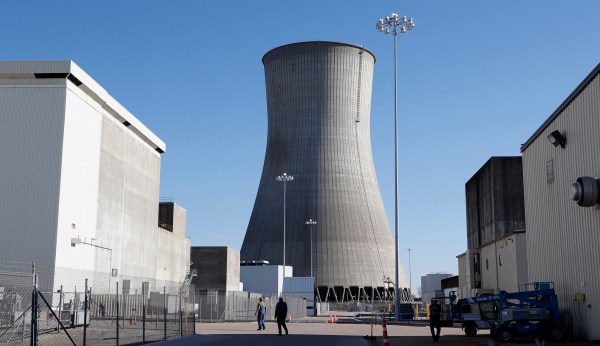
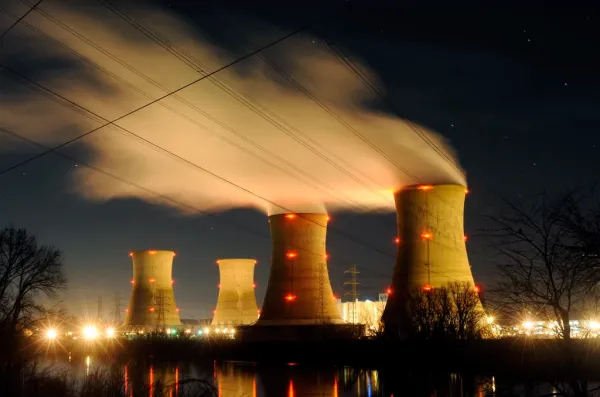
I recently joined Sen. Dave McCormick (R-PA) for a tour of the Crane Clean Energy Center in his home state of Pennsylvania, a nuclear power plant that closed in 2019. We spent time with plant leadership, workers, and local stakeholders from the community, participating in conversations about the efforts to bring the facility back online and why nuclear energy will play an important role in helping America generate the power it needs.
Recommended Stories
The project sits at the intersection of several trends shaping the country’s future, including growing electricity demand, domestic manufacturing, artificial intelligence, and renewed interest in nuclear energy. It is also proof that America can still tackle ambitious projects when policymakers, businesses, and communities work toward a common goal.
In Washington, energy conversations can quickly become polarized. At Crane, the discussion was much more practical. People talked about jobs and about keeping energy reliable and affordable. They talked about what it takes to move a major project forward, not in the abstract, but in terms of their lives and livelihoods.
As the facility looks to flip the switch back on in 2027, it has become one of the most talked-about energy projects in the country. Crane is expected to produce 835 megawatts of electricity once operational, a meaningful contribution to the grid at a moment when demand is rising almost everywhere you look.
The project is also a reminder that energy infrastructure and economic growth often go hand in hand. Constellation Energy estimates the restart at Crane will create roughly 3,400 new direct and indirect jobs for Pennsylvanians while contributing roughly $16 billion to the state’s economy over the next two decades. It’s also expected to generate around $3.6 billion in state and federal tax revenue in the same timeframe.
Constellation’s decision to restart the facility is also tied, in part, to a long-term power purchase agreement with Microsoft, a company that needs reliable, around-the-clock electricity to support growing data center demand as artificial intelligence applications continue to expand. That deal is a window into the broader challenge.
A few years ago, the energy conversation was largely about replacing aging infrastructure. Today it’s bigger — we need existing resources, new generation, and expanded infrastructure just to keep pace. That reality came up repeatedly during our roundtable discussion. Nobody was debating whether demand is growing. The debate was about whether the country is moving fast enough to keep up, and the conclusion was clear: Nuclear energy needs to be a key player in meeting American energy demand. Nuclear energy provides large-scale, reliable baseload power around the clock, helps support grid stability, and can complement other energy resources as demand continues to increase. Whether someone supports nuclear power because of reliability, energy security, economic growth, or the lack of emissions, it’s becoming harder to ignore the role it can play.
The Crane project also says something important about America’s ability to reinvest and rebuild our existing infrastructure. For years, much of the energy conversation focused on what should happen next, but with projects like Crane, you can see conversation becoming action. Today at Crane, equipment is being upgraded, workers are being hired, long-term plans are turning into reality, and there’s an obvious understanding that meeting America’s growing energy demand will require an all-of-the-above approach, one that invests in both proven energy assets and the next generation of energy technologies.
TRUMP ADMINISTRATION LOANING $17.5 BILLION TO BUILD 10 LARGE NUCLEAR REACTORS
Additionally, at a national level, McCormick has long argued that energy security is national security and that Pennsylvania has a central role to play in meeting future demand. Spending a day at Crane makes those arguments easy to understand. I left Pennsylvania optimistic, not because every challenge has been solved, but because the conversations are becoming more grounded in reality. People understand the stakes — the workers, engineers, and local leaders I met at Crane certainly do. They aren’t debating whether America needs more energy. They’re focused on providing it.
Crane is not just a story about one facility in Pennsylvania. It’s a glimpse of what America’s energy future could look like if we’re willing to build it.
Heather Reams is the president and CEO of Citizens for Responsible Energy Solutions.