They buried Khamenei. They couldn’t bury the body count

Published July 17, 2026 9:00am ET


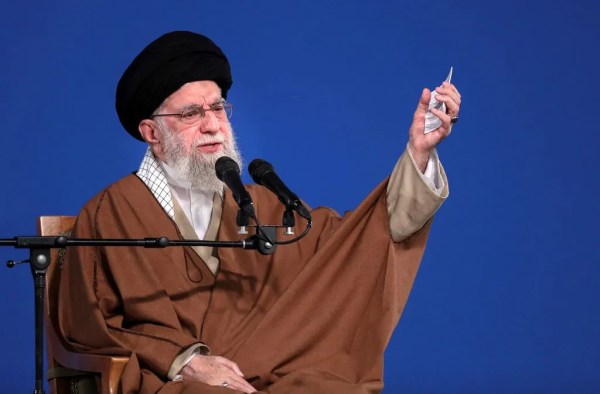
With the burial of Ayatollah Ali Khamenei, contemporary political discourse will inevitably focus on his geopolitical maneuvering, Iran’s nuclear trajectory, and prolonged confrontation with Western powers. However, an analysis restricted to statecraft overlooks the defining characteristic of his tenure: the systematic institutionalization of state-sanctioned violence.

Khamenei’s legacy is fundamentally defined by the creation of an authoritarian apparatus designed to subordinate the rule of law to regime survival. Yet, paradoxically, his relentless drive to tighten the state’s grip has exposed its deep-seated fragilities, leaving the post-Khamenei establishment weaker and more vulnerable than ever before.

Unlike autocrats who merely inherit established mechanisms of control, Khamenei was a foundational architect of the Iranian regime’s repressive apparatus. His trajectory spans the entirety of the regime’s history, serving sequentially on the Revolutionary Council, as deputy defense minister, a founding member of the Islamic Republican Party, president (1981–1989), and ultimately as supreme leader for nearly four decades. Consequently, no structural separation exists between the state’s human rights violations and Khamenei’s executive authority.

The consolidation of this power required the systematic elimination of pluralism. Khamenei continued what was initiated immediately following the 1979 revolution: The provisional leadership forcibly suppressed ethnic minority communities, including Kurds, Turkmen, and Arabs, demanding regional autonomy. 

This trajectory of state terrorism culminated in the summer of 1988 with the extrajudicial execution of thousands of political prisoners, predominantly affiliates of the People’s Mojahedin Organization of Iran. While the regime’s founder, Ruhollah Khomeini, issued the fatwa that sanctioned the massacre, Khamenei consistently defended these purges throughout his tenure, establishing a precedent of zero tolerance for political non-conformity. Legal scholars and human rights bodies, including former U.N. Special Rapporteur Javaid Rehman, have characterized these mass executions as crimes against humanity and actions bordering on genocide.

Under Khamenei’s supreme leadership, domestic policy relied on the routine deployment of lethal force to suppress recurring cycles of popular unrest. Major nationwide uprisings, including the 1999 student protests, the 2009 uprising, the economic protests of 2017 and 2019, the 2022 nationwide uprising after Mahsa Amini was killed in custody, and the widespread protests this past January, were uniformly met with militarized crackdowns, mass arbitrary detentions, and extrajudicial killings.

To legitimize this violence, Khamenei doubled down on the judiciary’s role as an instrument of state security. Consequently, the regime consistently maintained one of the highest per-capita execution rates globally. The Revolutionary Courts routinely relied on extracted confessions, denied defendants access to independent counsel, and systematically targeted political dissidents, as well as ethnic and religious minorities. Parallel to this judicial repression was a strict policy of censorship, marked by systematic internet blackouts during periods of civil unrest, such as the one during the January protests.

Khamenei’s strategy for regime survival extended far beyond domestic borders through a dual policy of regional destabilization, transnational terrorism, and economic monopolization. Under his direct oversight, Tehran cultivated a vast network of proxy militias across Lebanon, Iraq, Syria, and Yemen to project regional influence and disrupt global security. This architecture of regional warfare reached its most devastating expression in major operations, such as the Oct. 7, 2023, attack, which relied heavily on the Iranian regime’s funding, training, and strategic backing.

Furthermore, Khamenei’s tenure was marked by the systematic elimination of political opponents abroad and the orchestration of international terrorism. His regime actively targeted and assassinated Iranian dissidents across European capitals, including Paris, Vienna, Geneva, Berlin, and Rome. Beyond targeted assassinations, Khamenei’s security apparatus was directly implicated in large-scale international terrorist plots, most notably the 1994 bombing of the AMIA Jewish community center in Buenos Aires, Argentina, which killed 85 people and wounded hundreds, and the foiled 2018 bombing attempt targeting a massive Iranian opposition indoor summit near Paris, attended by an estimated 100,000 people and numerous international dignitaries.

Domestically, while public infrastructure deteriorated under the weight of inflation and corruption, an economic empire controlled directly by the supreme leader’s office accumulated tens of billions of dollars in assets. Megaconglomerates like Setad (also known as the Execution of Imam Khomeini’s Order) and the Mostazafan Foundation operated outside legislative oversight, siphoning wealth from the public sector to directly fund these domestic and international security operations, insulating the ruling elite from economic decay.

Ultimately, the centralization of power under Khamenei exposes the regime’s structural fragility rather than its resilience. Despite decades of systematic repression, the autocracy failed to resolve the endemic social, political, and economic crises that now threaten its survival. The aggressive monopolization of wealth, paired with hyperinflation and environmental mismanagement, has eroded the regime’s traditional support bases. The violent suppression of civic spaces has only exacerbated societal grievances, transforming localized protests into existential challenges and leaving the state increasingly vulnerable to internal shocks.

WHY IS IRAN SUDDENLY DESPERATE TO KILL TRUMP?

Furthermore, the regime’s inability to eliminate cohesive, organized opposition movements underscores the absolute limits of its coercive apparatus. Despite decades of executions, systematic demonization, and targeted assassinations, that opposition remains the regime’s Achilles’ heel — an enduring, structured counterweight that the security apparatus failed to erase. This resilience demonstrates that domestic dissent has transitioned from fragmented economic grievances into an organized political alternative.

International observers must resist the tendency to view the end of Khamenei’s reign as an automatic catalyst for democratic transition, as the system was engineered for structural continuity via the Islamic Revolutionary Guard Corps and the Guardian Council. However, true accountability requires international policy to shift away from diplomatic accommodation and toward the documentation of state crimes. Redressing the legacy of this era demands rigorous investigations under universal jurisdiction, targeted sanctions against officials complicit in abuses, and sustained international solidarity with the Iranian population’s aspirations for a constitutional democracy grounded in the rule of law.

Ali Safavi, a sociologist, is an official with the Foreign Affairs Committee of the Paris-based National Council of Resistance of Iran. His elder brother was executed by the Iranian regime. He was 29. He is on X at @amsafavi.