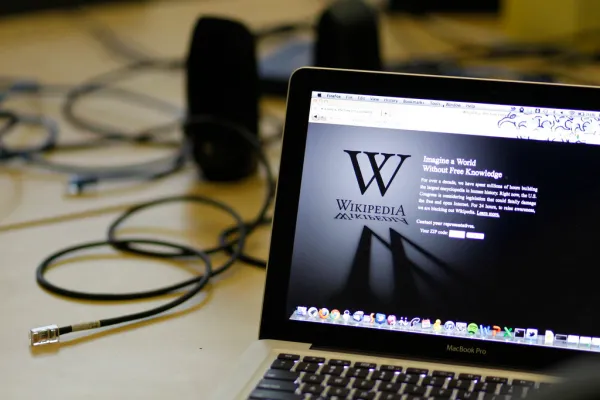
Wikipedia is training Google and AI to lie to you

Published July 23, 2026 10:00am ET


We live in a world where access to information is more plentiful than ever, yet truth has never felt more elusive. AI summaries, 24/7 media, and never-ending social media “takes” create more opportunities for content to be corrupted by misinformation and disinformation.

Wikipedia is another example. Fresh claims of left-wing bias have triggered congressional concerns and led to the launch of Grokipedia as an alternative encyclopedia. Last month, Wikipedia co-founder Larry Sanger was banned by editors for trying to promote an “intellectual diversity” project online. This month, my organization, the Hindu American Foundation, found out (yet again) why intellectual diversity is so sorely needed within Wikipedia, throughout the mainstream media, and everywhere Americans consume content.
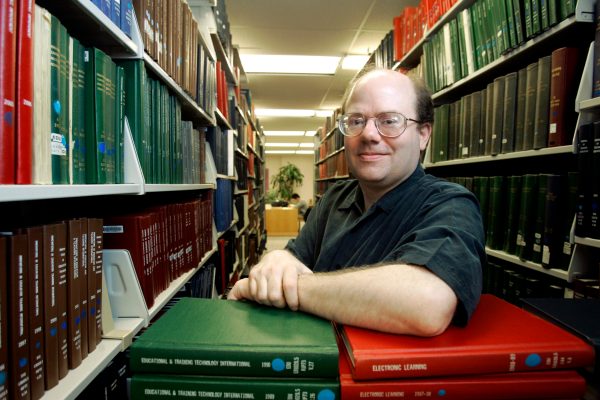
I CO-FOUNDED WIKIPEDIA, BUT AN ANONYMOUS MOB RUNS THE SHOW — AND NOW I’M BANNED

Wikipedia editors recently changed the summary description of HAF, which is meant to be written from a “neutral point of view,” to now include this line: “HAF is thoroughly embedded in networks of Hindu nationalist politics and seeks to weaponize Hindu victimhood to bolster this agenda.”

Does that sound neutral to you?

I have worked at HAF for more than a decade. The campaigns we’ve done, the policy stances we’ve articulated, and the educational work we’ve promoted don’t neatly fit into the buckets that either our supporters or detractors want to put us in.

In U.S. political terms, HAF falls somewhere between the mainstream center-left and center-right (although political reference points have shifted dramatically over the past decade). HAF is more left-leaning on domestic cultural issues and more right-leaning on foreign policy matters. We are definitely nowhere near the far-right Hindu supremacists that our most vocal detractors would suggest, but a quick look at HAF’s Wikipedia page shows otherwise.

You would think that I head communications for a group of fascists whose primary purpose is killing anyone in India that isn’t Hindu, hoodwinking the American public with language of civil rights, educational equity, and community advocacy to hide our origins as a secret project to advance the political objectives of Prime Minister Narendra Modi’s government.

To be entirely clear, I wouldn’t have spent a decade of my life working at HAF if that were anywhere close to accurate. 

Our Wikipedia portrayal by anti-Hindu activists — readily picked up by Google Search, Google Gemini, and other large language models — has grown notably worse in recent years. We had long suspected a group of editors who took a special interest in maintaining an unflattering portrait of us. We didn’t quite know the depths of this deception until a few weeks ago, when journalist Ashley Rindsberg and the team at NPOV shared the results of their investigation into our page.

Rindsberg has long raised awareness of how biased Wikipedia has become and how far from its mission of creating a crowdsourced public encyclopedia it has strayed, particularly for any individual, organization, or topic that is politically or culturally charged.

Look up the history of mollusks or mid-century modern furniture, and Wikipedia is accurate and unbiased enough for what it sets out to do. Look up the history of conflict between Israel and the Palestinians, the treatment of Iranian civilians by their government, contemporary heterodox cultural commentators, or leading Hindu American advocacy nonprofits, and all bets are off when it comes to reading something that is written from a neutral point of view.

In the case of HAF, NPOV found that a group of four editors and one super-administrator have effectively hijacked our Wikipedia page, editing it in a way so only the worst possible interpretation of our work is presented. Any edits that try to present another perspective are deleted. In some places, opinions about our work from a certain ideological perspective, usually a far-left or Islamist perspective, are presented as settled fact in what is known as “Wikivoice.” Water is wet, the sun rises in the morning, and HAF employees are far-right Hindu supremacists promoting Hindutva in the U.S.

This is a much greater issue than how HAF is portrayed (as important as that is for me personally and professionally). There are countless cases like ours, as Sanger has pointed out.

Viewed as authoritative by the general public, Wikipedia content is often right near the top of a Google search or LLM response. The information enshrined in Wikipedia is part of the foundation upon which future human knowledge creation and dissemination is being built. If the information in Wikipedia is incorrect, then the entire system breaks down.

Beyond public education (or the lack thereof), misinformation and disinformation can have downstream effects. For example, we have witnessed a rapid rise in anti-Hindu hate crimes in the U.S. Anti-Hindu incidents account for 23% of reported religious bias cases in California, making them the second most frequently reported form of religiously motivated hate in the state.

The critics of HAF, and my sometimes personal critics, can certainly have their perspectives recorded in Wikipedia for the new annals of history. I will mumble, grumble, and disagree, but they are entitled to present their opinions and conclusions to the public. But what ought not happen is that viewpoints that contradict theirs are actively erased or suppressed, or presented only if characterized as intellectually inferior in the face of their orthodoxy.

WIKIPEDIA AND LEGACY MEDIA COMPETE TO OUT-BIAS EACH OTHER

Our best approximation of understanding the truth comes through the assessment of analysis from different standpoints. Wikipedia is currently failing, and it is not the only failure. Just scroll through X or Reddit for an hour.

America’s online information ecosystem needs massive reform. If that can’t happen, Americans will drift further and further from the truth (and from each other), and our society won’t be saved.

Mat McDermott serves as Senior Director of Communications at the Hindu American Foundation.