As a retired U.S. Army general who spent decades confronting terrorism and helping to build security partnerships around the world, I learned one simple lesson: You do not defeat terrorists by depriving your partners of the tools they need to fight them.
Right now, we are seeing two diametrically opposed visions for how to defeat terrorism, one from the Trump administration to support an allied government and ensure the safety of Christians and Muslims alike, and another from Congress that is shockingly counterproductive and dangerous.
Recommended Stories
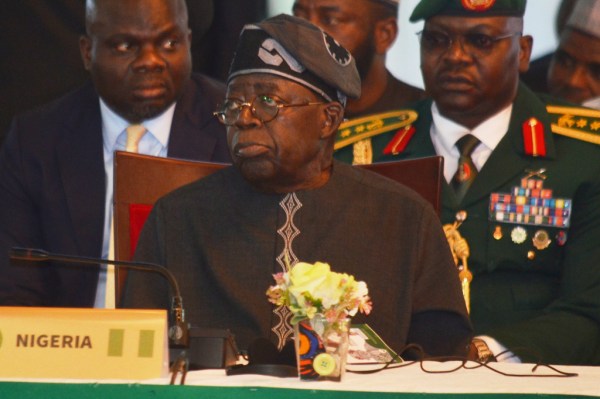
Last week, Frank Garcia, the new U.S. assistant secretary of state for African affairs, made Nigeria his first stop on the continent. In Abuja, Garcia met with Nigerian national security adviser Nuhu Ribadu to discuss reinforcing the U.S.-Nigeria counterterrorism strategic partnership, which has been highly effective.
Since President Donald Trump launched the Christmas Day strikes, thousands of jihadi terrorists have been killed or arrested by Nigerian security forces, with a single operation eliminating 199 of them, including the second-in-command of ISIS. This was one of the most successful international counterterrorism missions since 9/11, and it’s time to maintain the momentum.
In Washington, however, certain Republicans in Congress are headed in an opposite direction, proposing measures that would immediately hamper the counterterrorism partnership, give terrorists time to regroup, and ultimately put Nigerian Christians in harm’s way.
Last week, Reps. Greg Steube (R-FL) and Barry Moore (R-AL) championed an amendment to the fiscal 2027 National Security, Department of State, and Related Programs Bill that will withhold 100% of military and other security assistance to Nigeria until the secretary of state certifies to the committee that the Nigerian government is taking effective steps to address violence in the country.
This comes after Rep. Chris Smith (R-NJ), in his Nigeria Religious Freedom and Accountability Act of 2026, references the debunked “Fulani ethnic militia,” which has never been recognized by any U.S. intelligence agency, in his call for sanctions. The U.S. Commission on International Religious Freedom, whose research the bill references, has clearly stated that militant Fulani do not share a “centralized leadership,” operating instead as a disorganized smattering of criminals in groups ranging from 10 to 1,000.
Imagine telling a country struggling with famine that it can only receive lifesaving food assistance once it gets its starvation problem under control. The logic is absurd, and yet that is essentially what the U.S. House just did last week, in demanding that Nigeria satisfy security conditions as a prerequisite for military assistance, without which those conditions cannot be satisfied. These proposals are misguided and outright dangerous, putting at risk the advances the U.S. has made in dismantling terror cells and operations in Nigeria and the Sahel.
Trump will continue racking up counterterrorism wins in Nigeria if Congress doesn’t get in the way. If Nigeria needs better intelligence capabilities, counterterrorism training, mobility, equipment, and operational capacity to protect vulnerable communities, including persecuted Christians and targeted Muslims, then withholding assistance until those outcomes are achieved is self-defeating.
Furthermore, while the U.S. and Nigeria signed a deal for AH-1Z Viper helicopters in 2022, the equipment isn’t expected to be delivered until 2028, and terrorist organizations aren’t waiting. Scaling back counterterrorism support now would leave a dangerous vacuum for adversaries like Russia, China, or non-state actors to fill. If the U.S. must reduce its presence in the region, it must at least ensure that a key security partner has the equipment needed to continue the fight independently.
An agreement for U.S. forces to use Nigerian military bases as a hub for counterterrorism operations coupled with an agreement for Nigeria to purchase weapons and ammunitions from the U.S. and our allies would be the logical next steps of this successful counterterrorism partnership.
The Trump administration has chosen engagement over isolation and action over moralizing. Congress must not undermine that strategy, which is producing measurable results against ISIS and other extremist organizations that threaten both Nigerian civilians and American interests.
THE TOXIN NOBODY’S TALKING ABOUT IN NIGERIA’S CHRISTIAN MASSACRES
As someone who spent a career fighting terrorists and building international security coalitions, I urge every member of the U.S. Senate to reject these misguided restrictions on aid to Nigeria and oppose any provisions that would unnecessarily undermine one of America’s most important counterterrorism partnerships in Africa.
The stakes are too high for symbolic gestures and counterproductive policymaking. Nigeria’s terrorists would welcome a weakened U.S.-Nigeria partnership. The U.S. Senate should not give them one.
James “Spider” Marks is the former Commanding General of the U.S. Army Intelligence Center.