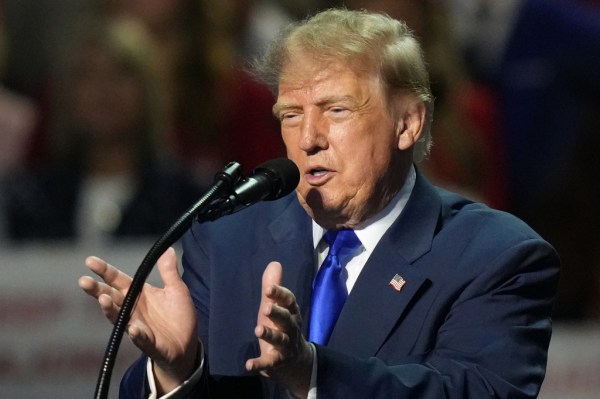
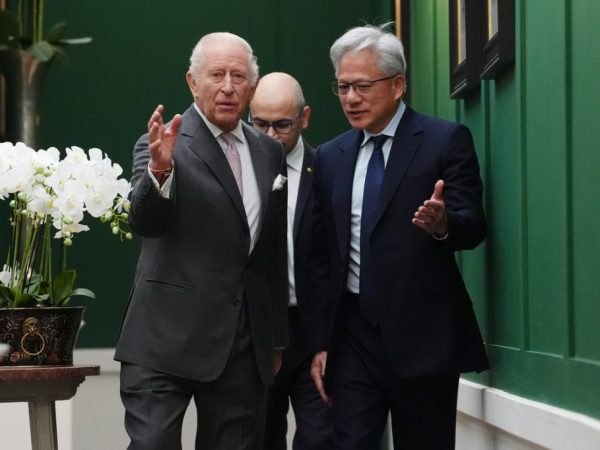
A recurring figure in American popular culture, particularly in periods of rapid economic and technological change, is the “prophetic CEO.” These larger-than-life figures seemingly have their finger on the pulse of the zeitgeist and offer sweeping prescriptions on how to address them.
We are presently living in the age of artificial intelligence, and some Americans fear not just its implications for employment, but its ramifications for society and the systems that underpin it. Recently, a CEO prophet for the AI age has risen. His communique to the public is simple: Your fears are fully justified.
Recommended Stories
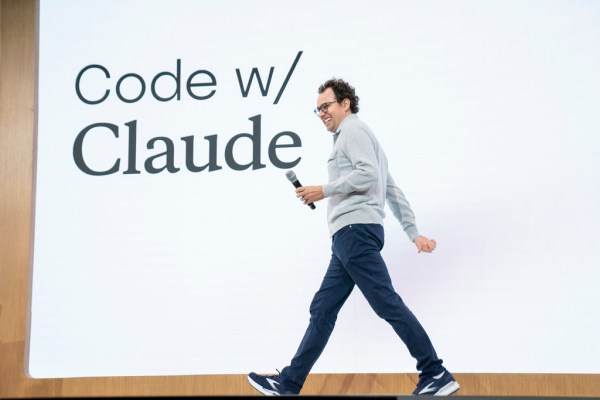
This messenger is Dario Amodei, and he is the co-founder and CEO of Anthropic — the creator of the popular AI chatbot Claude. He is the ultimate insider, which affords him the credibility in the eyes of his audience to make the most sweeping of statements.
HOW ANTHROPIC’S ‘DESTROY THE WORLD’ DOOMERISM BACKFIRED ON AMERICA
In June 2026, Amodei published an essay in which he asserted, “There may come a time, perhaps relatively soon … when the most powerful AI systems look less like airplanes and automobiles and more like weaponizable nuclear materials — a threat to humanity rather than ‘just’ a threat to public safety.”
It is hard to get more provocative than a prospective Armageddon. How does Amodei propose to save civilization as we know it? Through a greatly expanded role for government regulation of AI.
There is no doubt that AI is having a significant impact across America, and no one disputes that a discussion of optimal public policy in this space is appropriate. To get the best results, however, we know that broad-based deliberation rather than narrowcasting the loudest voices is the best way forward.
When a person as economically vested in the AI race as Amodei argues that we must aggressively regulate, it’s only fair to have a modicum of skepticism about his motivations, and it is not clear that Amodei is AI’s well-meaning adult. It seems likely that an enhanced regulatory regime over AI would serve to entrench Anthropic while systematically undermining its competitors.
If successful, he might even secure the lucrative outcome known as regulatory capture, which is when a dominant industry player shapes the regulatory process to such a degree that it protects incumbents rather than the public or the interests of competition. A good analogy for regulatory capture would be if innovative pharmaceutical companies designed approval pathways for generic drugs that are so onerous and costly as to prevent generic drugs from entering the market altogether.
In the case of AI models, the lever for regulatory capture would be stated concerns around safety. Regardless of Amodei’s specific motivations, his “Safety Playbook” has three pillars. The first pillar is open-source restrictions. Amodei’s essay called for the federal government to be given the power to block or release frontier AI models that fail independent safety testing. This builds on his testimony before the Senate, during which he told lawmakers that open-source AI models are “going down a very dangerous path.” French technologist Arnaud Bertrand perceptively summed up Amodei’s position as “please, dear legislators, ban my competition.”
While independent testing may sound logical, only deep-pocketed companies such as Anthropic would be able to afford it. Moreover, suppressing open-source models would push smaller firms without billion-dollar training budgets out of the market. Ultimately, commercial users of AI models would be subject to a de facto forced migration toward having an API with a company such as Anthropic. Nothing would be more “secure.”
The second pillar of his regulatory prescription calls for mandatory compliance frameworks. Such regimes tend toward complexity in the service of being “rigorous” — something Amodei aspires to be. Anthropic can support complex frameworks because it has the resources to staff, understand, and comply with them. A ten-person start-up cannot. When rules are calibrated to Anthropic’s scale, they are not public protections: They are barriers to entry.
THE REAL AI DOOMSDAY SCENARIO? LISTENING TO DARIO AMODEI
The third pillar is export controls for chips. Amodei takes the view that putting controls on chip exports will lock in America’s competitive advantages in AI. However, this has not proven out: After the United States put export controls on advanced chip sales to China in 2022, Beijing began dumping billions of dollars into building out its own chip sector. This has created an increasingly ferocious competitor to the U.S. semiconductor industry.
America is at its best when it promotes competition. Anthropic was once a small firm, and now it is large. The next generation of AI breakthroughs is more likely to come from smaller, unencumbered developers than from established frontier labs. These small firms also need the right conditions in which to grow. We forget at our peril that every American company, developer, and consumer pays that price when a CEO, no matter how charismatic, is permitted to build a protective moat around his business.
Eric Miller is a technology and regulatory adviser in Washington, D.C.