Trump miscalculated Iran — and exposed all his cards

Published July 27, 2026 9:00am ET


As President Donald Trump prepares to meet Israeli Prime Minister Benjamin Netanyahu once again, both leaders confront a question that has shaped the Middle East for nearly half a century: how did the West so profoundly misread the Islamic Revolution in Iran — and can that mistake still be corrected?

The roots of this miscalculation trace back to 1979. The Carter administration viewed Ayatollah Ruhollah Khomeini through a religious and largely apolitical lens, underestimating the ideological nature of the revolution he led. Many in Washington failed to grasp that Khomeini was not merely a spiritual figure, but the architect of a doctrine that fused theology with political absolutism. In contrast, Israeli intelligence — along with warnings from the Shah — recognized that Iran was undergoing not just a political upheaval, but the emergence of a revolutionary ideology with regional ambitions.
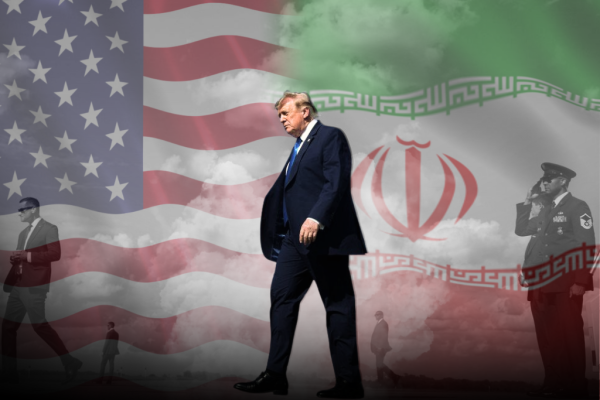
What followed was not a conventional regime change, but the birth of an ideological state. The Islamic Republic grounded its legitimacy in a theological framework tied to the authority of the Hidden Imam, transforming governance into a mission that transcended national borders. From its inception, the regime defined itself not as a typical nation-state, but as the vanguard of a broader revolutionary project.

Over the past four decades, this vision has translated into a deliberate strategy of regional expansion. Tehran has cultivated an extensive network of proxy forces — including Hezbollah, Hamas, and the Houthis — allowing it to project power while avoiding direct confrontation. Alongside this, it has invested heavily in missile technology, cyber warfare, propaganda, and transnational influence operations. Ideology, in this framework, functions as both motivation and instrument.

Yet Iran’s greatest strategic advantage has not been military capability, but the West’s persistent misreading of its intentions. Policymakers have often approached Tehran as a rational actor operating within conventional geopolitical norms. In reality, the Islamic Republic’s decision-making is inseparable from its ideological identity. Its actions — whether diplomatic or militant — are not isolated responses, but components of a long-standing revolutionary doctrine.

This misunderstanding has repeatedly shaped Western policy. Negotiations and agreements have often provided Tehran with time to consolidate power, strengthen its proxies, and advance its strategic objectives. Diplomacy, from the regime’s perspective, has frequently served as a tactical pause rather than a path to transformation.

It is in this context that Trump’s leadership becomes especially relevant. The mullahs have seen Trump’s cards, largely because his approach has at times revealed intentions without consistent strategic discipline. In high-stakes geopolitical bargaining, unpredictability can be an asset — but only when paired with restraint and coherence. Without that balance, pressure loses its effectiveness, and adversaries gain clarity.

Today, American and Israeli policymakers face a more fundamental question than the status of Iran’s nuclear program: can the Islamic Republic alter the ideological foundations that have defined its behavior since 1979? Or is it merely adapting its tactics while preserving its core objectives?

For decades, U.S. administrations have hoped engagement might moderate Tehran. Israel, by contrast, has remained skeptical, questioning whether diplomacy changes intentions or simply delays confrontation. This divergence reflects a deeper strategic divide over how to interpret ideological regimes.

Trump’s meeting with Netanyahu is therefore more than a routine diplomatic engagement. It represents an opportunity to reassess a central assumption of Western policy — that revolutionary systems inevitably evolve into pragmatic actors. The historical record in Iran suggests otherwise.

A new Middle East, if it is to emerge, will not be shaped solely by negotiations or shifting alliances. It will depend on recognizing that the primary challenge posed by the Islamic Republic is ideological, not merely strategic. Political systems rooted in revolutionary doctrine do not easily abandon their defining principles.

MAMDANI’S TOUGH TALK EXPOSED AS DECEPTIVE VIRTUE SIGNALING

Ultimately, lasting change in Iran is unlikely to come from external pressure alone, but from the internal erosion of the ideology that sustains the regime. The Iranian people, long subjected to repression and isolation, remain central to that possibility.

History will judge Trump and Netanyahu not by the symbolism of their meetings, but by whether they understood the nature of the challenge before them. The future of the Middle East may well depend on that recognition.

Erfan Fard is a counterterrorism analyst and Middle East studies researcher based in Washington, with a particular focus on Iran, Islamic Terrorism, and ethnic conflicts in the region.