The House should reject delay of hemp regulations

Published August 30, 2026 8:00am ET


Congress has already taken the necessary steps to close the dangerous “hemp loophole.” Now, the House of Representatives has a simple choice: uphold the law and protect children, or grant the intoxicating hemp industry another opportunity to profit from an addiction-for-profit business model.

The Senate recently passed a continuing resolution that would delay implementation of critical restrictions on delta-8 THC and other intoxicating hemp-derived cannabinoids. While the proposed delay is only one month, it is far from harmless. When children’s health and safety are at stake, there is no justification for postponing a law Congress has already passed.

The loophole dates back to the 2018 farm bill. Congress limited delta-9 THC derived from hemp to a concentration of 0.3% but failed to address other intoxicating cannabinoids, including delta-8 THC. The result was predictable: An entire industry emerged to exploit the gap.

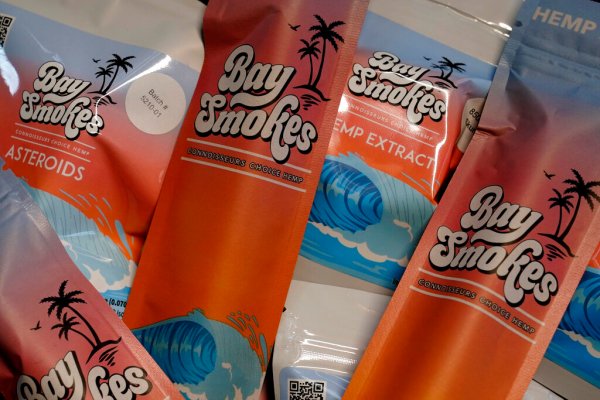
Today, intoxicating hemp products are sold as gummies, drinks, and vapes in common locations such as gas stations and grocery stores. These products are often packaged and marketed to appeal to young people. Children have suffered severe consequences from consuming them. Tragically, some have even died.

This is not the responsible use of hemp that Congress intended to legalize. It is an industry that found a loophole, built a billion-dollar business around it, and has every incentive to keep that loophole open.

Thankfully, Congress addressed the problem in November 2025. The law expanded the definition of hemp to include delta-8 and similar psychoactive cannabinoids and set Nov. 12, 2026, as the implementation date. That date was not sprung on the industry overnight. Manufacturers and states have had time to prepare, and many states have already taken action to restrict or ban intoxicating hemp products.

More than 35 state attorneys general have warned Congress about the dangers of unregulated intoxicating hemp. In their most recent letter, they noted that many states have tightened their own regulations specifically to protect the health and safety of their citizens.

So why are we talking about delaying a law that has already passed?

Supporters of the delay claim they need more time to create a regulatory “framework” for different hemp products. This argument deserves serious skepticism. The intoxicating hemp industry is not seeking more time out of a sudden passion for sensible regulation — its business model depends on the very loophole Congress voted to close.

The entire synthetic THC industry was built on a misinterpretation of the 2018 farm bill. Congress and the president corrected that mistake in 2025. Now, after states have spent months preparing for the Nov. 12 implementation date, we are told that everyone needs more time.

That is absurd.

A new “framework” should not become a backdoor to undoing the restrictions Congress already enacted.

The timing of this effort is also concerning. The White House has supported the delay, even as questions have been raised about connections between the administration and the intoxicating hemp industry. The New York Times recently reported that White House chief of staff Susie Wiles’ son-in-law, Bret Worley, is the chief executive of companies that distribute and sell intoxicating hemp-derived gummies and vapes.

While this doesn’t prove political influence is driving the push for a delay, it makes congressional scrutiny of the proposal even more vital. People deserve to know whether public health or industry interests are driving this debate.

Opposition to intoxicating hemp is not a partisan issue. Sen. Ted Budd (R-NC) offered an amendment to remove the delay from the Senate’s continuing resolution. Although the amendment was tabled, 32 senators voted against tabling it — including nine Democrats.

That bipartisan concern should tell the House something important: protecting children from unregulated intoxicating products is not a Republican issue or a Democratic issue. It is a common-sense issue.

At Eagle Forum, we joined 56 national and state public health, public safety, consumer protection, and community organizations in urging the Senate to reject the delay. This is bigger than one industry or one piece of legislation. It is about whether we will tolerate an industry that has profited from selling intoxicating products with minimal oversight by exploiting a technical loophole.

The House now has another opportunity to get this right.

Because the Senate bill differs from the version passed by the House in July, members of the House will have the chance to strip the delay from the continuing resolution when it comes before them in September.

They should do it.

Congress closed the hemp loophole. States have prepared. Public health and public safety officials have warned us about the consequences of leaving these products unregulated.

There is no legitimate reason to kick the can down the road.

When an industry is making billions by exploiting a loophole that puts children at risk, the answer should not be “give them one more month.”

WHY TRUMP MUST REJECT THE WEED LOBBY

The answer should be: the loophole is closed.

The House should stand with parents, children, and public safety, not the intoxicating hemp lobby, and reject any attempt to delay the law.

Kristen A. Ullman is the president of Eagle Forum, one of America’s leading conservative public policy organizations.