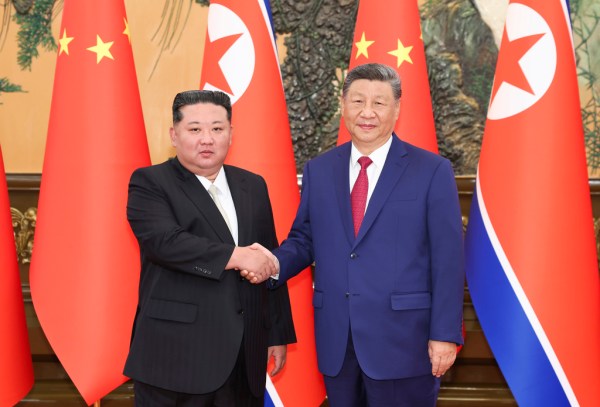
President Donald Trump has long regarded personal diplomacy with North Korean leader Kim Jong Un as one of the greatest foreign policy successes of his first term and recently signaled that he wants to meet with Kim again. To facilitate this, he ordered the Pentagon to scale back last month’s joint military exercises with South Korea, citing their cost and Pyongyang’s longtime opposition to the drills.
The president’s impulse is understandable. Trump’s personal diplomacy during his first term significantly lowered tensions with North Korea. There has been no North Korean nuclear test since 2017, a pause in long-range missile launches, and a window of relative calm on the peninsula.
Recommended Stories
Unfortunately, bringing Kim back to the table today is far more difficult, and the risks of mishandling it are substantial.
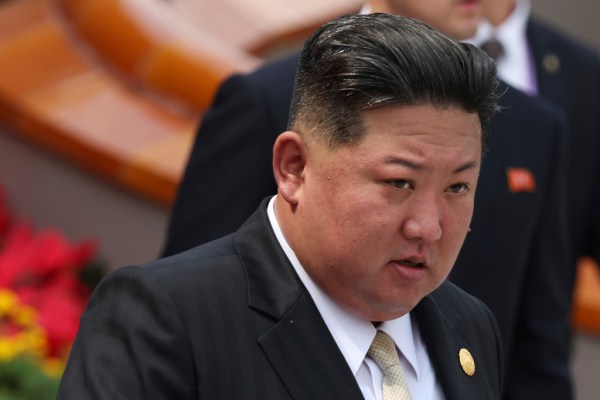
Kim has never been a trustworthy negotiating partner, and he will be far harder to negotiate with than during Trump’s first term. He has a long record of pocketing concessions and then reverting to provocations. Kim is now more belligerent and appears less interested in peace, having declared his nuclear arsenal irreversible, branded South Korea a permanent enemy, and answered outreach with missile tests rather than diplomacy. The North Korean leader is more interested in helping sustain Russian President Vladimir Putin’s genocidal war against Ukraine, which pays him in cash, fuel, and military technology, than in exploring the rewards of talks with the United States.
Most experts believe the annual U.S.-South Korea exercises are essential for deterrence and readiness. Temporarily scaling them back is not unprecedented; similar suspensions occurred under Presidents George H.W. Bush, Bill Clinton, and during Trump’s first term while negotiations were underway. A temporary reduction could be a small price to pay if it gets Kim to the negotiating table. But North Korea has already dismissed the partial cut as inadequate and further signaled defiance by test-firing 10 short-range missiles into the Sea of Japan on Aug. 20.
Obstacles to a new summit go beyond the exercises. U.S.-North Korea relations frayed due to the Biden administration’s weak foreign policy, which emboldened Pyongyang to harden its positions, expand its nuclear and missile arsenals, and commit to an “unlimited” nuclear buildup. Trump said last month that the North has 57 nuclear weapons; some experts believe the number is higher. Advances in miniaturization and delivery systems make the arsenal even more dangerous.
Compounding this challenge is North Korea‘s close relationship with Russia and warmer ties with China, still its main trading partner and energy source. Kim has supplied artillery shells, ballistic missiles, and thousands of troops to support Moscow’s war in Ukraine. In return, North Korea receives food, energy, cash, and critical military technology that strengthens its capabilities and reduces any incentive to negotiate with Washington. This relationship appears transactional and tied to the Ukraine conflict; a settlement there could loosen the bond. Until then, Kim has little reason to abandon a profitable arrangement for uncertain talks with the U.S.
Success, if achievable, would bring real strategic dividends. A working relationship with Pyongyang could help isolate Russia, contribute to ending the war in Ukraine by removing a key supplier of munitions and manpower, and lower Chinese regional influence at a time when Beijing is growing more belligerent. It could also stabilize the Korean Peninsula, reduce the risk of miscalculation in Asia, and enhance America’s reputation and influence across the region.
But this high-stakes effort cannot come at the expense of the crucial U.S.-South Korea alliance. The partnership, which has grown stronger during Trump’s second term, remains the cornerstone of American security architecture in Northeast Asia — critical for trade, technology, and collective defense against both North Korean aggression and Chinese coercion.
It is hard to fault South Korea for staying out of the Iran war when America’s European allies, many with far greater military capacity, actively tried to undermine the U.S. effort by denying access to critical bases and publicly criticizing Trump’s Iran policy. Any complaints about Seoul’s noninvolvement are more than offset by the Lee Jae Myung government’s stronger-than-anticipated cooperation on trade and security. This includes a 7.5% rise in South Korea’s 2026 defense budget, an additional $1 billion in support for the 28,500 U.S. troops stationed there, and major shipbuilding agreements expected to expand U.S. Navy capacity while involving American firms in South Korea’s development of its first nuclear-powered submarines.
Scaling back exercises without reciprocity, or appearing to prioritize outreach to Kim over consultation with Seoul, threatens the alliance. Lee’s bold decisions to strengthen the security relationship underscore the need for deeper, not thinner, cooperation. Undermining that partnership would exact a high price in American influence and regional stability — costs that could outweigh any temporary diplomatic opening with Pyongyang.
TOKYO JUST CHANGED KIM JONG UN’S NUCLEAR CALCULUS
Dealing with Kim has never been easy. It requires steady diplomacy and close coordination with America’s top partners in the Asia-Pacific: South Korea and Japan. The immediate next steps should include intensive consultations with both countries by Secretary of State Marco Rubio, and possibly a Trump visit to Seoul.
Although the potential upside of a new U.S.-North Korea relationship is real, successful high-level talks remain a long shot given how frayed the relationship has become and how North Korea’s policies worsened during the Biden years. The danger of damaging the U.S.’s most reliable partnership in the region is equally real. Success will require sophisticated diplomacy to test the waters with Kim and the discipline to strengthen the South Korean alliance. Anything less risks trading a difficult problem for a worse one — undermining America’s relationship with a close friend.
Fred Fleitz previously served as chief of staff of the Trump National Security Council and as a CIA analyst. He is the author of North Korea, Nuclear Brinkmanship, and the Oval Office, which was released by Texas A&M Press in April.