Louisiana just fixed America’s scariest organ donation problem. Every state must follow

Published September 4, 2026 10:00am ET


America’s leadership in organ donation, which began in 1954 with the first successful whole-organ transplant, is under strain. More than a million people have received the gift of life in the decades since, and last year alone, more than 49,000 transplants were performed. Yet the long-term success of this system depends on public trust — and that trust has been damaged.

Recent federal findings make the problem clear. On Aug. 5, the Department of Health and Human Services began the process of decertifying Network for Hope, the organ procurement organization serving Kentucky and parts of three neighboring states. Federal reviewers found serious problems in nearly 30% of the cases they examined, including ones in which preparations for organ donation continued even though patients still showed signs of brain function. These failures have left families questioning whether their loved ones were truly dead when the decision to proceed was made, and they have undermined confidence in a system that more than 100,000 people on the national waiting list rely upon every day.

Process improvements and better oversight are necessary. But process alone cannot answer the fundamental questions that arise at the bedside: What interventions may be performed on a still-living patient in the name of future donation? When has death occurred? How can we be certain a donor is dead?

These questions are answered primarily by state law. In every state, lawmakers have a responsibility to thoughtfully consider ethical guardrails and adopt measures that reinforce confidence in what should always be a lifesaving system. In its most recent session, the Louisiana legislature enacted Louisiana Act 511. The law modernizes the state’s Anatomical Gift Act and provides a clear framework for restoring trust without restricting legitimate donation.

First, under the new law, authorization governs acts that take place after a person has died, while consent governs acts undertaken while the person is still alive. This distinction protects patients and families at their most vulnerable moments.

Second, the law converts the existing donor registry into a comprehensive decision registry. Individuals may choose to donate, choose not to donate, or make no decision at all, with the registry recording all decisions. A decision to refuse has the same legal force as a decision to donate. These options respect individual autonomy and provide clarity when it is needed most.

Third, Act 511 reinforces the irreversibility standard in the determination of death for organ donors and requires that irreversibility cannot be manufactured. Death is determined when the body’s vital functions — circulation, breathing, or brain activity — have irreversibly stopped and cannot return. This is a legal standard, not a matter of discretion. The new law explicitly requires that organ recovery may occur only after irreversible death has been established and must never cause or hasten death. Until death has been determined, a prospective donor remains a living patient, entitled to the same duties of care as any other patient.

These three protections work together. They provide safeguards for patients, clear standards for physicians, and renewed trust for the public. Nothing in Act 511 interferes with the clinical judgment of doctors acting within the law and accepted medical standards, and nothing in the law prevents a single legitimate transplant from taking place.

HARVESTED ALIVE: TRUMP MUST STEP IN BEFORE DOCTORS FARM HUMANS FOR SPARE PARTS

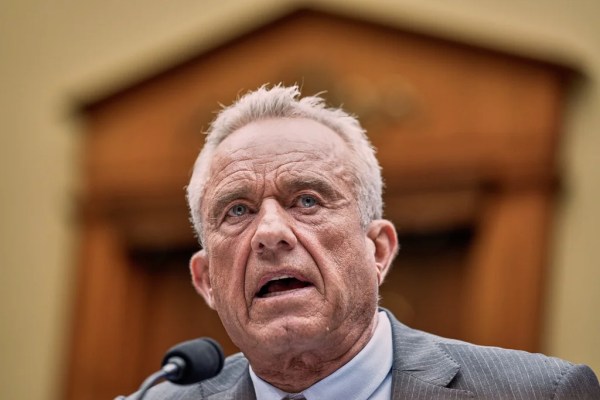
As HHS Secretary Robert F. Kennedy, Jr. has stated, “When Americans register as an organ donor, they make one of the most generous decisions imaginable … Every one of those donors, every one of those families, every patient waiting for that gift deserves complete confidence that our organ donation system is safe, ethical, and worthy of their trust.”

Because the fundamental rules governing authorization, consent, and the determination of death are matters of state law, the most lasting path forward is for other states to adopt similar reforms. Federal oversight of organ procurement organizations can and should reinforce state-level protections. Louisiana has provided a workable model that strengthens protections in the organ transplant system. Other states should follow it.

Thomas A. Pressly IV is the Louisiana state senator who authored the legislation that became Act 511. The measure received bipartisan support in both the House and Senate before being signed into law by Gov. Jeff Landry. Frederick J. White III, MD, is a cardiologist in Shreveport and former chairman of the institutional ethics committee for a large hospital system. He is a certified healthcare ethics consultant.