

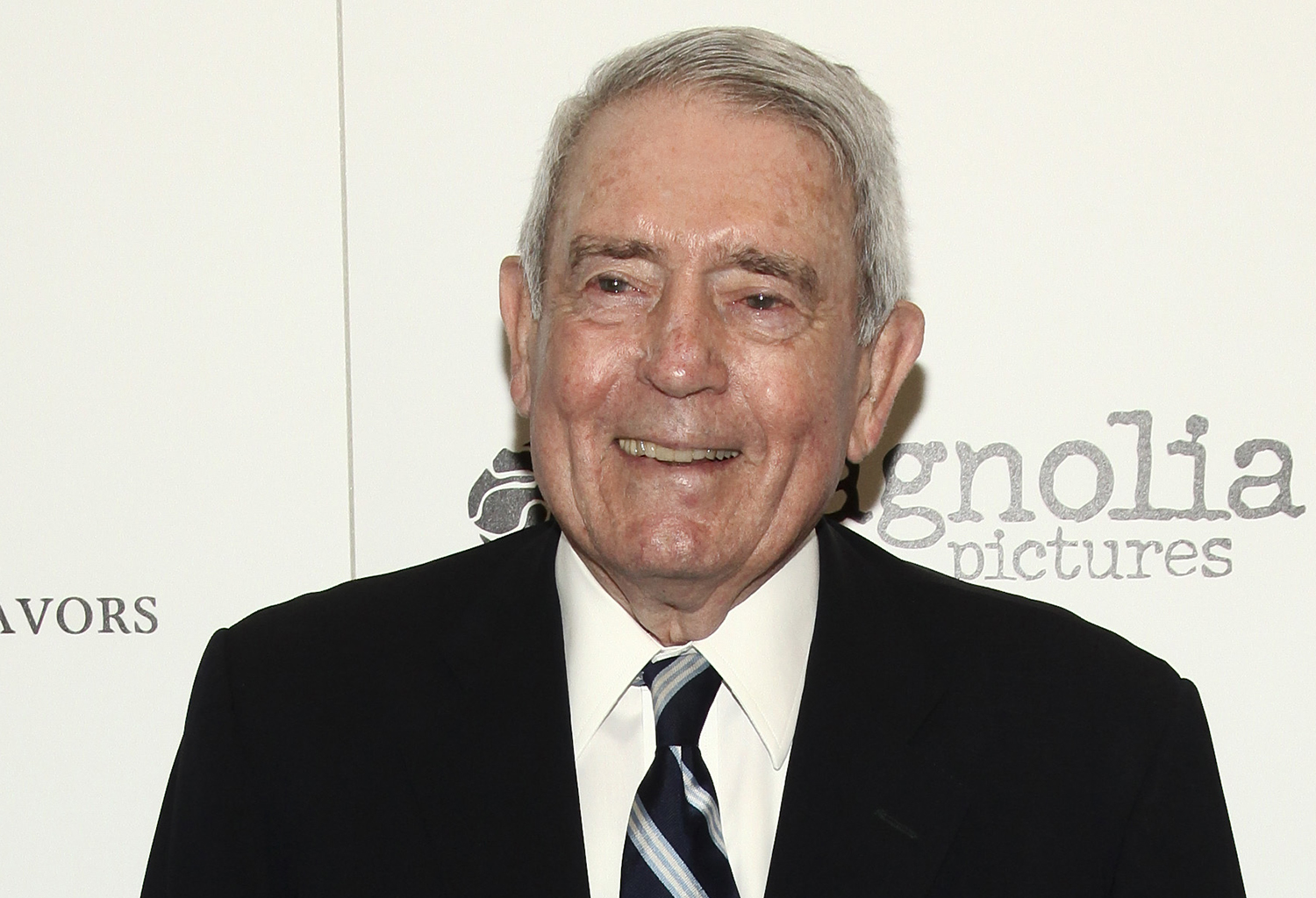
Dan Rather is drawing praise this week because he criticized the Wall Street Journal’s editor-in-chief for saying reporters shouldn’t use the word “lie” to describe inaccurate claims made by President-elect Trump.
As the unrepentant perpetrator of one of the biggest media disasters of the 21st century, Rather is an interesting person to exalt as an authority on journalism standards and ethics.
Recommended Stories


The Wall Street Journal’s Gerard Baker claimed this weekend that “lie” is far too loaded a word, and suggested straight news reporters avoid using it to describe falsehoods and fabrications.
“I’d be careful about using the word, ‘lie.'” Baker said Sunday on “Meet the Press.” “‘Lie’ implies much more than just saying something that’s false. It implies a deliberate intent to mislead.”
“I think if you start ascribing a moral intent, as it were, to someone by saying that they’ve lied, I think you run the risk that you look like you are, like you’re not being objective,” he added.
For Rather, this is an unacceptable line of reasoning.
“A lie, is a lie, is a lie. Journalism, as I was taught it, is a process of getting as close to some valid version of the truth as is humanly possible. And one of my definitions of news is information that the powerful don’t want you to know,” the former anchorman said in a Facebook post.
He added, “It is not the proper role of journalists to meet lies — especially from someone of Mr. Trump’s stature and power — by hiding behind semantics and euphemisms. Our role is to call it as we see it, based on solid reporting. When something is, in fact, a demonstrable lie, it is our responsibility to say so.”
First, Rather is wrong to say that it is the role of straight news reporters to use the word “lie” when covering a false claim or an outright fabrication.
As the Federalist’s Mollie Hemingway correctly argues, the word “lie” speaks too much to “motive [and] intention in a way that requires mind-reading.”
Measuring statements against facts is something reporters can often do. Determining whether the speaker believed what he was saying — that’s usually impossible to do.
Secondly, and this isn’t so much of an ideological point as a personal one, it’s difficult to take Dan Rather seriously on the issue of ethics in journalism considering he is still defending his since-retracted report in 2004 alleging George W. Bush had gone “AWOL” for much of his tenure in the National Guard.
The disputed CBS report was based entirely on documents that were shown later to be almost certainly fraudulent. CBS eventually pulled the story, and admitted it had failed to vet the National Guard documents. Rather and his producer apologized for the story, and they resigned later in disgrace.
But even with the apology and resignation, the former anchorman has stubbornly maintained all these years that the story was mostly correct, and that the likely forged documents were just a small detail.
“One supporting pillar of the story, albeit an important one, one supporting pillar was brought into question. To this day no one has proven whether it was what it purported to be or not,” Rather said in an interview in 2005.
He added, “I stuck by the story because I believed in it.”
Pressed to clarify his position on the disputed report, Rather said, “The story is accurate.”
Rather defended his reporting again in 2015 after the release of “Truth,” a glossy film that, unsurprisingly, favored his version of events.
“We reported a true story. And there has never been any doubt the story was true,” he said at the time, adding, “Because it was true, those who wanted to attack it had to find the weakest point, and they attacked the [news-making] process.”
Except that that “weakest point,” documents CBS said it couldn’t authenticate, was the centerpiece of the entire story. Several independent analysts have since deemed the supposed National Guard documents to be forgeries.
All of this is to say that after spearheading one of the most boneheaded media failures in the last 20 years, an unrepentant Rather doesn’t really have room to lecture others on journalism standards and practices.
But he tries anyway.
“We are being confronted by versions of what are claimed to be ‘the truth’ that resemble something spewed out by a fertilizer-spreader in a wind tunnel. And there is every indication that this will only continue in the Tweets and statements of the man who will now hold forth from behind the Great Seal of the President of the United States,” the former anchorman’s Facebook post concluded.
He added, “Some journalists and publications will rise to the occasion. Some will not. You as the paying, subscribing public, can use your leverage and pocketbooks to keep those who should be honest brokers of information, well, honest.”
