

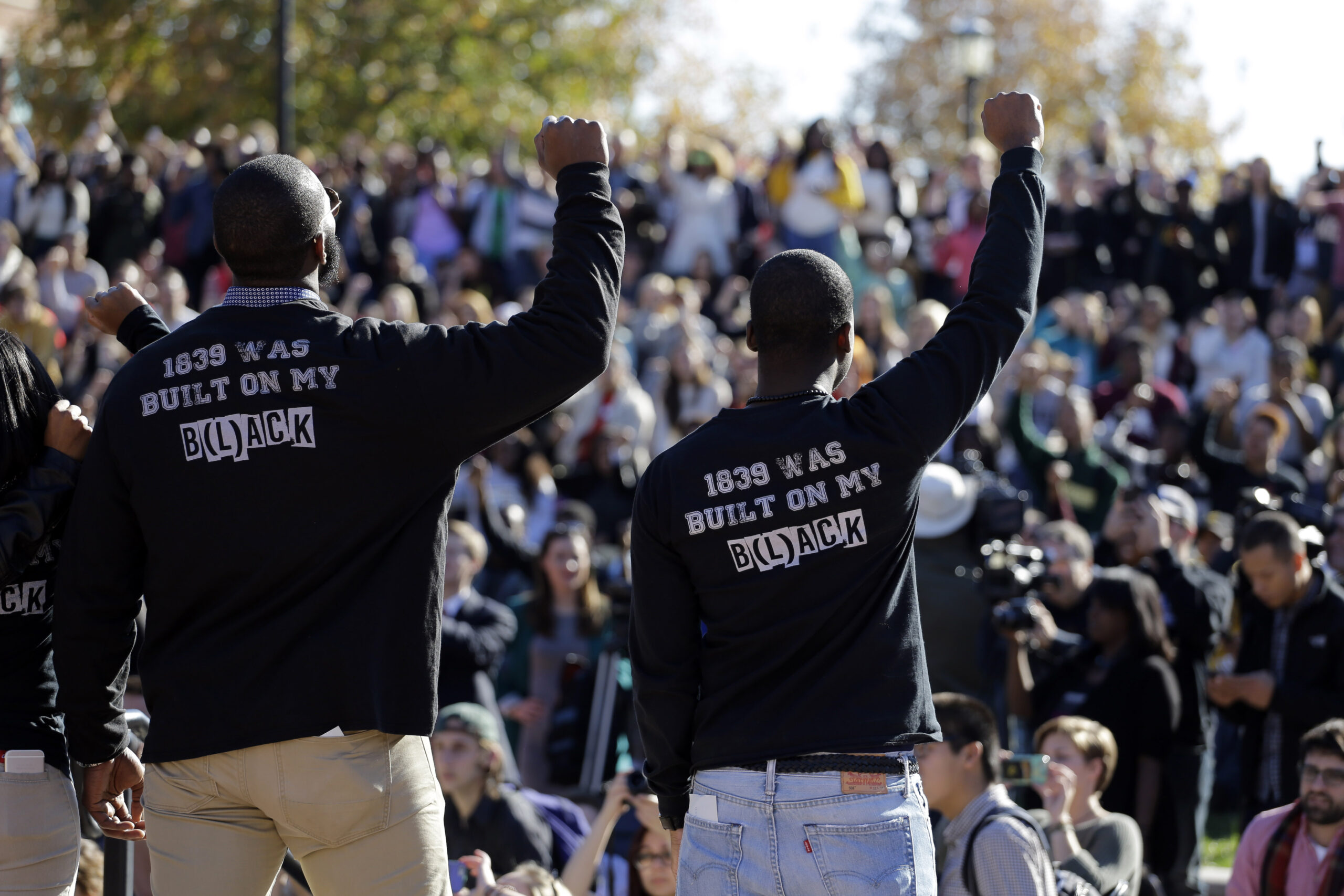
A Harvard Law professor who says his photo was covered with black tape as part of a recent incident has written an op-ed for the New York Times that brings a different perspective to the situation.
Rather than jump on the band wagon and cry racism, professor Randall Kennedy writes that the motive was unclear.
Recommended Stories


“Perhaps the defacer is part of the law school community. But maybe not. Perhaps the defacer is white. But maybe not. Perhaps the taping is meant to convey anti-black contempt or hatred for the African-American professors,” Kennedy wrote. “But maybe it was meant to protest the perceived marginalization of black professors, or was a hoax meant to look like a racial insult in order to provoke a crisis, or was a rebuke to those who have recently been taping over the law school’s seal, which memorializes a family of slaveholders from colonial times.”
Kennedy added: “Some observers, bristling with certainty, insist that the message conveyed by the taping of the photographs is obvious. To me it is puzzling.”
Even if it was a racist incident, Kennedy suggests “a need to calibrate carefully its significance.” Kennedy asks whether a single incident, or even a few incidents, of alleged racism constitutes a systemic problem, as some on the campus clearly do.
“They believe that the defacement is but an outcropping of shrouded, denied, but pervasive bigotry abetted by an unwillingness to redress subtle vestiges of historical racial injustice,” Kennedy wrote. “The aggrievement felt by substantial numbers of smart, knowledgeable and capable students is evident. Their accusations warrant close examination and may well justify further reforms.”
Kennedy warns the protesters that gains they may have made in bringing racism to the forefront of administrators’ minds could be squandered by “destructive tendencies.”
“I worry about two in particular. One involves exaggerating the scope of the racism that the activists oppose and fear,” Kennedy wrote. “The other involves minimizing their own strength and the victories that they and their forebears have already achieved.”
Kennedy wrote that he asked for specific examples of the racism that is allegedly so prevalent at Harvard. The responses he received included too few black professors and not enough emphasis on racial issues in certain classes. Others said their enrollment in the college had been questioned by white students as part of “Affirmative Action” or claimed they had been unduly hassled by campus police officers.
“While some of these complaints have a ring of validity, several are dubious,” Kennedy wrote. “A decision by a professor to focus on a seemingly dry, technical issue rather than a more accessible, volatile subject involving race might well reflect a justifiable pedagogical strategy. Opposition to racial affirmative action can stem from a wide range of sources other than prejudice.”
Kennedy also accused protesting students for indulging “in self-diminishment by displaying an excessive vulnerability to perceived and actual slights and insults.” Kennedy concludes by stating that “nurturing an inflated sense of victimization” hurts protesters in the long run.
