

“Never argue with a man who buys ink by the barrel.”
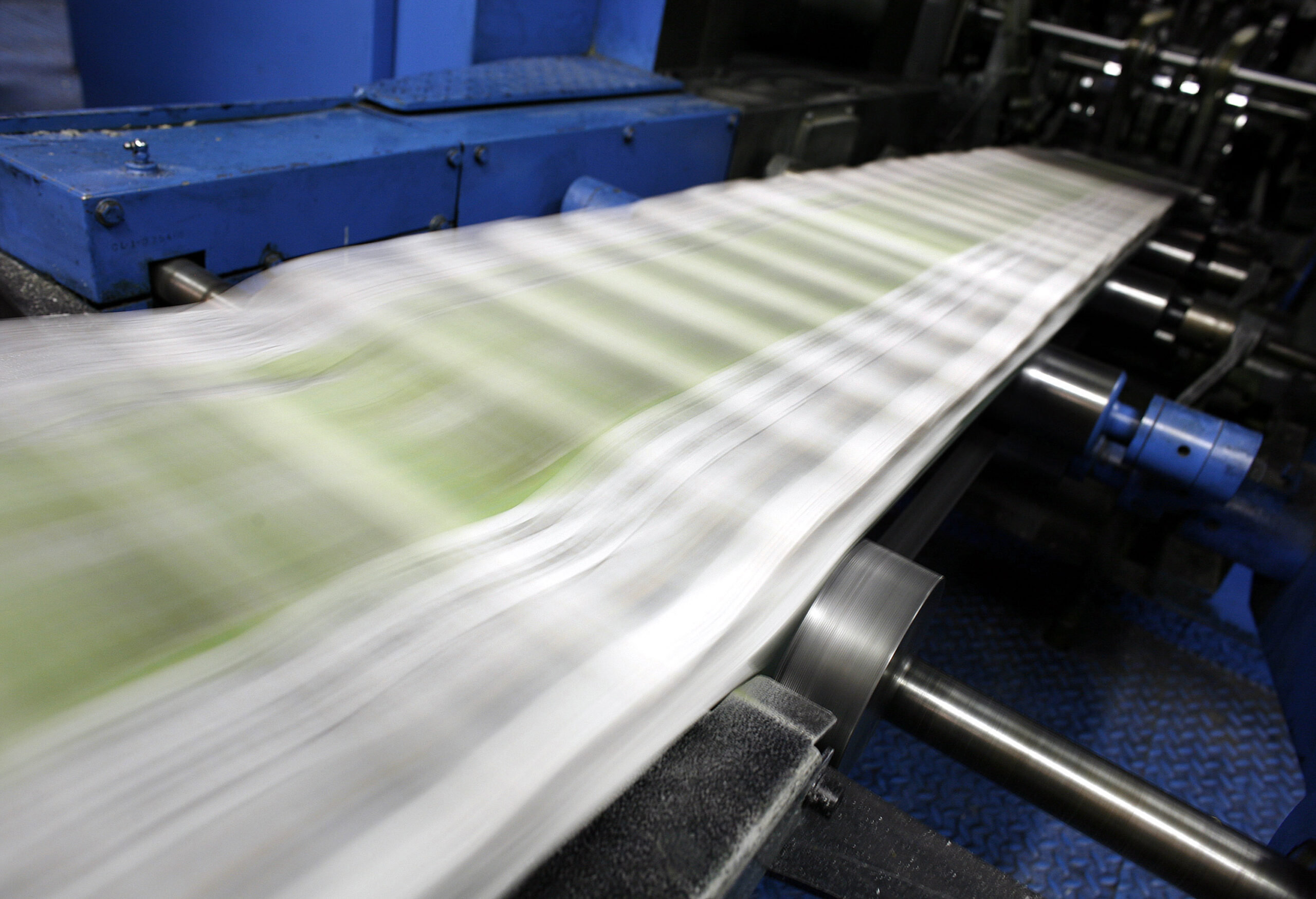
This saying, attributed to Mark Twain, came to mind today when I read an editorial in my local South Carolina newspaper taking issue with the Trump administration’s decision to impose tariffs on Canadian newsprint. According to the editor, the decision will impose heavy costs on newspapers around the country, and even endanger many jobs in an already layoff-prone industry.
Recommended Stories



The editor also pointed out that her newspaper had been an active Trump supporter. I note the use of the past tense, because there’s more to this story than an industry venting about unfair treatment.
To be effective, a tariff must impose costs on consumers who buy the newly taxed product. Otherwise, they would go right on purchasing foreign goods. This is just another way of saying that a tariff increases prices on sales within a protected industry, and beyond it as the effects filter into the rest of our economy.
The greater the burden imposed on consumers, the more valuable a tariff is for the industry that sought it. Viewed through the lens of “Public Choice” economics, higher-valued tariffs can more than make up for the lobbying costs that industries must pay in order to get them in place.
This point is particularly relevant in the case of Canadian newsprint. It seems that there is insufficient U.S. production capability to serve the needs of the U.S. newspaper industry. Newspapers must import paper, even when it becomes more expensive to do so.
But Public Choice economics also teaches us that wise politicians will only bestow favors on special interests when the costs are spread out among a vast number of unorganized consumers. It’s easier to bill 1,000 people an extra penny than to get 10 people to pay an extra buck without noticing.
Take, for example, the Trump tariff imposed on Canadian dairy products. The benefits of that tariff are concentrated across an identifiable, concentrated, and politically influential part of the U.S. dairy industry. But the costs are stretched thinly across a huge number of dairy product consumers who hardly notice that the prices they pay for milk or cheese are just a few pennies more expensive. Machiavelli would be proud.
This type of arrangement (concentrated benefits and dispersed costs) is key to a politically successful bout of protectionism that rewards highly organized producers at the expense of unorganized consumers. So, what happens when those costs aren’t quite as dispersed?
It’s one thing to impose tariffs on steel, aluminum, and solar panels, the combined costs of which are eventually spread out upon nearly every American consumer. But it’s a political mistake to place a tariff on newsprint when those who bear the cost are relatively small in number, are highly organized, and buy ink by the barrel.
Bruce Yandle is a contributor to the Washington Examiner’s Beltway Confidential blog. He is a distinguished adjunct fellow with the Mercatus Center at George Mason University and dean emeritus of the Clemson University College of Business & Behavioral Science. He developed the “Bootleggers and Baptists” political model.
