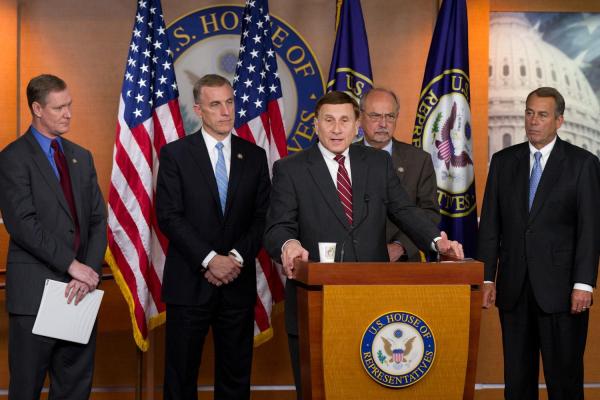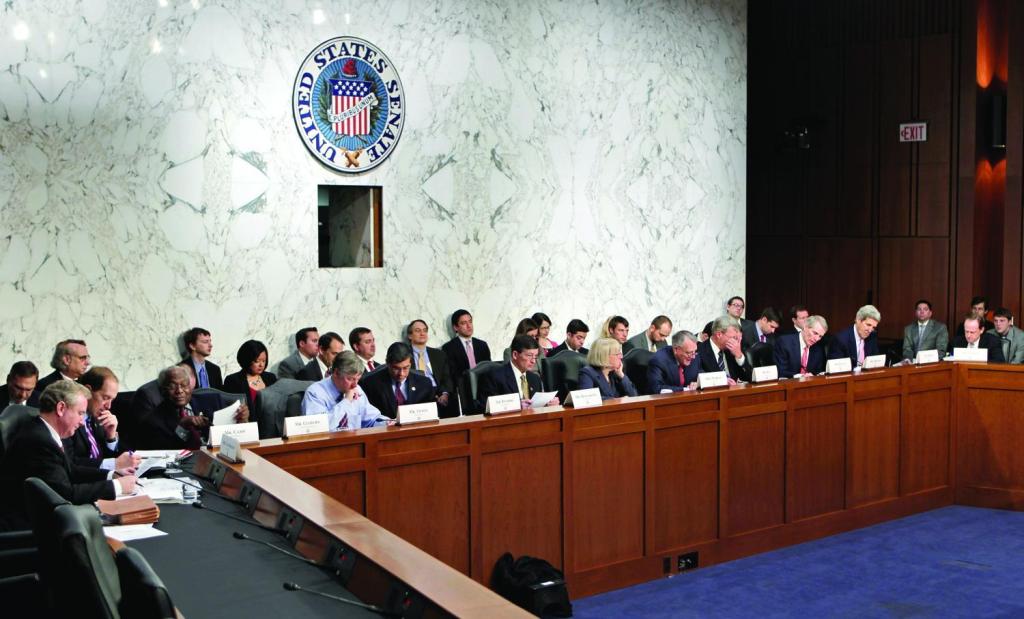
To no one’s surprise, members of the Joint Select Committee on Deficit Reduction, a.k.a. the Super Committee, announced yesterday that it had failed to agree on a $1.2 trillion debt reduction plan. As a result, no additional spending cuts or tax hikes will go into effect this year. True, there are $1.2 trillion in mandated spending sequestrations that will begin to take effect in 2012, but these are almost guaranteed to be repealed by a future Congress. That being the case, it’s difficult not to view the whole super-committee process as a charade intended only to make it appear that Washington was “doing something” to control federal spending, and in the process protect the jobs of incumbents of both political parties. Meanwhile, Republicans on the Super Committee were right to oppose the new taxes their Democratic counterparts demanded as part of any deal. Nobody outside of Washington believes any additional revenues generated by higher taxes would be used to reduce the national debt. Every time in the recent past when conservatives agreed to such deals, taxes went up, but spending and debt never went down. In 1982, for example, President Reagan agreed to three dollars in spending cuts for every dollar in tax hikes in 1982, but spending rose from $745 billion that year to over $1.06 trillion when Reagan left office. Years later, Reagan famously quipped, “I’m still waiting for those three dollars of spending cuts I was promised from Congress.”
The reality is that Washington spends too much, not that it taxes the people too little. Raising taxes on “the rich” won’t fix this problem. Even if the Bush tax cuts are allowed to expire, tax revenues as a percentage of gross domestic product would reach 21 percent by 2021, far above the historical 18 percent average. But spending is predicted to reach 26.4 percent of GDP that same year, according to the Congressional Budget Office. Higher taxes mean only one thing — more government spending.