

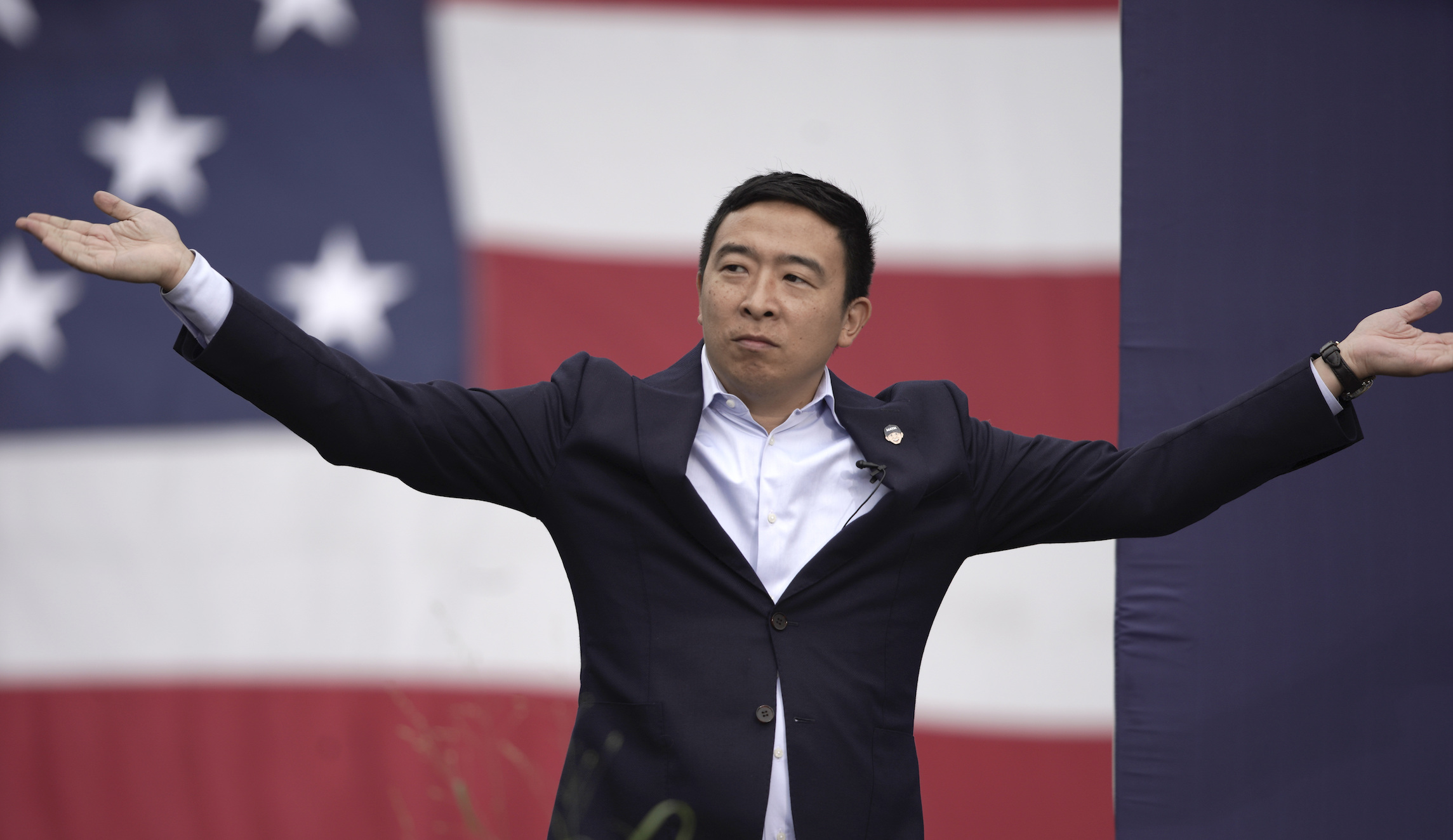
Based on the Democratic National Committee’s latest announcement, it seems that Andrew Yang will once again be locked out of the next presidential debate.
Despite polling in sixth place nationally at nearly 4%, Yang failed to make the January debate because of a critical dearth of DNC-approved polling. Thanks to impeachment, pollsters have focused on national polling at the expense of early state polling, and they published fewer polls overall thanks to the normal lull of the holiday season. Only a dozen polls qualify so far for the Feb. 7 debate just before the crucial New Hampshire primary, and just two and a half weeks remain before the deadline.
Recommended Stories


The DNC offers two paths to make the next debate stage: either acquire at least one delegate from the Iowa caucuses or meet the polling and donor threshold. Yang has already gotten the donor count, and he has two of the four required polls at 5%. But Yang’s strongest early state is New Hampshire, not Iowa, where he is unlikely to earn a delegate. If polling remains anemic, it’s possible that Yang will remain off the stage while Amy Klobuchar and Tom Steyer make it on again, despite polling nationally at only 3% and 2.4%, respectively.
The debate stage also won’t include Michael Bloomberg, who has strategically ignored the debates and chosen not to raise any money. That may be fair on paper, but voters won’t get to hear the former New York mayor challenged on a debate stage, even as he buys himself what could prove to be an alarmingly viable candidacy. If Yang and Bloomberg both aren’t on the debate stage, that leaves voters without the option of hearing from candidates who comprise more than 10% of Democratic voters’ support collectively.
In the era of social media, debates have become increasingly irrelevant, so it’s possible that the ensuing fracas over debates in the past two election cycles is as unimportant as it was inevitable. But without Yang or even Bloomberg on the stage, it’s increasingly clear how broken the debate system has become.
