

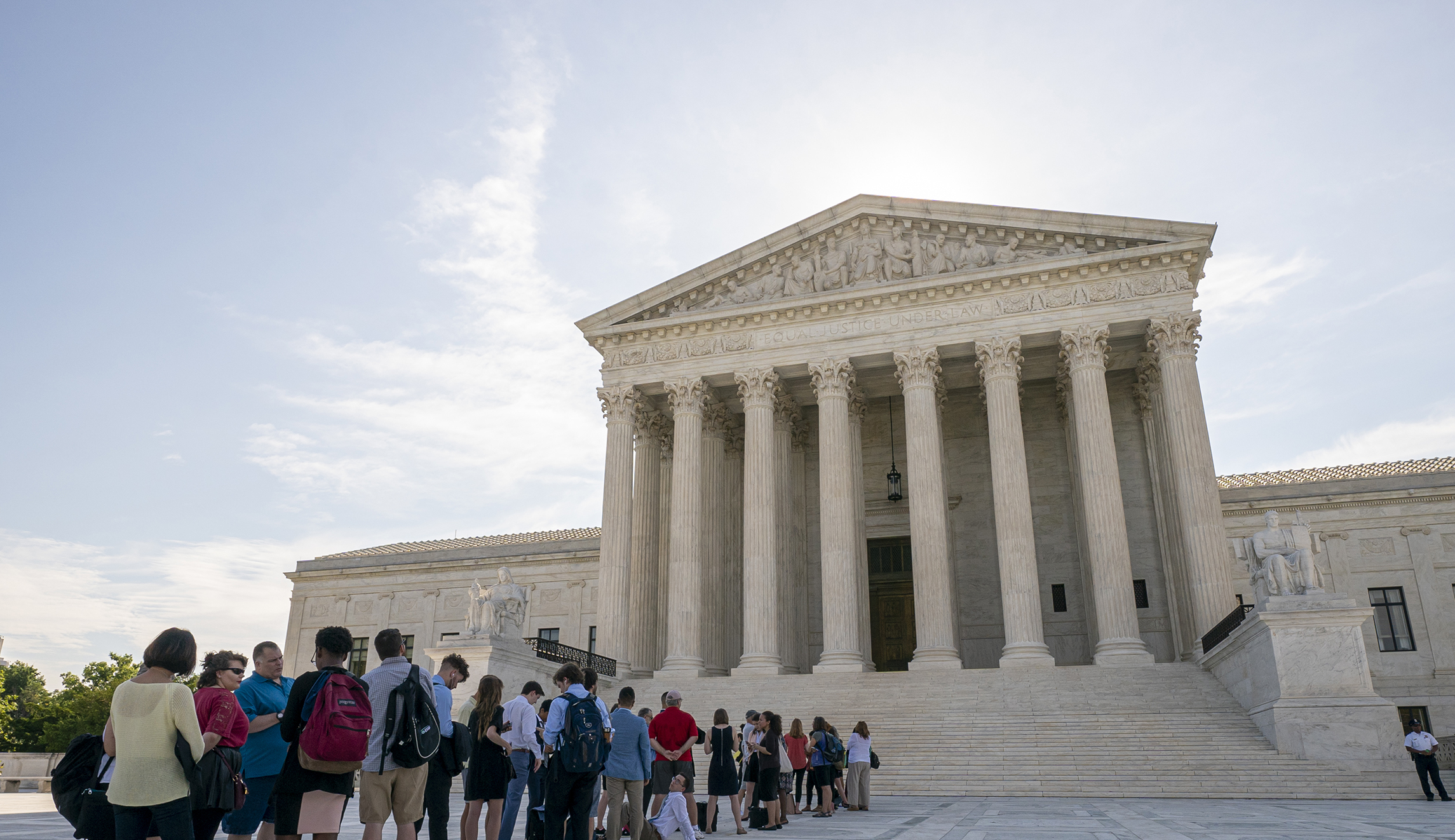
History provides a warning for partisans attempting to seize control of the Supreme Court. A Supreme Court seen as purely partisan may fracture the nation with its decisions rather than resolve issues.
The Dred Scott decision attempted to end national debates over slavery; three years later the national tragedy of the Civil War began. Seizing the court was ultimately a losing political move.
Recommended Stories


Today, we can see all too clearly the potential for both major parties to repeat this disastrous experience. If Republican efforts to replace Justice Ruth Bader Ginsburg are rammed through before the next president is inaugurated, millions of people will regard any sweeping edicts as no more legitimate than the Dred Scott decision. If Democrats respond to the Garland/Ginsburg “seat thefts” by expanding the size of the Supreme Court, millions of other people will regard any “packed court” decisions as fundamentally illegitimate. Either path leads to tragedy.
Worse, ongoing fights over the Supreme Court would inevitably block progress on multiple urgent issues. Our nation faces daunting challenges — the pandemic and its economic impacts, social order and racial justice, balancing the budget, climate change, great power threats, as well as terrorism, and so much more. The partisan wildfires touched off by further Supreme Court fights would inevitably suck oxygen away from other issues, leaving those festering ones unresolved.
There is a better solution — one that could break the bitter cycle of escalating partisan warfare over the Supreme Court. Former Vice President Joe Biden should offer to renounce and oppose any effort to expand the size of the Supreme Court if Republicans will agree to wait for the inauguration in January before confirming the next justice. This would concede and preserve Republicans’ 5-4 advantage in Supreme Court nominees, but leave the decision on Justice Ginsburg’s replacement to the voters. It would deescalate partisan Supreme Court fights.
Biden should further commit his party to further reforms, such as a constitutional bar against court-packing, to bring the court back toward the non-partisan body it should be — one whose decisions people of all groups accept as legitimate.
It is almost inconceivable that President Trump or Senate Republican Leader Mitch McConnell would agree to this compromise. So far, nothing has deterred them from pushing for total victory in the form of a successful confirmation of Trump’s nominee. They are not likely to stop now. But this compromise does not require Trump or Senator McConnell’s approval. It just requires that of four Republican senators — and two have already sent signals they might support such a compromise.
The dangers of a packed partisan court issuing new Dred Scott-style decisions on a divided nation (a “Republican” Court litigating the 2020 election or a packed “Democratic” Court approving sweeping gun restrictions) could be averted by such a “gang of four.” The heat would be turned back down again.
We need a solution that ultimately stabilizes rather than fractures the nation and sucks its oxygen into bitter partisan fires. There is a better way.
Patrick Condray, a retired Air Force Colonel, is a Ph.D. candidate in public policy at George Mason University.
