

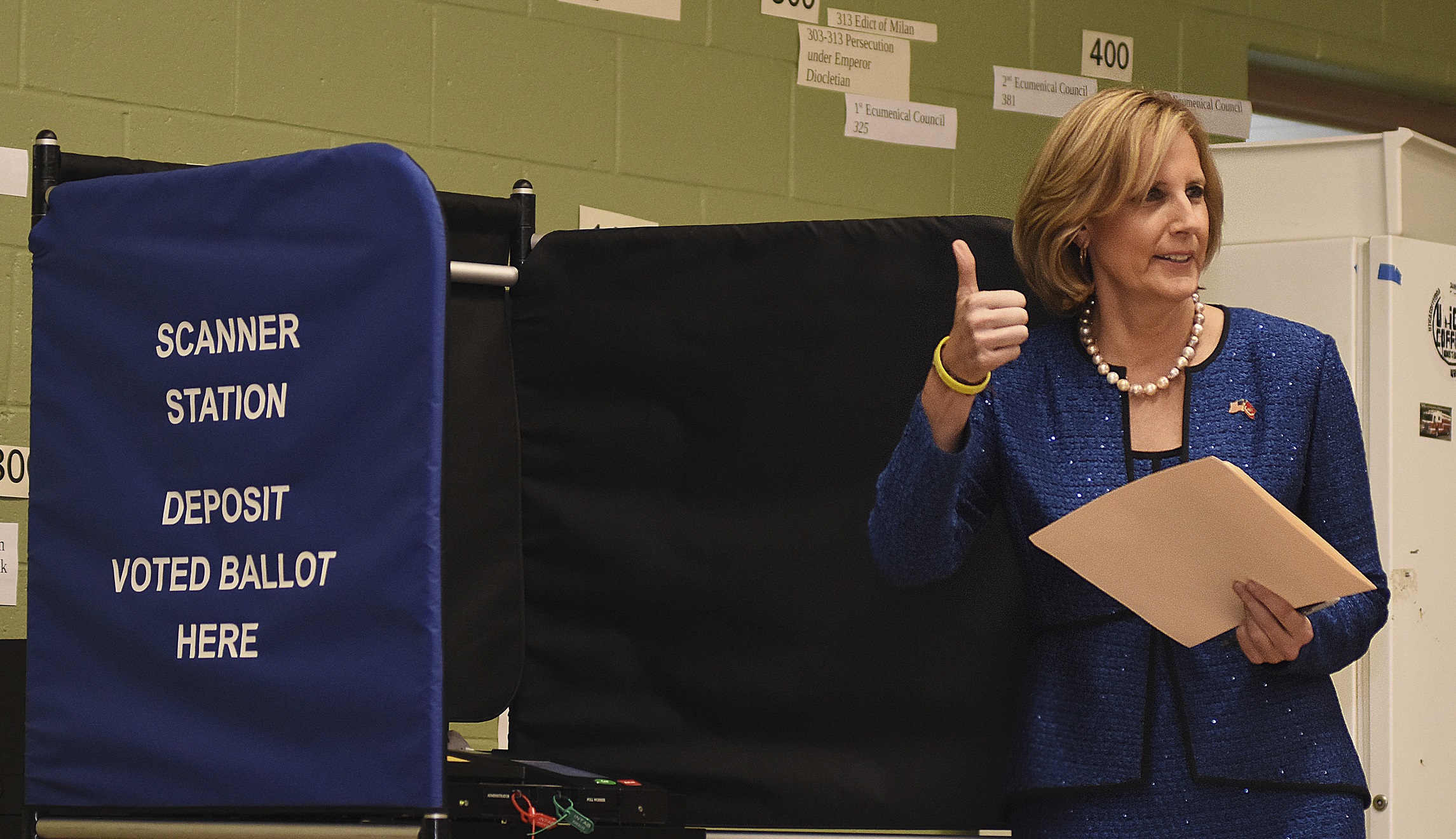
A judge trying to decide the results of a congressional race in New York said something Monday that could apply to all systems of widespread mail-in voting.
“We have a serious problem on our hands,” said Oswego County Supreme Court Justice Scott DelConte, who is ruling which ballots to admit or reject in the tight race between Republican former Rep. Claudia Tenney and current Democratic Rep. Anthony Brindisi.
Recommended Stories


Yes, he does have a serious problem, one entirely predictable when mail-in voting is prevalent.
Tenney was first elected to the seat from New York’s 22nd Congressional District, upstate, in 2016, but Brindisi ousted her in 2018 by a margin of less than 2%. After the initial, full count in this year’s rematch finally was completed, Tenney led by a mere 106 votes — but several thousand absentee ballots remained that had been disputed by one side or the other, many of them having been rejected as invalid by the bipartisan election board. DelConte ruled on Nov. 20 that he should directly examine each of the disputed ballots, and he began doing so on Monday.
That’s where the biggest problem, albeit only one of many problems, arose. It turns out that election commissioners in one of the district’s counties, Oneida, can’t say for sure whether some of the ballots DelConte is reexamining were included in the original count. In other words, even though the ballots were set aside due to anomalies, some of them may have been tallied already.
Well… Uh-oh!
Now, DelConte can’t know if he is invalidating ballots already counted, meaning they should be subtracted from the vote total, or validating ballots that were previously uncounted, meaning they should be added to the total. Or both. Or neither. Thus, aside from all the other controversies in this district’s ballot-counting, it’s not even clear what the result would be no matter how the judge rules on each question of law and of fact.
This comes on top of multiple other problems with New York’s system. For example, the New York state absentee ballot request portal was unsecured and required only basic publicly available info such as name, date of birth, and county. This could actually allow third parties, such as campaign workers, to request voters’ ballots without the voters’ consent or knowledge. Reports are plentiful of voters receiving such unsolicited ballots.
Worse, the portal allowed the “user” to change the destination address for the absentee ballot. So, someone could easily go to the portal using someone else’s name and date of birth and registered address within the district, then ask for an absentee ballot to be sent somewhere else, and then fill in the ballot and mail it in. Election officials would have no way to know if this scam happened, other than if the real person in whose name this was done tried to show up to vote in person after all.
In Madison County alone, 54 of these people actually did show up to vote, thus canceling out the absentee ballots mailed in their name. There’s no way to tell how many others were mailed in under false pretenses for people who never intended to vote at all.
Those examples barely scratch the surface of the anomalies, foul-ups, and human error, not to mention potential fraud that have polluted the district’s ballot-counting almost beyond repair.
Yet, this is what happens with widespread mail-in voting: Lacking the strict controls and direct observers of in-person, Election Day balloting, mail-in systems are an invitation to confusion or cheating.
New York’s 22nd Congressional District isn’t an outlier. Similar reports pop up across the country, with the main difference being that they come from districts where the result isn’t close enough to make a difference.
Still, it stands to reason that any time mail-in voting becomes the system of choice, we’re all going to find “a serious problem on our hands.”
