

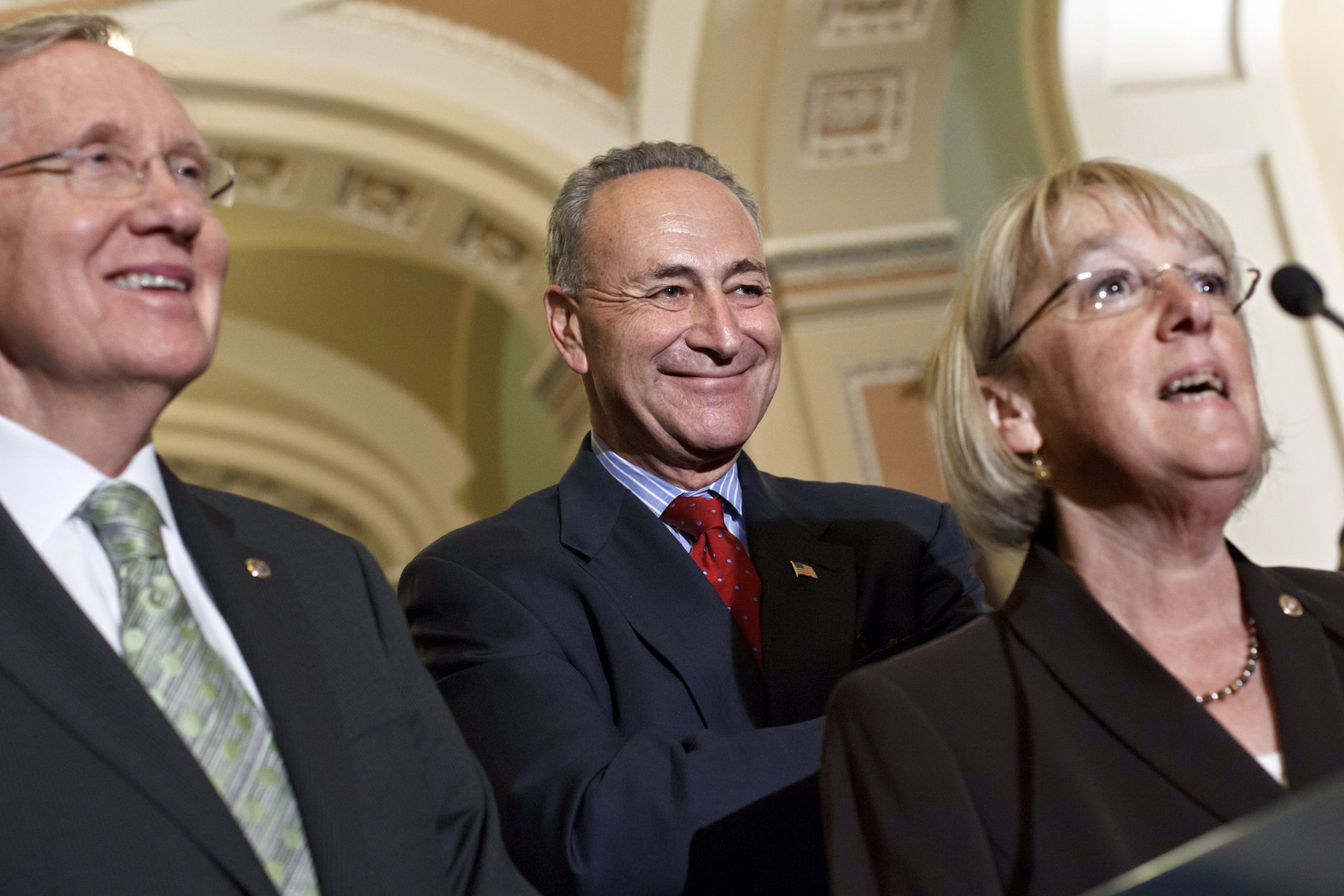
Democratic Senatorial Campaign Committee Chairwoman Sen. Patty Murray, D-Wash., told the Brookings Institution last month that whatever the economic consequences, her party plans to allow almost $500 billion in tax hikes to hit Americans in 2013 unless Republicans agree to raise taxes on the rich.
Everyone agrees that this tax hike, combined with a separate $100 billion spending cut from the sequester from last year’s budget deal, would be an economic disaster. According to the Congressional Budget Office, this “fiscal cliff,” due in January, would shave 3.9 points from the gross domestic product, raise the unemployment rate, and possibly send the American economy back into recession. But for Democrats, it’s worth it if it leads to higher taxes on the rich — even though the tax increase would cut the annual deficit by less than 10 percent, and perhaps less than that if the economy goes into a tailspin.
Recommended Stories


Former Democratic Michigan Gov. Jennifer Granholm has called the fiscal cliff “exciting to both actuaries and Democrats” and predicted “it could bring a cool blast of sweet relief.” And former Democratic National Committee Chairman Howard Dean said on MSNBC last week, “I think we ought to go over the fiscal cliff … You restore the Clinton tax rates which we are going to have to do because we have to pay more. We ought to do it.”
Democrats also believe they can successfully avoid political accountability for sending the U.S. economy into recession. Senate sources tell Talking Points Memo that Democrats believe “the economic consequences of tumbling over the fiscal cliff won’t really be felt until the election is over.”
But Senate Democrats, who have not passed a budget in over three years, seem to have forgotten that businesses, unlike the federal government, must plan ahead. The capital investments and hiring decisions that are made today are dependent on the federal tax rates and policies of tomorrow.
John Selldorff, an executive of global manufacturer Legrand, told the New York Times his company plans to “hold off on doing things that we might otherwise do if the environment were more stable.” “We’d love to hire more people, but we’re saying no,” he said.
Not that Republicans are doing enough to stop Taxmageddon either. Of the $493 billion in tax hikes scheduled to hit the U.S. economy in 2013, the most recent House Republican bill would only prevent $228 billion of them. That would leave more than half of Taxmageddon — $265 billion to be exact — in place. That is not good enough.
Mitt Romney should promise to stop all of Taxmageddon if he is elected president. That would offer American voters a clear choice this November: Democratic austerity and recession, or Republican tax cuts and economic growth.
