

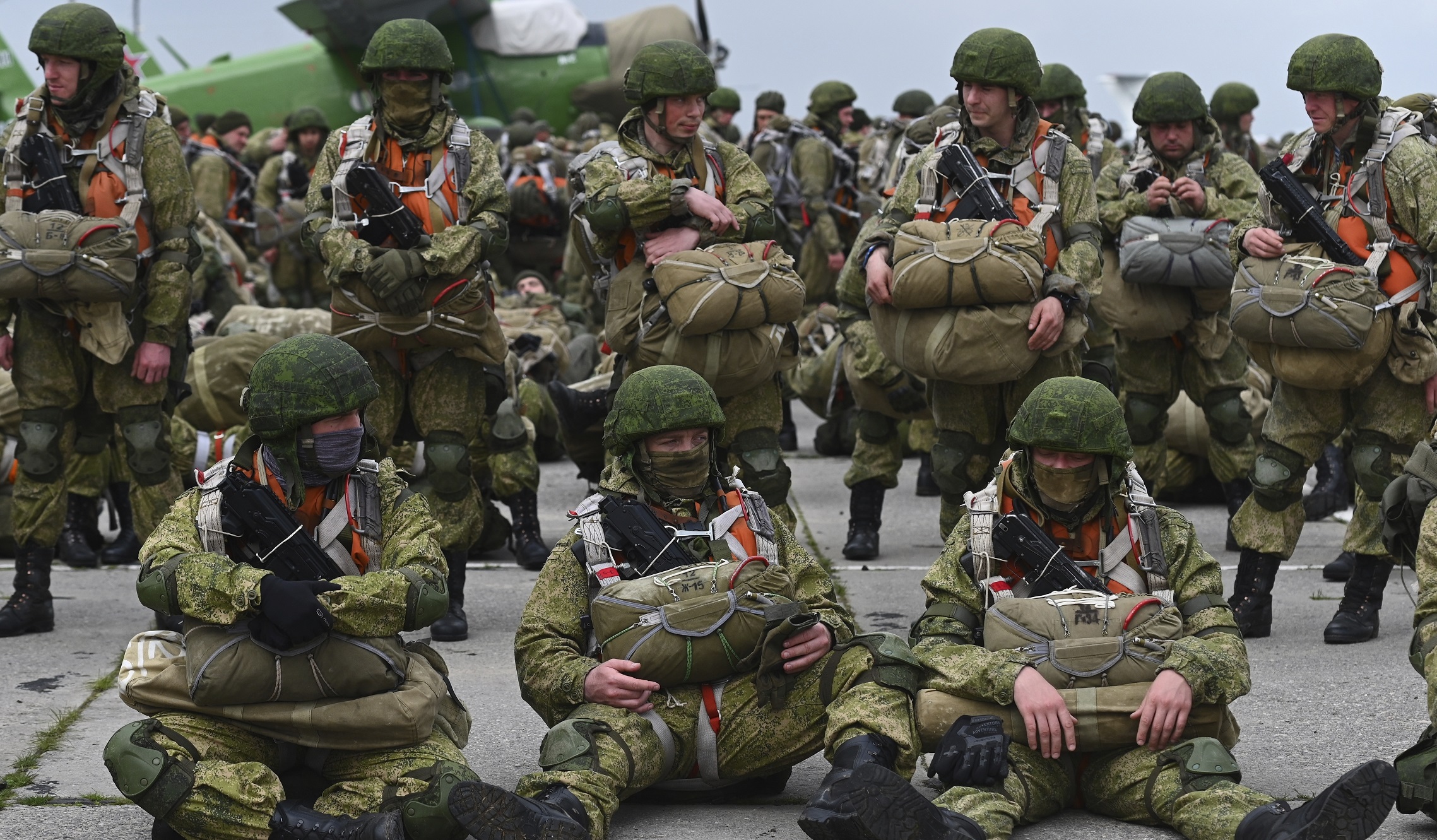
Much is being made of Russia’s announcement on Thursday that it is withdrawing its military forces from Ukraine’s border. But are those forces really heading back to their home bases?
Yes and no.
Recommended Stories


While the majority of ground forces appear to be preparing to depart, other elements remain in place. We will have to watch carefully, for example, to see if the helicopter and jet fighter squadrons deployed to Crimea stay or go.
Still, it’s already clear that some important units are staying put. Russian defense minister Sergey Shoygu, a close confidante of Russian President Vladimir Putin, noted that the “equipment and weapons of the 41st Combined Arms Army … should be located in field parks at the Pogonovo training ground in the Voronezh Region.”
This decision to keep the 41st Combined Arms Army in proximity to Ukraine is notable. After all, the 41st Army is one of the Russian army’s best formations. In 2018, it was given new electronic warfare equipment. Its subordinate 119th Missile Brigade has also been equipped with the advanced Iskander-M missile system. Locating the Iskander-M at Pogonovo training ground puts it within striking range of central Ukraine, including the city of Dnipro on the Dnieper river. The 41st Army’s 61st anti-aircraft brigade is also well armed. It possesses the most advanced variant of the Buk anti-air/missile air defense system, the M3. Notably, this is a variant of the same system that was used to bring down the MH-17 passenger airliner over southeastern Ukraine in July 2014.
The question follows: Why is Russia keeping these advanced capabilities, of which it has a limited number, so close to Ukraine?
Shoygu says it’s because the 41st Army’s equipment will be used in the Zapad military exercises later this year. I’m skeptical. Again, Pogonovo training ground is just 200 miles north of the rebel-held city of Luhansk and sits right on the M4 highway. That highway directly feeds access highways into southeastern Ukraine, meaning that it would take only about six hours for the equipment to reach the Ukrainian front lines. Moreover, the 41st Army is headquartered in Novosibirsk, 1,800 miles from Pogonovo. That’s a long distance to keep equipment separate from its command and force apparatus.
Top line: this directive offers Putin a way to get his ground forces home before their ill-discipline and poor morale become truly corrosive (it isn’t easy to be a Russian soldier). It also allows Moscow to save money on the logistics costs of an extended forward deployment. But the 41st Army’s equipment also gives Putin the means to increase his pressure on Ukraine should he so desire.
