

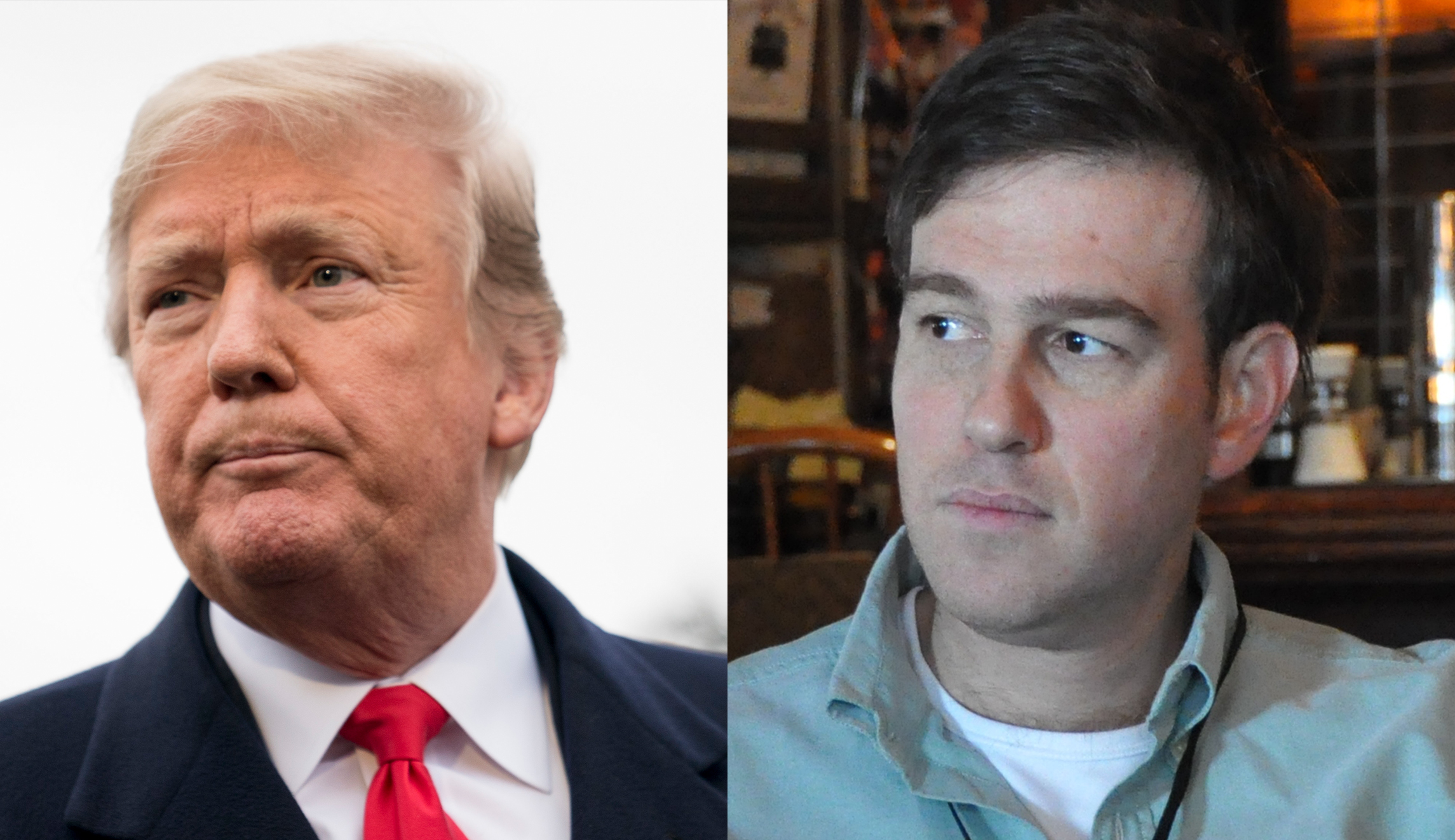
New York Times writer Bret Stephens’ antipathy for President Trump burns so hot that he, worryingly, devoted an entire column to explain why he thinks the president isn’t funny.
“In public, Trump has almost no humor, even when the moment calls for it,” he wrote on Friday, adding later, “It doesn’t seem to occur to him that the surest invitation to mockery is humorlessness.”
Recommended Stories


Stephens, whose cable news appearances aren’t exactly renowned for their flair and wit, must have never watched a Trump rally during the campaign.
Trump’s supporters are always laughing, and like all effective humor, when Trump tells a joke or ridicules a critic, it’s funny because he’s saying something everyone knows to be true.
Trump on Saturday again mocked Sen. Richard Blumenthal, D-Conn., for misrepresenting his military record. “Watched Da Nang Dick Blumenthal on television spewing facts almost as accurate as his bravery in Vietnam (which he never saw),” he said in a pair of tweets. “As the bullets whizzed by Da Nang Dicks head, as he was saving soldiers….left and right, he then woke up from his dream screaming that HE LIED. Next time I go to Vietnam I will ask ‘the Dick’ to travel with me!”
A Democrat friend of mine forwarded the tweets to me, saying they were among his “favorite tweets of all time.”
This is humor.
Stephens also mystifyingly suggested that Trump has no capacity for self-deprecation, writing that Trump’s attempts at humor “tend to be flattering to his self-image.”
The opposite is true: The reason why essentially all endeavors at mocking Trump on “Saturday Night Live” fall embarrassingly flat — Alec Baldwin’s impersonation is unbearable — is because he’s fully aware of how ridiculous his image can be.
At the annual Conservative Political Action Conference in February, Trump preceded his remarks on stage by joking about his comb-over.
Noting the over-sized photos of him adorning the auditorium, Trump said, “Look at that, I’d love to watch that guy speak.” He then turned his back to the audience and gestured to the incomprehensible mess of grey-blonde swoops and swipes on his head.
“Oh, I try like hell to hide that bald spot, folks,” he said to whoops of laughter. “I work hard at it. Doesn’t look bad. Hey, we’re hanging in.”
This is also humor.
After the famous Fox News debate in 2015, wherein Trump clashed with Megyn Kelly, NBC’s Chuck Todd asked Trump about insults he’s directed toward various women and their appearance.
“When I’m attacked, I fight back,” Trump said. “But I was attacked viciously by those women. Of course, it’s very hard for them to attack me on looks, because I’m so good looking.”
This, obviously, is humor.
The closest Stephens got to making a legitimate point was in his admission that maybe Trump does have a sense of humor, but, like Stephens’ taste in monochromatic suits, it may not be for everyone.
“[T]rump, I suspect, isn’t unfunny,” he wrote. “He’s anti-funny. Humor humanizes. It uncorks, unstuffs, informalizes. Used well, it puts people at ease. Trump’s method is the opposite: He wants people ill at ease. Doing so preserves his capacity to wound, his sense of superiority, his distance. Good jokes highlight the ridiculous. Trump’s jokes merely ridicule. They are caustics, not emollients.”
It really is true that the national media will find any reason to reassert their unlimited hatred for Trump. Stephens’ column is yet more proof.
It’s like the 2015 “B—h Eating Crackers” Internet meme that captured how once a person so intensely dislikes someone, everything that person does becomes annoying. “Once you hate someone, everything they do is offensive,” the meme said. “Look at this b—h eating those crackers like she owns the place.”
That’s how Stephens feels about Trump.
