

Donald Trump’s took up the subject of foreign policy Monday, in another attempt to add policy ballast to the listing ship that is his campaign. This is an urgent need for he is falling farther and farther behind Hillary Clinton in public opinion.
His speech contained oddities, such a promise that his vetting of refugees would be “extreme,” attributable to rough Trumpian use of language. What he meant is that he’d scrutinize refugees very carefully, which is a good thing, given that Islamic State has used refugee flows to infiltrate terrorists into enemy terretory.
Recommended Stories


One wishes, of course, that Trump would be more precise, but on foreign policy as on domestic policy he has simple but important things to say. He is right to make the point that President Obama’s foreign policy has been “not so hot for our world and our country.” He is right to put blame on the president for allowing the Islamic State to get out of control, the result of his cynical, over-hasty pullout of America’s military presence in Iraq, and his consistent underestimation of the Islamic State threat.
It was also appropriate for Trump to question the wisdom of the original invasion of Iraq, arguably the spark that set the Middle East ablaze at a terrible cost in lives, thousands of them American. Trump misrepresents his own opposition to that war, and he wants to have it both ways when he says both that the U.S. should not have invaded and that it should have seized Iraq’s oil. Still, Trump’s position on Iraq reflects current concerns of many voters.
He is obviously also right about Libya, and the disaster that Obama, urged on by Secretary Hillary Clinton, brought to that country with their military intervention. He is right that American spycraft has withered, and we are now too dependent on drone strikes to accomplish sloppily what better knowledge could accomplish more effectively.
He is right that the assimilation of immigrants “will produce the best outcomes” both for those immigrants and for the nation itself. He is right, at least in principle, that aspiring immigrants openly hostile toward the U.S. and its constitutional system should be barred in favor of those who embrace it.
So far, so good.
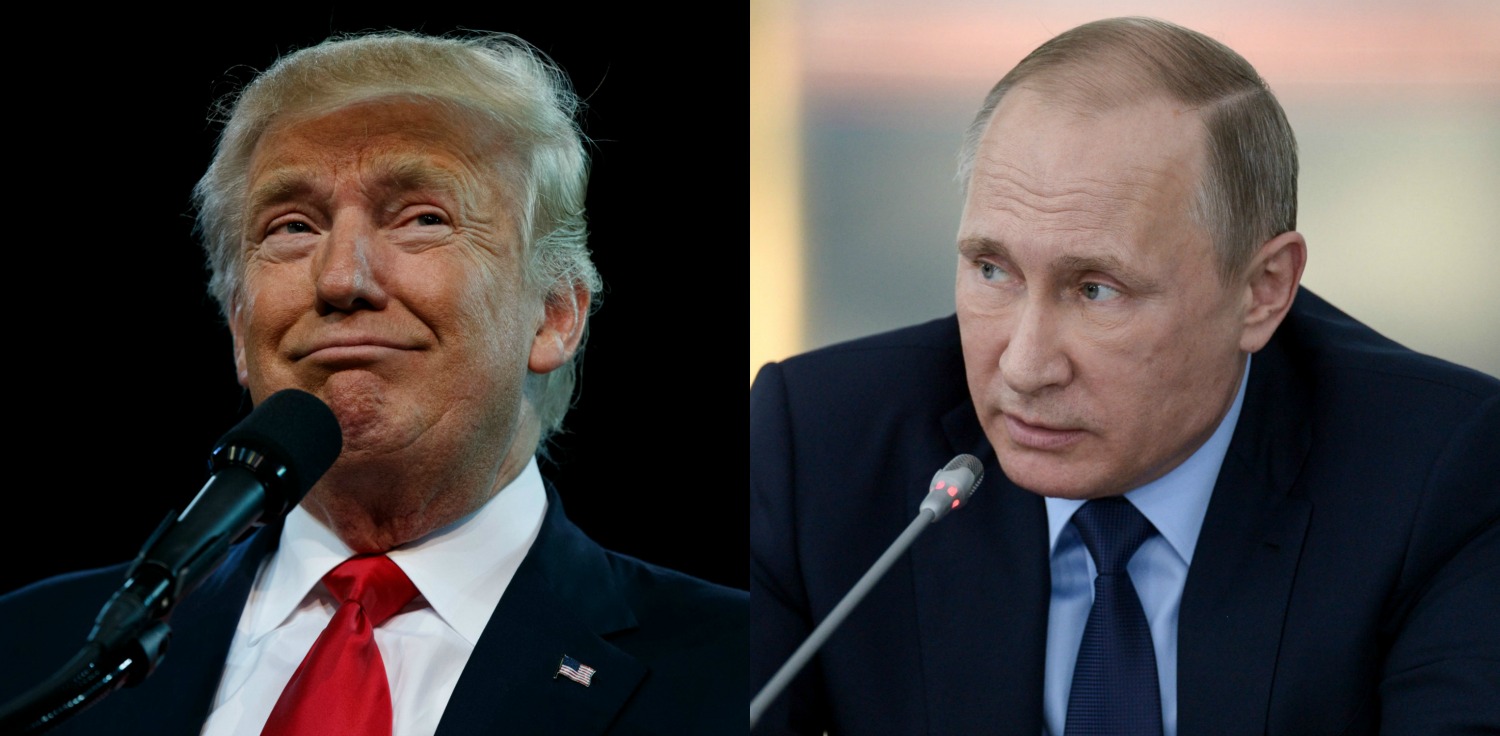
But there is one major area where Trump’s foreign policy view raises serious concern, and that is on Russia. When he calls for “common ground with Russia in the fight against ISIS,” he ignores the realities of brutal Russian self-interest in Syria. President Putin has been spectacularly unhelpful in eradicating the Islamic State, as he seeks to prop up his puppet, Presdient Assad. It is incongruous for Trump to promise a human rights crackdown against Arab nations that execute gay people, while at the same time praising and promising cooperation with a leader who assassinates journalists and political enemies.
Realities may require co-operation with Russia, and Obama has tried and failed already. But it is troubling that Putin, potentially a more dangerous enemy than Islamic State or Iran, occupies such a privileged place in Trump’s worldview.
The candidate’s comments follow the mysterious disappearance from the GOP platform of language about helping Ukrainians, in accordance with treaty obligations, to resist Russian aggression. They are disturbingly in line with Trump’s many other strange expressions of admiration for Putin. This is not a frivolous concern about his tongue-in-cheek suggestion that Russia help find Clinton’s missing emails. It’s is deeper than that.
A New York Times report Monday adduced evidence that Trump campaign chairman Paul Manafort was secretly paid $12.7 million in cash by Ukraine’s former pro-Putin president, who was ousted in 2014. Other news outlets have reported that Trump’s poor creditworthiness, based on his business bankruptcies, forced him to go to Russian investors for financing. This ties him to Russian money, even if as he claims he has no business interests in Russia itself.
Trump is not the only candidate too cozy with Putin, as we’ve noted before. Hillary Clinton, through her husband’s well-timed speaking fees, was pocketing Putin’s money (at least half a million dollars from a Kremlin-connected bank) even when she was still serving as secretary of State. The growth of Russian influence during Clinton’s term as secretary of State is Exhibit A of her incompetence, which was so encapsulated by the embarrassment of her “reset” of relations followed up by Putin’s aggressions against Ukraine, Estonia, and all Eastern Europe.
Still, however, Trump’s obeisance to Putin is a worrying counter to Clinton’s bungling. Even if Trump is correct in many of his criticisms of Clinton and of the Obama administration’s foreign policy, he needs to give some straight answers about his own motivations.
