

If you were ever a kid, you may have had the same unsettling experience I had once of seeing your teacher outside of a school setting. Maybe she was having dinner at the same burger joint or shopping at the same supermarket. It was shocking to learn teachers existed outside of school and that they were actual humans with full lives.
The error underlying that shock — I see my teachers only in school, and therefore I believe they do not exist outside of school — may seem like a laughable fallacy for only juvenile minds, but that very error underlies much COVID policymaking and commentary.
Recommended Stories


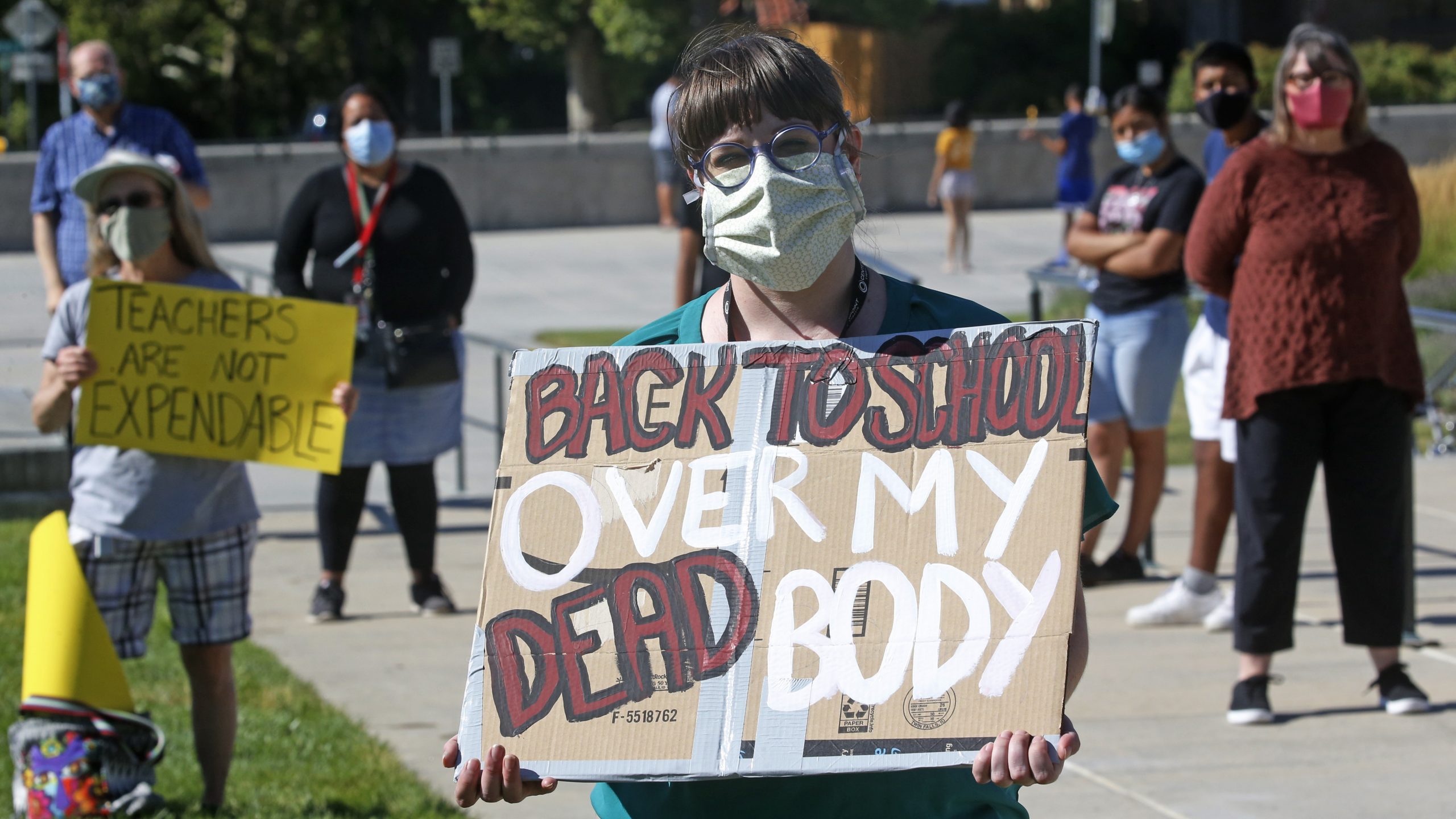
The rush to close schools again in the name of stopping the spread of COVID seems to be based on the belief that if school children and teachers aren’t in school, then they don’t exist. But children and teachers who aren’t in school do exist, and they do engage in activities that spread COVID. So, when you close schools, you are stopping COVID spread in schools, but you may actually be increasing the overall spread of COVID.
Washington, D.C., public schools, even before today’s snow day, had delayed school reopening by two days because of COVID. Neighboring Prince George’s County, Maryland, has two weeks of “remote learning” planned. Teachers unions in municipalities all over the country were pushing for Zoom instead of school for at least the first half of January.
Consider this point from a Twitter user in New Jersey.
So schools aren’t opening bc of staffing shortages bc too many teachers tested +. Which means they got infected over winter break when schools were CLOSED.
Yet everyone thinks schools are the dangerous places for spreading covid. ?
— Anna Markh (@NJPMRdoc) January 3, 2022
That is, maybe school closures are necessary because of staff shortages, but a staff shortage caused by a bunch of COVID cases over Christmas break shows us that being out of school certainly doesn’t stop the spread of COVID.
Recall 16 months ago, when a teachers union and the media started keeping track of teacher COVID deaths in order to stoke fear about a return to the classroom resulting in a wave of teacher deaths.
Teachers in at least five states have died with coronavirus since fall semester started https://t.co/rFKvV7tF3H pic.twitter.com/q2PPpqVwvc
— The Hill (@thehill) September 11, 2020
What the stories had in common was that every single teacher who died of COVID in the fall had caught the virus over summer vacation. The National Education Association, to much fanfare, launched a database of teacher deaths. They quietly closed it later that fall.
In fall 2020, we noticed that local public-school teachers (who were all out of the classroom) were getting COVID more than the in-person teachers in those nonpublic schools that had opened. By spring 2021, the numbers were in, and it turned out that children in remote learning had gotten COVID at 3 times the rate of children enjoying in-person learning.
How could that be? Again, students don’t cease existing when school is closed. Teachers do not remain hermetically sealed in some classroom closet when school is out. People are people, and they do things. It’s entirely possible that school is far safer COVID-wise than its alternative because classrooms are organized for social distancing.
Keeping schools closed this week and next may increase family travel in this time and increase the amount of time children spend playing video games in a friend’s basement whose ventilation is likely inferior to that of a classroom.
Closing schools during this winter/omicron wave will make sure nobody gets COVID in school. Instead, they’ll get it outside of school.
