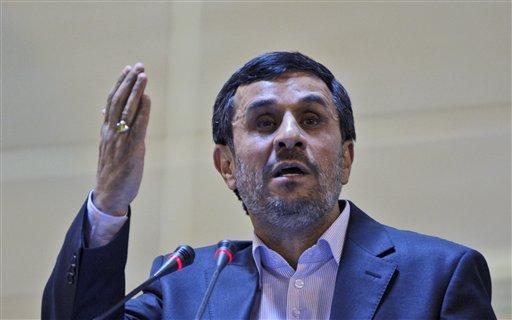
When President Obama addressed the United Nations on Sept. 21, he knew he would be followed on the dais the next day by Iran’s madman president, Mahmoud Ahmadinejad. Obama also knew from a secret federal investigation that Ahmadinejad was at that very moment financially backing a plot with a Mexican drug cartel to explode a bomb in a Washington restaurant to kill Adel al-Jubeir, Saudi Arabia’s ambassador to this country. Al-Jubeir’s murder would be followed by bomb attacks on the Saudi and Israeli embassies here. Had the plot succeeded, as many as 100 innocent Americans would also have been murdered as they ate their last meals. Manssor Arbabsiar, the 56-year-old naturalized American citizen from Iran who led the plot, told a U.S. informant posing as a co-conspirator, that it was “no problem” and “no big deal” to kill these innocents, some of whom would likely have been children. Even so, Obama’s speech to the United Nations — which included a comprehensive survey of developments across the Middle East during the past year — hardly mentioned Iran. Neither of his two brief references cited the fact that Iran has long been identified by the U.S. State Department as the world’s leading state sponsor of terrorism. But that should not have come as a surprise to anybody who has followed the administration’s foreign policy: The latest Obama National Strategy for Counter-Terrorism was made public in June and mentioned Iran only once in its 19 pages.
Note, too, that these developments come hard on the heels of the Iranian navy’s blatant statement a few weeks ago that it plans to station military ships off the U.S. coast, which would be a dangerously provocative act that could trigger a military clash. Obama said nothing, leaving it to the Pentagon to observe blandly that Iran can send its ships into international waters but may not have the logistical capability to support such action.