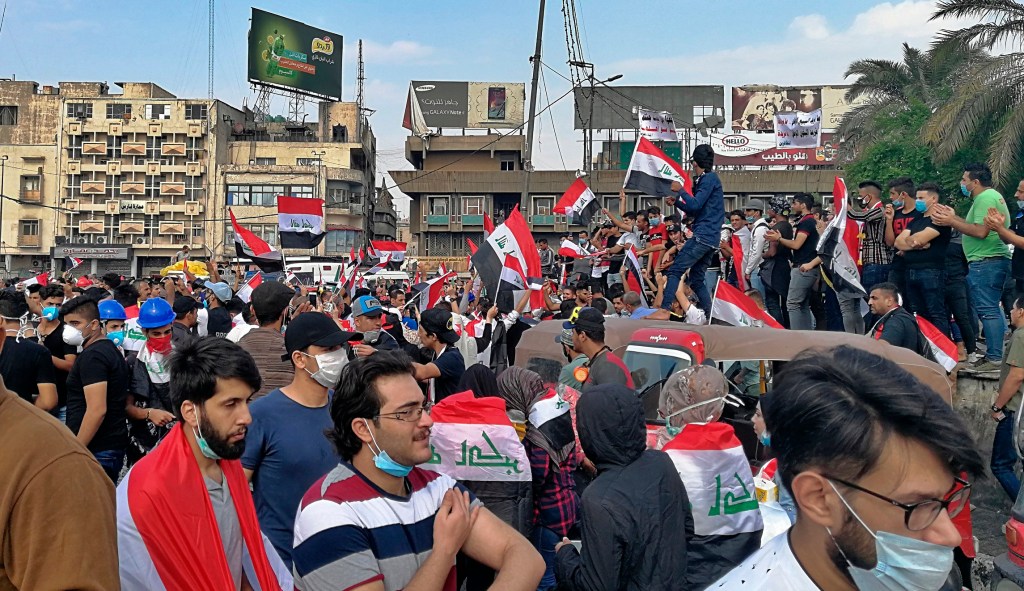
Violence continues in Iraq as forces loyal to Iranian-backed militias fire on peaceful protesters. Details are sketchy, but security forces killed more than a dozen protesters in Karbala and, according to some reports, far more. Such violence was likely not an accident, but rather revenge for protesters having last week publicly criticized Iranian Supreme Leader Ali Khamenei and Islamic Revolutionary Guard Corps’ Qods Force chief Qassem Soleimani.
The brutality of Badr Corps and Asa’ib Ahl-e al-Haq militiamen and snipers against unarmed protesters on behalf of Prime Minister Abel Abdul-Mahdi has two purposes: First, it replays the strategy embraced by Bashar Assad at the beginning of the Syrian civil war eight and a half years ago: the futile hope that overwhelming violence and brutality will convince ordinary citizens to stay home. Second, it is meant to protect Iranian influence in the palace. Abel Abdul-Mahdi has historically been both weak and a political chameleon. He has, at various times, been a communist, Islamist, and democrat. At the time of his appointment to the premiership, he had resigned from the Islamic Supreme Council of Iraq and claimed to be a technocrat. A visit shortly after to Islamic Supreme Council of Iraq leader Shaikh Humam Hamoudi, however, both belied Abdul-Mahdi’s supposed political independence and also highlighted Iranian influence.