

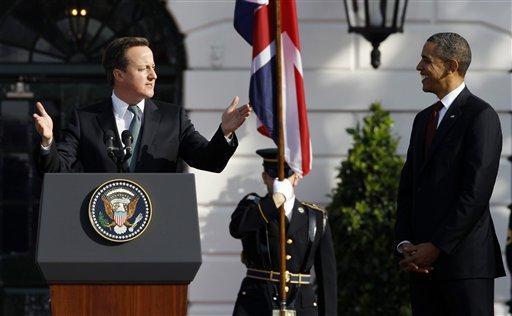
British Finance Minister George Osborne understands a paradox in tax policy that President Ronald Reagan grasped decades ago, but eludes the Democrats now crafting President Obama’s agenda of tax hikes and spending increases.
Recommended Stories


To be sure, Osborne’s attempt to cut taxes on the wealthy was met with derision from the British Left. “After today’s budget, millions will be paying more while millionaires pay less,” said a leader of the British opposition party in Parliament in response to Osborne. This reaction was not unlike the one offered by White House Press Secretary Jay Carney to the budget drafted by Rep. Paul Ryan, R-Wis. Carney called it “essentially a shift of money from the middle class….to the wealthiest Americans.”
But Osborne’s tax cut is actually an attempt to increase tax revenue and get the wealthy to pay more. He told Parliament this week that Britain’s 50 percent tax rate had backfired — it was driving wealthy people and their accountants to find ways to avoid paying the taxes. “[The 50 percent rate] raises, at most, a fraction of what we were told, and may raise nothing at all,” he said.
Reagan explained this phenomenon in 1985. “Every time in the past when a government began taxing at a certain level among people’s earnings, trust in government began to erode,” he said, paraphrasing a historian. “It would begin with efforts to avoid paying the full tax. This would become outright cheating, and eventually a distrust and contempt of government itself until there would be a breakdown in law and order.”
Maryland recently discovered how tax hikes on the rich can backfire. When the state raised taxes on millionaires in 2008, millionaires ended up paying 22 percent less in state taxes. Why? The Wall Street Journal reported that the number of millionaire filers in Maryland fell by 30 percent, with more than one-third of those changing residency to other states. An independent study found that a billion dollars of Maryland’s tax base simply moved elsewhere.
President Obama has spent months constructing his fiscal policy — and campaign platform — around a tax increase on millionaires that he says will help ensure “fairness” in the tax code. Obama wants a 30 percent minimum tax rate for individuals making $500,000 or more and couples making $1 million combined.
The congressional Joint Committee on Taxation released a study last week reporting that Obama’s tax principle, known as the Buffett Rule, would at best raise $47 billion over the next 11 years. That’s enough money to fund the federal government for about a week, in exchange for untold damage to job creation by small businesses that pay taxes at the individual rate.
Obama will never embrace anything like the Ryan budget, but he could at least take a cue from the British and start behaving in a serious manner on tax policy. It is time to put sound tax policy ahead of populist ideological gimmicks like the Buffett Rule.
