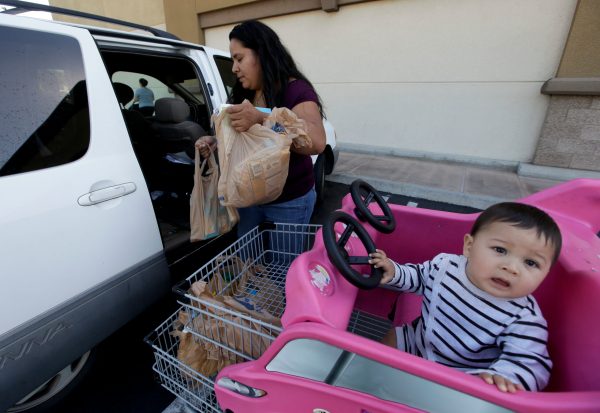
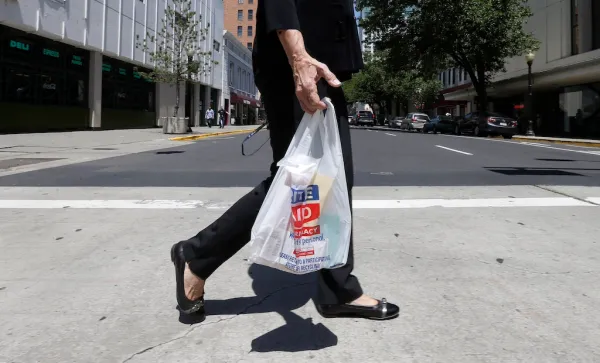
Last week, the Montgomery County Council approved a nickel grocery bag tax. The stated goals of the tax are to raise revenue and curb the use of plastic grocery bags. The bags, the county says, are an environmental hazard. Instead, county officials say they want to encourage Montgomery County shoppers to use reusable bags. Unfortunately, the measure misses the mark. What bag taxes like these result in isn’t very “green” at all. And, what might be affordable for one of America’s most affluent counties certainly wouldn’t be affordable for working–class communities, let alone the entire state.
Recommended Stories
Eliminating free grocery bags at the checkout means consumers must search for alternatives — presumably reusable plastic or cloth bags. Both options weigh more and take more energy to produce, contributing to greater emissions, not less.
As alternatives, plastic reusables and cloth bags must be used repeatedly over time before their environmental impacts are less than that of plastic. If they aren’t reused to that extent, we only succeed in introducing more waste into our landfills.
To illustrate, it would take 7.5 years of using the same cloth bag (393 uses, assuming one grocery trip per week) before it’s a better option than a plastic bag reused three times, like to carry lunch and then line a garbage can.
And since so many people (nine out of 10, according to market surveys) reuse plastic grocery bags, without them, consumers would naturally replace plastic grocery bags with other, heavier-gauge plastics, for household uses.
After Ireland implemented its bag tax, consumption of purchased plastic trash bags increased by 400 percent. So, if the goal is to promote less waste in our landfills and use fewer plastics, bans and taxes don’t achieve those outcomes.
Bag taxes also skirt the real issue of litter. The U.S. Environmental Protection Agency says plastic grocery bags make up less than 0.5 percent of the litter stream. Junk food wrappers, cigarette butts and paper all make up bigger portions of litter, but plastic bags make for an easy target because they are visible, white and often can get blown around.
In effect, getting rid of plastic bags is negligible in cleaning up litter. Addressing litter requires more than just banning a product; it requires a change in habits, more recycling and greater education.
Finally, sponsors of the measure have openly said that they hope this is a step to a statewide tax. This is the wrong direction for Maryland or any other state. While Montgomery County — consistently ranked one of the richest counties in America — can afford the tax, this is not the case for the rest of the state.
A tax on grocery bags is regressive. A growing number of Americans rely on government assistance for food, and taxes like this hurt these groups the most. In a time of rising gas prices, and with the rising cost of commodities driving up our grocery bills, the added financial burden at the check-out for a cause that has an arguable impact on improving the environment just doesn’t make sense.
Though well-intended, a bag tax does more harm than help. Despite what proponents will have you believe — free grocery bags are not ‘harmful,’ and they’re not even the root cause of litter. And nonrecyclable reusables are no better for the environment. The worse part is that the tax ends up hurting those who can least afford it.
A word to policymakers looking to implement similar measures — Montgomery County’s bag tax is an example of what NOT to do.
Harry Alford is president and CEO of the National Black Chamber of Commerce.