
Here’s why we could get a contested Democratic convention

Published February 13, 2020 8:58pm ET


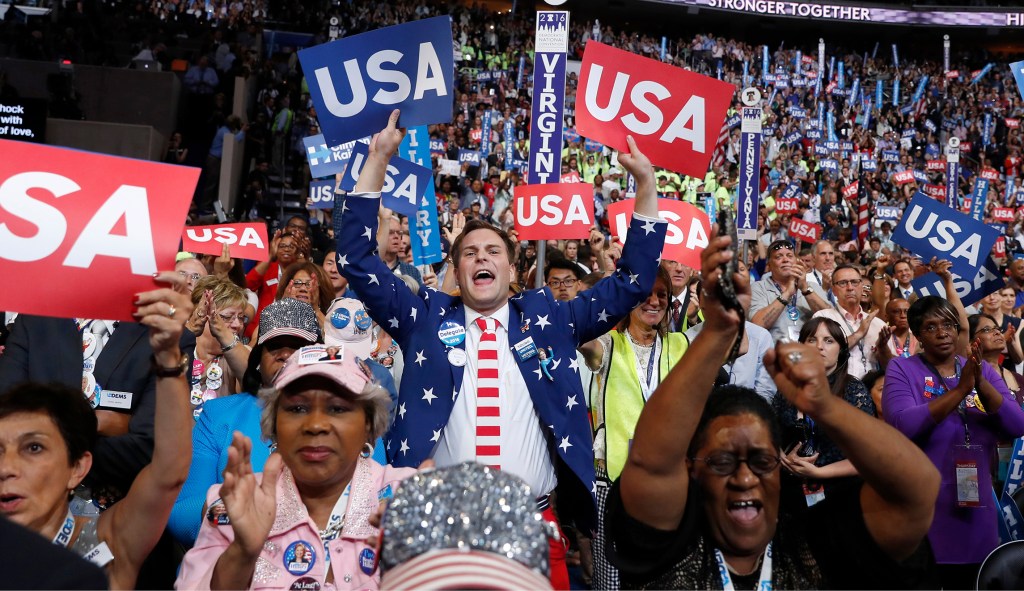
It’s every political reporter’s dream, but it has never happened in the modern age of primaries: a contested convention. That is, the Democratic National Convention in July may not be merely a pep rally and a coronation. The delegates may not simply be rubber stamps. They may be the people who get to pick the 2020 Democratic nominee.

If more than two candidates are winning delegates through March, it’s entirely possible that no candidate will get the 1,991 pledged delegates required to win on the first ballot in the convention. (There will be 3,979 pledged delegates, and 1,991 amounts to 50%+2 delegates, which is what the rules require.)

In that case, we’d get a second ballot at the convention, in which the 771 superdelegates get to vote, and the 3,979 originally pledged delegates would no longer be pledged. Thus, a contested convention.

Why might it happen?

1. We currently have two different front-runners

Pete Buttigieg has a slight lead in delegates, even though Bernie Sanders has won the raw vote count in both early contests. That’s hardly a clear picture.

2. At least two candidates are immune to the normal pressures to drop out

Kamala Harris, Jay Inslee, Cory Booker, and a dozen others dropped out of the race because of a lack of momentum. Their poor showing in the polls was drying up their fundraising and fueling a poorer showing in the polls. A similar dynamic could drive Joe Biden and Elizabeth Warren out of the race soon, too. This process usually winnows the field down to two candidates sooner or later.

But Michael Bloomberg and Sanders will be immune to such death spirals. Bloomberg has virtually infinite money, and Sanders has a lot of money and an extremely dedicated base.

Imagine if Buttigieg starts pulling ahead. Sanders can keep running, keep raising money, and keep getting 20% or more in every state. Bloomberg has the money to do the same.

3. Sanders and Buttigieg both have massive holes in their potential bases

To win a majority of delegates, you need very broad support inside the Democratic Party. Buttigieg has basically zero support among black voters, and Sanders has a huge portion of the Democratic establishment aligned against him.

These factors could keep Sanders or Buttigieg from pulling away from the field if either of them did really well on Super Tuesday.

4. The schedule is pretty front-loaded

It takes time to sort out a front-runner, but nearly 70% of all pledged delegates will have been won by April 1. So, even if Bloomberg, Sanders, or Buttigieg become the favorite by then, there may not be enough remaining delegates for that favorite to get to 1,991, especially if Minnesota Sen. Amy Klobuchar is winning delegates along the way.

A final note: A “contested” two-ballot convention could still be a kind of boring fait accompli. It could be that the front-runner has 45% of the pledged delegates while the other candidates drop out and endorse him or her, and everyone knows that front-runner will win on the second ballot, whether because of superdelegates or because other candidates’ pledged delegates will move on the second ballot.

Still, we can hope for some real drama.