

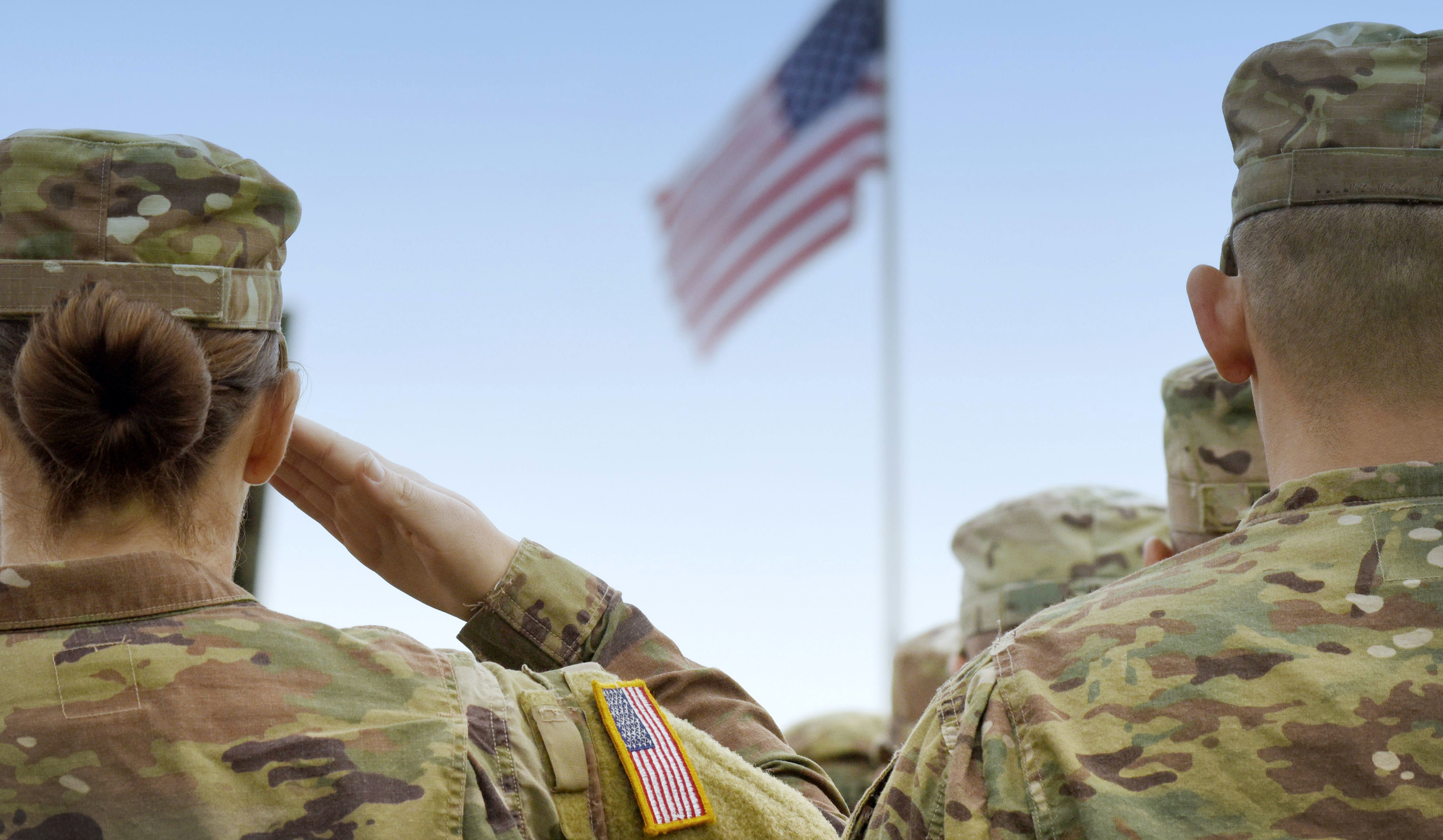
At 19 years and counting, the conflict in Afghanistan is America’s longest war. There have now been 5,135 U.S. casualties associated with Afghan reconstruction, more than 40% of whom were killed. Violence against our troops is also on the upswing, as combat casualties recently hit the highest in five years.
While for former President Barack Obama, Afghanistan was once “the good war” in contrast to “the bad war” in Iraq, patience with the continued U.S. presence has worn thin across the political spectrum and especially in the White House. “We are working to finally end America’s longest war and bring our troops back home,” President Trump declared in this month’s State of the Union address.
Recommended Stories


Against the backdrop of this desire, Secretary of State Mike Pompeo appointed businessman-diplomat Zalmay Khalilzad to negotiate with the Taliban. The Pompeo-Khalilzad strategy actually originated with Obama and former Secretary of State Hillary Clinton.
During his 2009 West Point address to lay out his new Afghanistan strategy, Obama declared, “We will support efforts by the Afghan Government to open the door to those Taliban who abandon violence and respect the human rights of their fellow citizens.”
“You don’t make peace with your friends,” Clinton added. “You have to be willing to engage with your enemies if you expect to create a situation that ends an insurgency.”
The difference between the Trump administration and the Obama-Clinton approach is that, with the Taliban insurgency remaining strong, Khalilzad has looked for ways around the fact that, rather than abandon violence, the Taliban have been increasing it. Part of that strategy has simply been to threaten punishment for anyone who asked tough questions. When Khalilzad cut the Afghan administration out of its deal-making with the Taliban, Afghanistan’s national security adviser Hamdullah Mohib, the point man on U.S. intelligence sharing and military cooperation, raised tough questions in Washington.
The response was a U.S. diplomatic temper tantrum, which saw the State Department blacklist Mohib. Not only did they prevent him from visiting the United States in the future — all the better to protect the State Department’s information monopoly and prevent him from talking to Congress — but whenever he would enter a forum in Afghanistan in which U.S. diplomats were present, the diplomats would leave.
Put another way, Pompeo and Khalilzad treated the Taliban, who have American blood on their hands, better than they treated a democratic ally who dared say the emperor wore no clothes.
Trump and Khalilzad have now discovered what Obama and John Kerry understood: Any deal is possible with a rogue regime or terrorist group if the substance is irrelevant in the drive to win a signature. Such it is with the most recent Afghanistan deal.
The Washington Post has reported the rough outline: The U.S. and the Taliban will agree on a “reduction of violence,” likely just one week, which will be followed by the beginning of direct Taliban negotiations with the Afghan government and a simultaneous U.S. troop withdrawal. In order to maintain the diplomatic fiction of Taliban compliance, Pompeo and Khalilzad appear prepared to measure the week prior to the beginning of the spring fighting season, a time when violence is normally minimal anyway.
In short, while inter-Afghan dialogue is good and long overdue, Trump and Khalilzad are not only embracing a deal more flawed than the 2015 Iran nuclear agreement, but they are also engaged in a reckless act of intelligence politicization, which will put the U.S. at risk for decades to come.
The basic flaws in the agreements are obvious, though Congress and the press are widely disillusioned with what they now deem an “endless war,” so few tough questions are being asked. First, there is no guarantee that the Taliban will negotiate, in good faith, once U.S. forces depart, but rather, they might simply ramp up their military campaign. What Khalilzad has negotiated is analogous to an agreement by which U.S. forces would withdraw from South Korea and then trust North Korea to maintain the status quo.
Second, it is unclear whether the Taliban representatives with whom Khalilzad has negotiated actually represent all Taliban groups. The Haqqani network is different from the Quetta Shura, which is different from the northern Taliban, and so on. Even if those with whom Khalilzad negotiates are unified (and they are not), there is the question about how the U.S. would deal with Taliban splinter groups.
Indeed, it would be quite easy for the Taliban to feign compliance and blame any attacks on splinter groups even if the Taliban leadership themselves approved the attacks to bleed the Afghan government.
Third, it is uncertain what happens with regard to Pakistan, the Taliban’s main sponsor.
Not only can Pakistan act to undermine any dialogue and peace agreement once the U.S. has departed, but Trump, Pompeo, and Khalilzad have essentially rewarded the Pakistani way of asymmetric warfare. It is a lesson rogue regimes and militant groups around the globe will learn.
Finally, there is the problem of al Qaeda. The U.S. entered Afghanistan because of the Taliban’s devil bargain with the terror group. Khalilzad is simply wrong if he argues that the Taliban are now nationalists and have forsworn relations with al Qaeda. After all, how else could it be that al Qaeda in the Indian subcontinent’s leader was killed inside Afghanistan, where he was apparently under Taliban (and perhaps Pakistani) protection?
Democrats accused former President George W. Bush of lying to get the U.S. into a war in Iraq. This accusation was slanderous. Historically, however, intelligence politicization occurs more when diplomats seek to ignore evidence in order to achieve peace deals than when politicians seek an excuse for war. And so it is now, as Trump, Pompeo, and Khalilzad are so desperate to run for the exit in Afghanistan, that they would agree to a flawed and meaningless deal that is little more than cover for surrender.
Michael Rubin (@Mrubin1971) is a contributor to the Washington Examiner’s Beltway Confidential blog. He is a resident scholar at the American Enterprise Institute and a former Pentagon official.
