

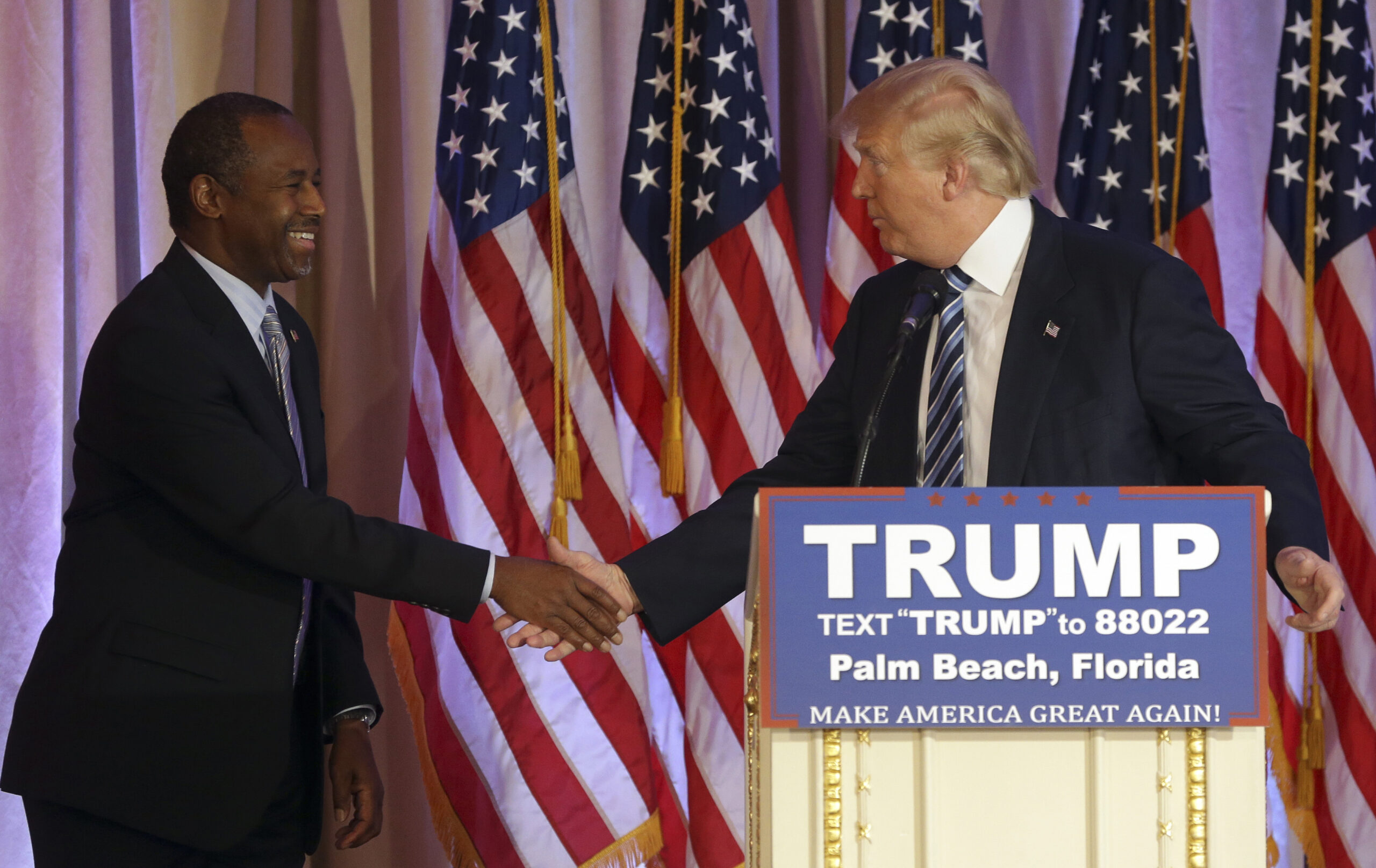
As of Sept. 23, 11 of the 16 former Republican presidential candidates have endorsed Donald Trump. Eight of those endorsements only came after Trump became the presumptive nominee. Three other candidates have yet to announce a decision. Two former candidates have said they won’t endorse Trump, but both say they will work to support conservative candidates at the state and federal levels.
Jeb Bush: Will not endorse
Recommended Stories


On May 6, Bush announced in a Facebook post that he would not vote for Trump or Hillary Clinton. “Donald Trump has not demonstrated that temperament or strength of character. He has not displayed a respect for the Constitution. And, he is not a consistent conservative,” Bush wrote. Bush joins his father and brother in refusing to support Trump. President George H.W. Bush says he is “retired from politics” and President George W. Bush “does not plan to participate in or comment on the presidential campaign.”
Ben Carson: Endorsed
Carson dropped out of the race on March 4 and endorsed Trump a week later.
Chris Christie: Endorsed
Christie dropped out of the race on Feb. 10 and endorsed Trump on Feb. 26.
Ted Cruz: Endorsed
Cruz dropped out of the race on May 3, the last major obstacle before Trump became the presumptive GOP nominee.
Cruz endorsed Trump in a Sept. 23 Facebook post, writing, “After many months of careful consideration, of prayer and searching my own conscience, I have decided that on Election Day, I will vote for the Republican nominee, Donald Trump. … A year ago, I pledged to endorse the Republican nominee, and I am honoring that commitment. And if you don’t want to see a Hillary Clinton presidency, I encourage you to vote for him.”
His candidacy was the last major obstacle between Trump and the presumptive nomination. After Cruz and Trump spent months sparring on the campaign trail, often in very personal terms, Cruz was still invited to speak at the GOP convention. In a memorable speech, Cruz told attendees to “vote their conscience” and was booed for not endorsing Trump.
Carly Fiorina: TBD
Fiorina dropped out of the race on Feb. 10, endorsed Cruz on March 9 and was named Cruz’ vice presidential pick on April 27. With the Cruz campaign ending on May 3, it’s unclear whether Fiorina will endorse Trump.
Jim Gilmore: Endorsed
Gilmore ended his long-shot presidential campaign on Feb. 12. He waited until after Trump became the nominee to make any endorsements. On May 5, Gilmore said he will vote for Trump and that the party should unify behind him.
Lindsey Graham: Will not endorse
On May 6, Graham said he will not vote for Trump or Hillary Clinton. Graham also won’t attend the Republican convention. “I do not believe [Trump] is a reliable Republican conservative nor has he displayed the judgment and temperament to serve as commander in chief,” he said in a statement. Graham’s campaign ended on Dec. 21, 2015. He first endorsed Jeb Bush on Jan. 15, then endorsed Cruz on March 17 after Bush was no longer running.
CNN reported on May 22 that Graham told donors at a private fundraiser they should get behind Trump. Graham later disputed that claim, saying he still doesn’t support Trump.
Mike Huckabee: Endorsed
Huckabee endorsed Trump on May 4. Huckabee ended his campaign on Feb. 1 and did not make an endorsement until after Trump became the presumptive GOP nominee. Huckabee’s daughter, Sarah Huckabee Sanders, has worked for the Trump campaign since late February.
Bobby Jindal: Endorsed
Jindal reluctantly endorsed Trump on May 3 right when Trump was about to become the presumptive nominee. “I don’t think he’s the best qualified candidate, I don’t think he’s the one most likely to be successful, but I would vote for him over Hillary Clinton,” Jindal said. After Jindal ended his campaign on Nov. 17, 2015, he endorsed Marco Rubio on Feb. 5.
John Kasich: TBD
Ending his campaign on May 4, Kasich was the last Trump rival to drop out of the race, although he didn’t pose much of a challenge to Trump. Kasich has yet to indicate whether he will back Trump. As recently as Sept. 16, he said it was “very unlikely” he would vote for Trump.
George Pataki: TBD
Pataki hasn’t announced his plans now that Trump is the presumptive nominee, but it’s clear he’s no fan. “I don’t think Donald Trump should be president of the United States,” Pataki said in April. “I don’t think he’s going to be president of the United States and if he’s going to be our nominee I fear he’s going to drive the Republican party off a cliff.” Pataki ended his campaign on Dec. 29, 2015, then endorsed Rubio on Jan. 26. Pataki, the former governor of New York, endorsed Kasich on April 14, just before the state’s primary.
Rand Paul: Endorsed
Paul dropped out of the race on Feb. 3. After that, he said he wouldn’t endorse anyone but would support the eventual GOP nominee. On May 5 when asked about Trump, Paul simply said, “I’ve always said I’ll endorse the nominee.” He never mentioned Trump by name and proceeded to attack Hillary Clinton.
Rick Perry: Endorsed
Perry announced on May 5 that he will support Trump since he’s the GOP nominee. “He wasn’t my first choice, wasn’t my second choice, but he is the people’s choice,” Perry said. He also said he would be open to joining Trump as his running mate. Perry ended his presidential campaign on Sept. 11, 2015, the first 2016 candidate to do so. He later endorsed Cruz on Jan. 25.
Marco Rubio: Endorsed
Rubio hesitated to endorse Trump even after Trump became the presumptive GOP nominee. But he eventually did endorse and spoke in a brief video message at the Republican National Convention.
After dropping out of the race on March 15, it was reported that Rubio was close to endorsing Cruz but no formal endorsement ever came.
Rick Santorum: Endorsed
Santorum finally endorsed Trump on May 24, three weeks after Trump became the presumptive nominee. Santorum said he spoke with Trump the week prior and that their conversation helped Santorum decide to back Trump. While ending his campaign on Feb. 3, Santorum endorsed Rubio. He didn’t endorse anyone else after Rubio’s campaign ended.
Scott Walker: Endorsed
Walker said on May 4 that he will support Trump, although he may not campaign with him this fall. Walker formally ended his campaign on Sept. 21, 2015 and later endorsed Cruz on March 29, just before the Wisconsin primary.
This article was originally published on May 6 and has been regularly updated since then.
Jason Russell is a commentary writer for the Washington Examiner.
