

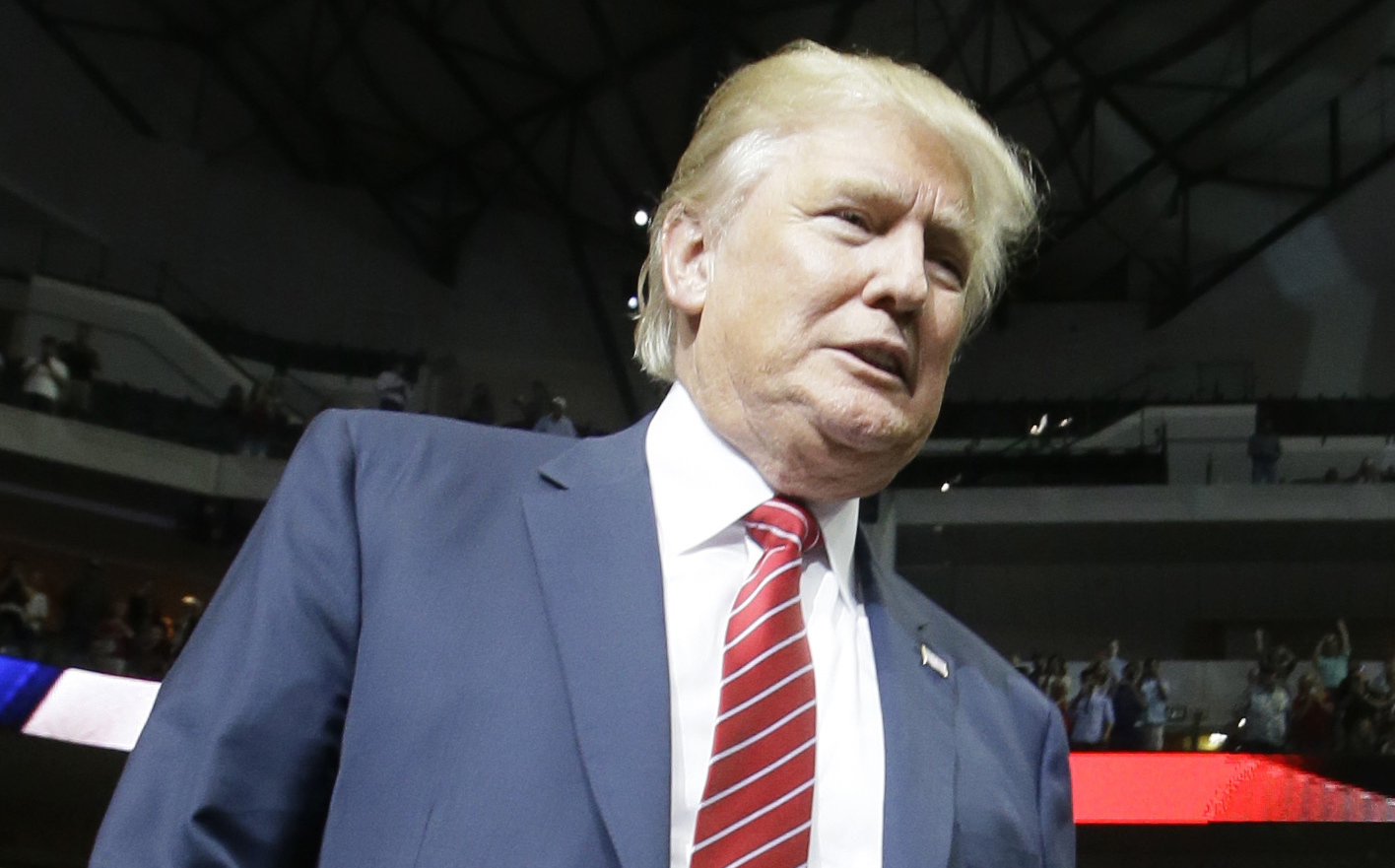
Donald Trump is the wealthiest person ever to run for president, and he’s led all but one of the Republican presidential primary polls since July.
Coincidence?
Recommended Stories


Mostly, but not entirely. At this point in the campaign, Trump’s lead has more to do with factors — the size of the GOP field, Trump’s fame and outsized personality and the novelty of his candidacy, etc.— that have little or nothing to do with his ability to self-fund.
Still, liberals who want to limit money in political campaigns have complained that Trump’s rise highlights the need for campaign finance reform.
Of course, vast personal wealth is no guarantee of political success. Despite his billions of dollars, Ross Perot never earned a single electoral vote in the 1992 or 1996 presidential elections. Steve Forbes, for all his billions, managed to win only two GOP primaries in his two presidential runs.
Even if personal wealth were a guarantee of electoral success, what would fix it? Any attempt to limit the ability of an individual to transfer his personal wealth to his campaign would be ruled unconstitutional.
“Congress in the original Federal Election Campaign Act did limit contributions even from the candidate to his own campaign, and the court said that makes no sense under the First Amendment, so that was struck down,” Center for Competitive Politics President David Keating told the Washington Examiner. “Even the most anti-free speech judges, it would be hard to imagine them saying something like that would be constitutional.”
Unable to limit campaigns financed by personal wealth, liberals might seek instead to hamper billionaires by limiting how much a campaign can spend. That, too, would be unconstitutional under that pesky First Amendment.
“The court has said clearly the First Amendment protects the right to free speech,” Keating said. “The government can’t pass a law limiting how much money a campaign can spend or how much speech a campaign can do. That’d be like saying newspapers can’t have a circulation more than 100,000.”
If liberals really want to reform campaign finance law in a way that would damage billionaires, they should seek to raise or eliminate the cap on individual campaign contributions. Lifting the $2,700 limit would make it easier for other candidates to close their money gap with candidates like Trump.
“For most of our country’s history, we elected Lincoln, Roosevelt, Washington, Eisenhower … who [were] allowed to collect unlimited contributions,” Keating said. “Campaign finance restrictions, there’s no evidence they’ve done any good to make for better government. All it does is complicate things for people and make it harder to run outsider campaigns.”
Keating says campaign contribution limits incentivize parties to find rich people to run for office. When outsider candidates can fund more from donations, they’ll be able to compete with wealthy, self-financed candidates.
Jason Russell is a commentary writer for the Washington Examiner.
