
The coronavirus is killing people and spreading rapidly. In Seattle, 14 people have died as of Friday morning amid at least 75 confirmed cases. The number of Seattle residents infected with the virus that causes COVID-19 is probably far, far higher because testing is so scarce.
So the area is faced with a lethal and contagious virus for which no treatment is available, and unknown hundreds or maybe thousands of people are infected.
Recommended Stories
That’s why the county government is telling people to “avoid bringing large groups of people together” and encouraging everyone to work from home as much as possible. If you’re curious, “large groups” are defined as gatherings of more than 10 people.
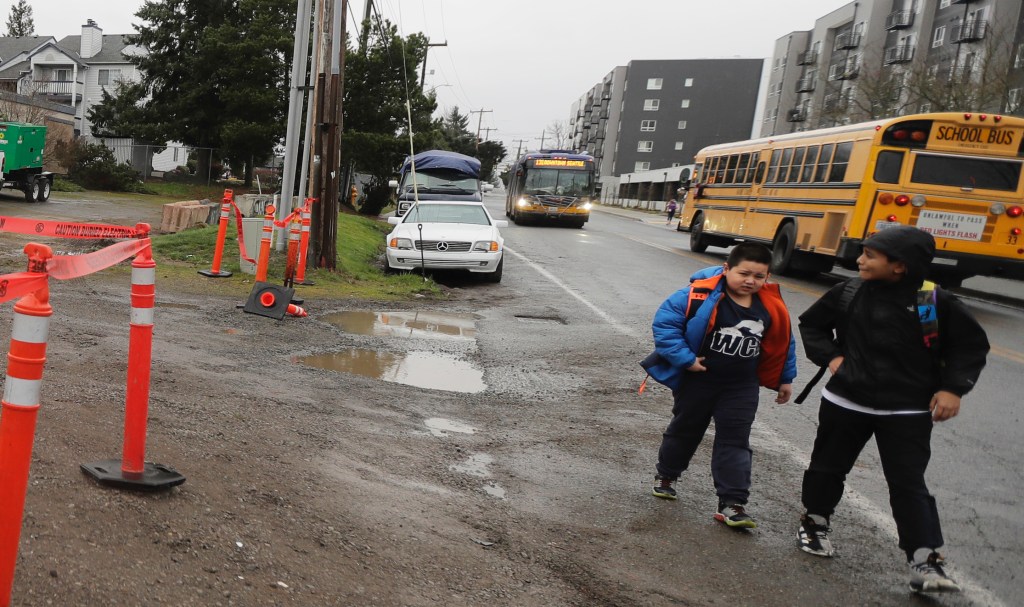
Yet Seattle Public Schools announced on Thursday that they are keeping schools open. While canceling all school district gatherings, they’re keeping school, childcare, and aftercare open.
Why would you say 12 people can’t get together but say that we should keep open schools, where hundreds of children, teachers, staff, parents all are in close proximity, eating, chewing on pencils, and using the bathroom? Ask the superintendent of schools.
Per Public Health recommendations, we are keeping schools open at this time. The longer we can keep stay open, the better for our students and the entire community. We hear and share your concerns and will continue to update you daily. Learn more: https://t.co/IVnxN3sg1P
— Seattle Public Schools (@SeaPubSchools) March 6, 2020
“We know that school closures affect our city’s economy and can disrupt family work schedules.”
This is true. Children raised by one parent or by two working parents will find a school closure very disruptive. But there are prior questions raised by this situation. Michael Brendan Dougherty asked one very pertinent one on Twitter:
I wonder how much the two-income parental model is degrading our ability and willingness to close schools during a pandemic. A depleted “social surge” capacity
— Michael Brendan Dougherty (@michaelbd) March 6, 2020
That is, maybe we wouldn’t all consider school closings a disaster if more families had a stay-at-home mom, dad, aunt, or next-door neighbor. The technology of the day makes it easy to make up a lot of instruction remotely, so the major problem of closing schools is that most children don’t have a parent at home between 9 a.m. and 5 p.m.
This is relevant because a lot of economists and commentators have praised the rise of two-income households as adding to our economic efficiency and GDP. Great. The accompanying liberation of women to do what they want is also great.
But a society with fewer stay-at-home parents loses out on a lot of things. Children are either less free to run around or less policed by neighborhood moms sitting out on the front porch. Television does more of the babysitting work. PTAs have fewer moms who can volunteer or chaperone school trips. Finally, our society is less able to close school if school needs to be closed.
Maybe Seattle is right. Maybe nobody in the school system is infected. Maybe teachers can get the children all wash their hands.
But it would be better if Seattle were not as constrained by these reasonable concerns over the “city’s economy” and “family work schedules.”
