

When it came to embarrassing his family, my dad was a pro. Living in a concrete jungle — Chicago — my dad made it a point to say “hello” to everyone he walked past. He’d have no problem interrupting you — even if you were in mid-conversation on your cellphone.
My dad left this world at 12:58 a.m on June 11, 2015. I want to share three things my dad taught me during his difficult last weeks in the hospital.
1.) When you believe in something, believe in it 100 percent
“You can give me any medication, and do all you want to heal my body, doc, but only God has the power to cure me,” my dad said. “How embarrassing,” I thought. Here are these men and woman wanting to help my dad through his chemotherapy treatment, and he’s telling them that they’re not good enough?
My dad embraced his faith in his God as a child clings to his mother. He was absolutely sure that his God had the power both to heal him and take away his life. My dad’s confidence in his God was embarrassing to me, but it was also powerful and touching. He believed 100 percent that God was in control. I wish I had faith like that.
2.) To praise God even in the hard times
On his fourth day in the hospital, my dad was placed on 40 percent breathing assistance, and had his hands locked down to his bed. He started hallucinating and crying often. The hardest part for me was not being able to help him through his mental battle. He was confined to a bed for more than 100 hours as he began to slip away.
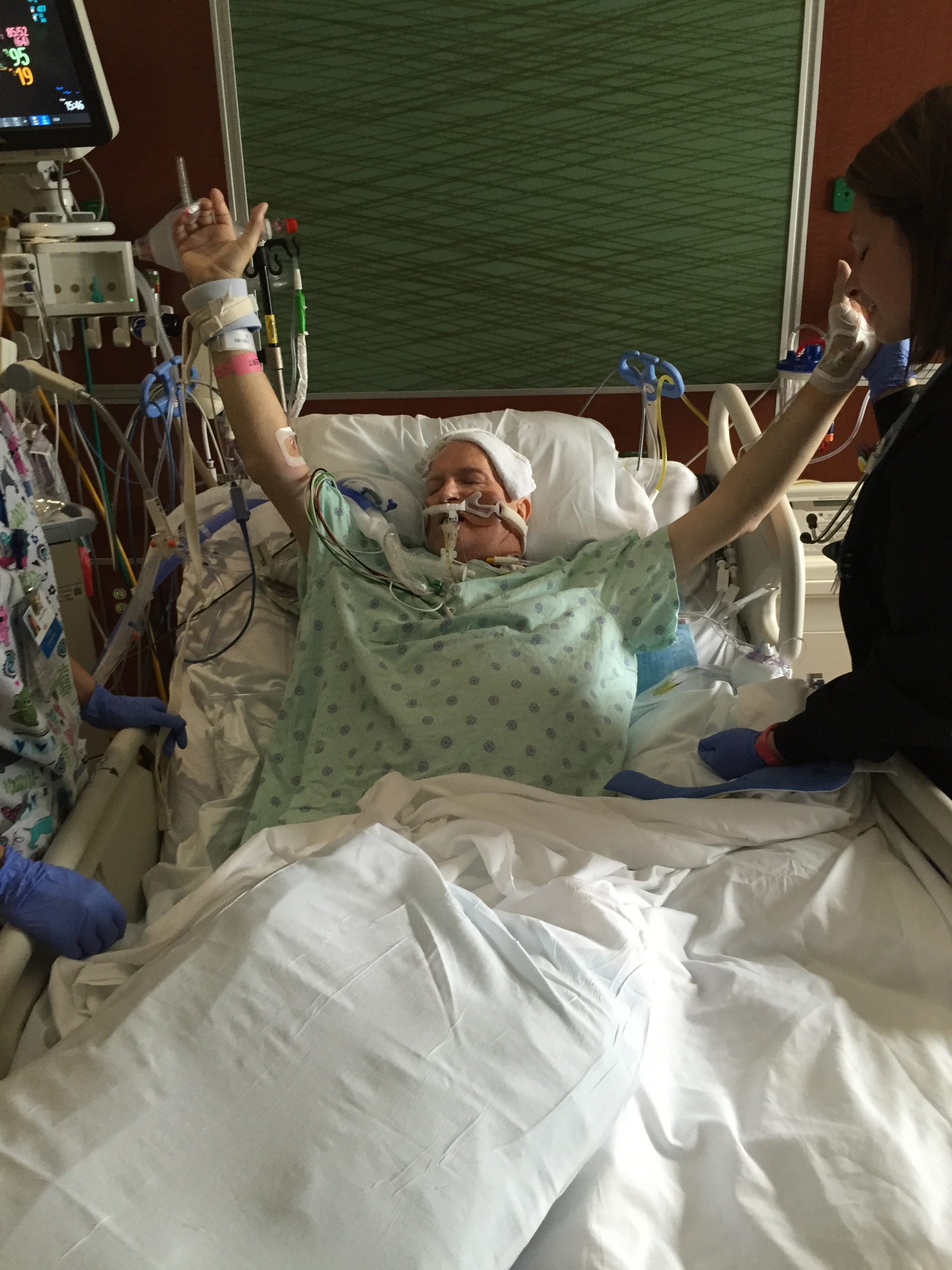
My wife decided it was best to play worship music for him. Then, all of a sudden, dad began to pull on his restraints for the first time in days. The alarms were triggered, and nurses came rushing in try to figure out what he wanted. They took off his restraints, being ever so careful to make sure he didn’t pull out his breathing tube. He raised his weak arms slowly into the air. “Ohhh I see,” said a nurse, “you needed to stretch.”
“No,” my wife replied, “He’s praising the Lord.” My dad began to shake his head vigorously in agreement.
3.) Surrendering isn’t a bad thing
After an emergency room visit, more than 30 days in the Intensive Care Unit, a surgery and a few days in the general hospital, life wasn’t easy for him. Dad was suffering from acute pancreatitis, a condition that affects the digestive system, but also has a domino effect on the rest of the body’s systems.
On June 3, my dad’s health declined further. Our conversations with doctors turned grim and ended in hugs and tears. Days went by and my dad kept his mouth shut. When he tried to talk, it was frustrating because we couldn’t understand him through his oxygen mask. On June 10, my dad’s breathing increased rapidly, and all of the machines started beeping. He started to motion to my mom and my wife that he needed something.
Everyone was trying to guess what was wrong: “Are you hot? Are you in pain?” He used whatever strength he had left to motion that he was going somewhere. “You want to go somewhere?” my mom asked. Yes, he shook his head. With his dementia and his skinny body, which hadn’t moved for days, he began to lift his arm slowly and point up. “The ceiling?” a nurse asked, “You want to go upstairs?” “Heaven?” my mom said. “Honey, do you want to go to heaven?”
Just like before, when my dad was praising God, he shook his head vigorously up and down in a yes motion. “I don’t like it one bit, but it’s OK. We understand,” my mom said. As we wept over him, my dad was placed on a ventilator maxed at 100 percent breathing support, and that was the last time he communicated with us.
Twenty-four hours later we got the call that it was time to say goodbye. My family stood by his bedside, played worship music, covered him in prayer, held his hand, climbed in his bed, listened to his heartbeat — oh the list goes on and on.
I am pleased to say his death is well with our soul. My dad and I danced in celebration and cried in sorrow, but now my dad is dancing on his own two feet in his new and perfect body.
This piece first appeared on Medium.com.
Lee Springer is a start-up enthusiast who writes on his personal successes and failures in starting a company. You can learn more at https://medium.com/@lee.springer. Thinking of submitting an op-ed to the Washington Examiner? Be sure to read our guidelines on submissions.
