

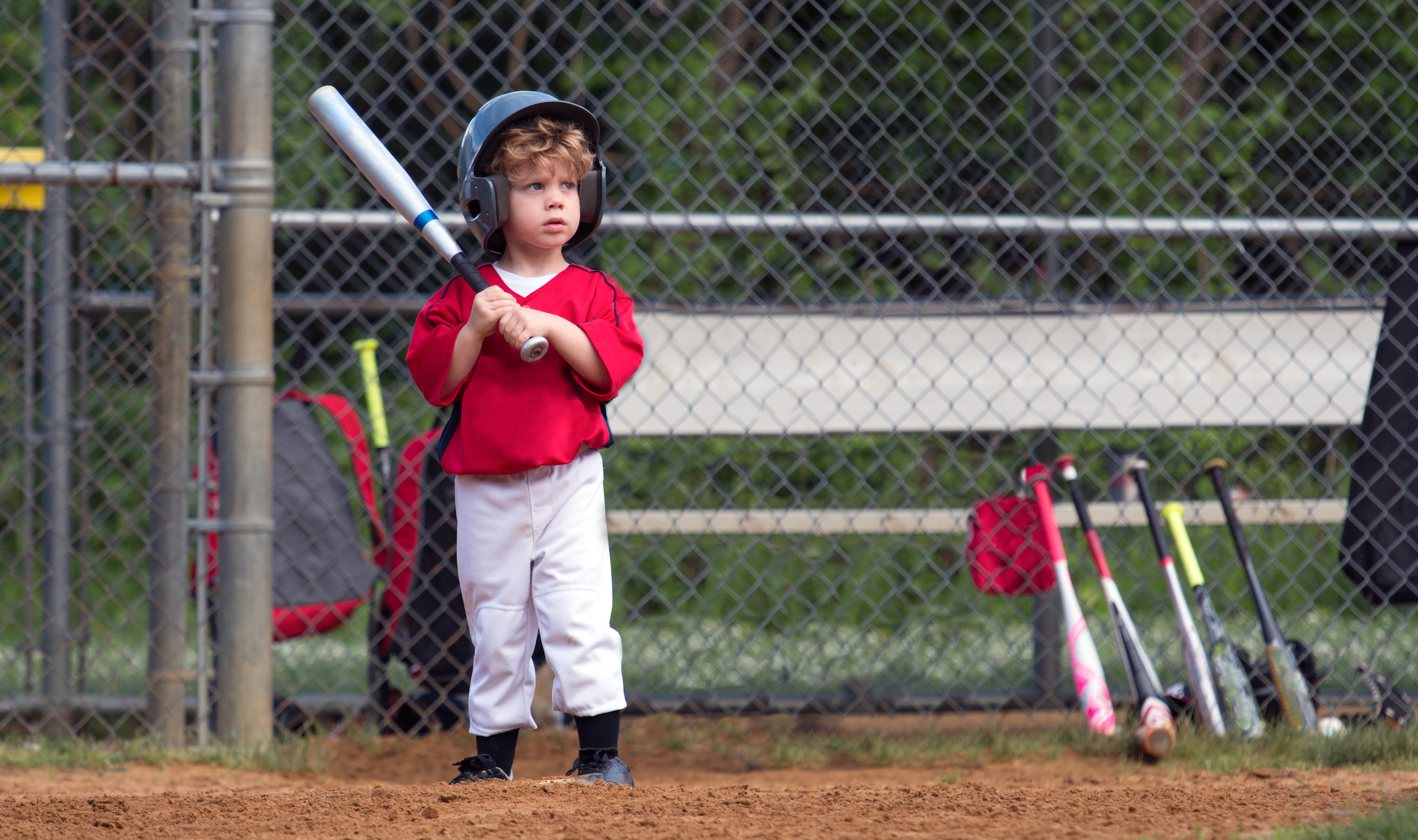
Last Friday, after weeks of believing, then hoping, then fearing, and finally giving up, I had to drive in the dagger. I emailed 15 families to tell them that there would be no T-ball season at St. Andrew the Apostle this spring.
For the last couple of years, on Fridays in the spring, I had gathered 12 to 20 kindergarten and first grade boys and girls onto the baseball diamond at our parish and coached them in T-ball. Alongside the T-ball, we would grill burgers and hot dogs (except during Lent, when we order plain pizza), while parents socialized, young siblings climbed the monkey bars, and teenagers hung out in the outfield. (Not many of my 6-year-olds have warning track power.)
Recommended Stories


It’s really one of my favorite things. And this year, it’s gone — because of the coronavirus.
I don’t pity myself because the cost here is relatively small. The lockdowns have hurt others much, much more. I think about the high school seniors who missed their final varsity baseball season. I consider the friends who had to scrap their wedding receptions. The unemployed and their families are suffering serious harm. Then, there are the tens of thousands of deaths and many more hospitalizations.
So I have little to complain about in the big picture. I bring up T-ball because I wanted to say what this didn’t feel like to me: It doesn’t feel like a noble sacrifice I am making for the greater good.
Canceling the season is obviously the right thing to do. Gathering 20 or more families, even outdoors, and sharing food, balls, bats, and gloves seems risky. I couldn’t distance myself and still adjust batting stances or throwing grips. And although siblings crashing into each other on slides and monkey bars isn’t the greatest danger in the coronavirus world, the risk is still there. I wouldn’t be serving these families or loving my neighbors if I brought them together while the virus is still spreading steadily throughout Montgomery County. For these reasons, my pastor might not even allow it, and our state government might not either.
So it’s the right decision to cancel the season. That doesn’t make me happy to do it.
More broadly, staying home, canceling block parties, losing a baseball season, and sort of home-schooling my children do not feel like contributions I am making to some great cause. They just suck. These are unpleasant consequences of a horrible plague. My family and I are losing things we love — our parish, our friends, our schools — either because others (government, school, or church officials) forced it on us or because we want to avoid activities that seriously risk spreading the virus.
So I will err on the side of caution, but I also don’t want to give up good things if giving up those things won’t stop the spread of the virus. I don’t think sacrificing leisure, work, prayer, or community is a good thing in itself. It’s a bad thing that is currently necessary.
This is why I bucked when my state said it would be illegal for me to sit with two children on the bank of our neighborhood creek and catch fish. The no-fishing-at-all rule didn’t advance safety. And thankfully, my governor has since removed that rule.
But the negative reactions I got when I complained about it showed me that other people view the lockdown differently.
Many of my friends and readers have managed to take a much more positive outlook toward all the costs of the virus and the lockdown. They look at what they’re losing as worthy sacrifices for the greater good. For many, giving up their local pubs, their Little League season, their planned vacations, their fishing, and their buying pumpkin seeds at Home Depot carries an echo of the wartime sacrifices our grandparents made in the 1940s.
While the doctors, nurses, and techs are on the front lines of this war, while the drivers, meatpackers, and store clerks are also in the line of fire, we nonessential folks can still do our part.
You see this sentiment everywhere. You can buy a “Do Your Part, Stay Apart” shirt. People have donned masks for their Facebook and Twitter profile pics, reminiscent of the ribbons people wear or put on their social media accounts to express solidarity.
And thus my objection to the no-fishing rule — this aspect of the lockdown does not materially reduce the spread of the virus — sounded like grousing.
Here’s one typical reaction:
Compare tweets like this to the way Americans handled past crises, such as fighting wars or overcoming the devastation of 9/11. What a bunch of entitled babies many of us have become.
— BJD (@bjdoor) April 17, 2020
Similarly, on Facebook, after I wrote that church leaders should seek ways to make church safe again, one friend called me “selfish.”
I was confused. I wasn’t saying, “Open church, even if it kills people!” I was saying, “Let’s not ban activities that aren’t dangerous.”
But again, many folks see the cancellations as worthy in themselves — part of a war effort.
I’m not averse to this attitude in general. Sacrifice as sacrifice has value. Half of this lockdown has been during Lent, when as Catholics, we give up things such as alcohol, meat, and coffee. We also fast. During the lockdown, three local priests did a 54-mile walk for the hungry.
These sacrifices and fasts, I believe, are valuable. I see a spiritual value in them. There’s also a symbolic value.
Others see a symbolic value (above and beyond whatever material value there is, if any) in the things we lose to lockdowns. That’s great. Maybe I’ll come around to their point of view. Until then, I’ll give up the activities that are actually unsafe. And then I’ll pray for my country.
