

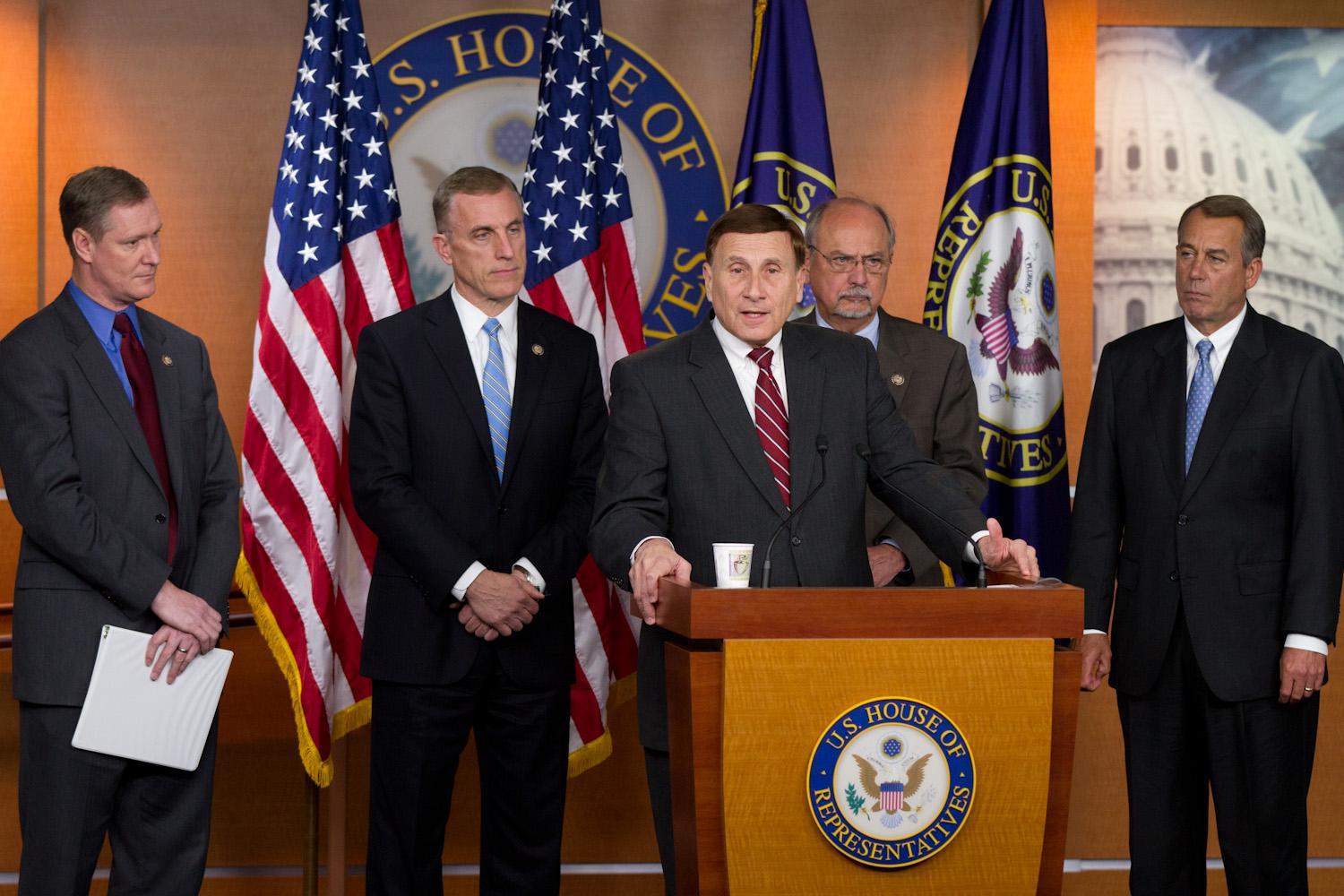
When voters tossed Republican majorities out of the Senate and House in 2006, a major reason for low conservative turnout was disgust with then-record levels of government spending. Billions of dollars in earmarks went to benefit members of Congress, their former staff, and favored campaign contributors. Voters got tired of hearing congressional Republicans’ empty promises to reduce federal expenditures, restore limited government and provide honest, constitutional governance.
Recommended Stories


In the following years, Senate Majority Leader Harry Reid and House Speaker Nancy Pelosi ran up trillions of dollars in added federal spending and debt. They approved a $787 billion economic stimulus package that failed to stimulate the national economy. They passed Obamacare, which put bureaucrats between Americans and their doctors.
Republicans were swept back into power in the House. This time, they promised, they had “learned the lessons of 2006.” There would be no more “business-as-usual” in Washington.
Now comes an 846-page, $260-billion, five-year highway bill called the American Energy and Infrastructure Jobs Act of 2012. It has several provisions that will appeal to conservative House members, especially those elected in the Tea Party-inspired 2010 victory. Among the reasons to support this bill: It contains no earmarks. It mandates approval of the Keystone XL pipeline. It kills the requirement that states spend 10 percent of their federal transportation funds on bike lanes and other “transportation enhancements.”
The highway bill would stop the diversion of gas tax revenues to support mass transit, which serves a steadily declining portion of the nation’s commuters. It funds highway maintenance and construction with revenues expected from oil and gas royalties generated by opening federal lands in Alaska and the continental U.S., and by drilling offshore.
Here’s the problem: Democrats absolutely oppose every one of those provisions. The few House Democrats who might be enticed to vote for the bill will be more than offset by the opposition of Reid, under whose leadership, or lack thereof, Senate Democrats have failed to present a budget for more than 1,000 days, let alone stick to one.
And so there exists a two-pronged danger in the legislative process. The first is that House Speaker John Boehner will sweeten the deal in order to gain more Democrats’ votes in the House. The second is that, after the Senate produces an inferior bill, Reid will win the big spending increases he wants, while expunging all redeeming provisions from the bill in a conference committee.
This is one more occasion upon which Boehner’s mettle will be tested. We’re about to find out whether Republicans really learned the lessons of 2006, or whether Mr. Business-as-Usual is back in town.
