

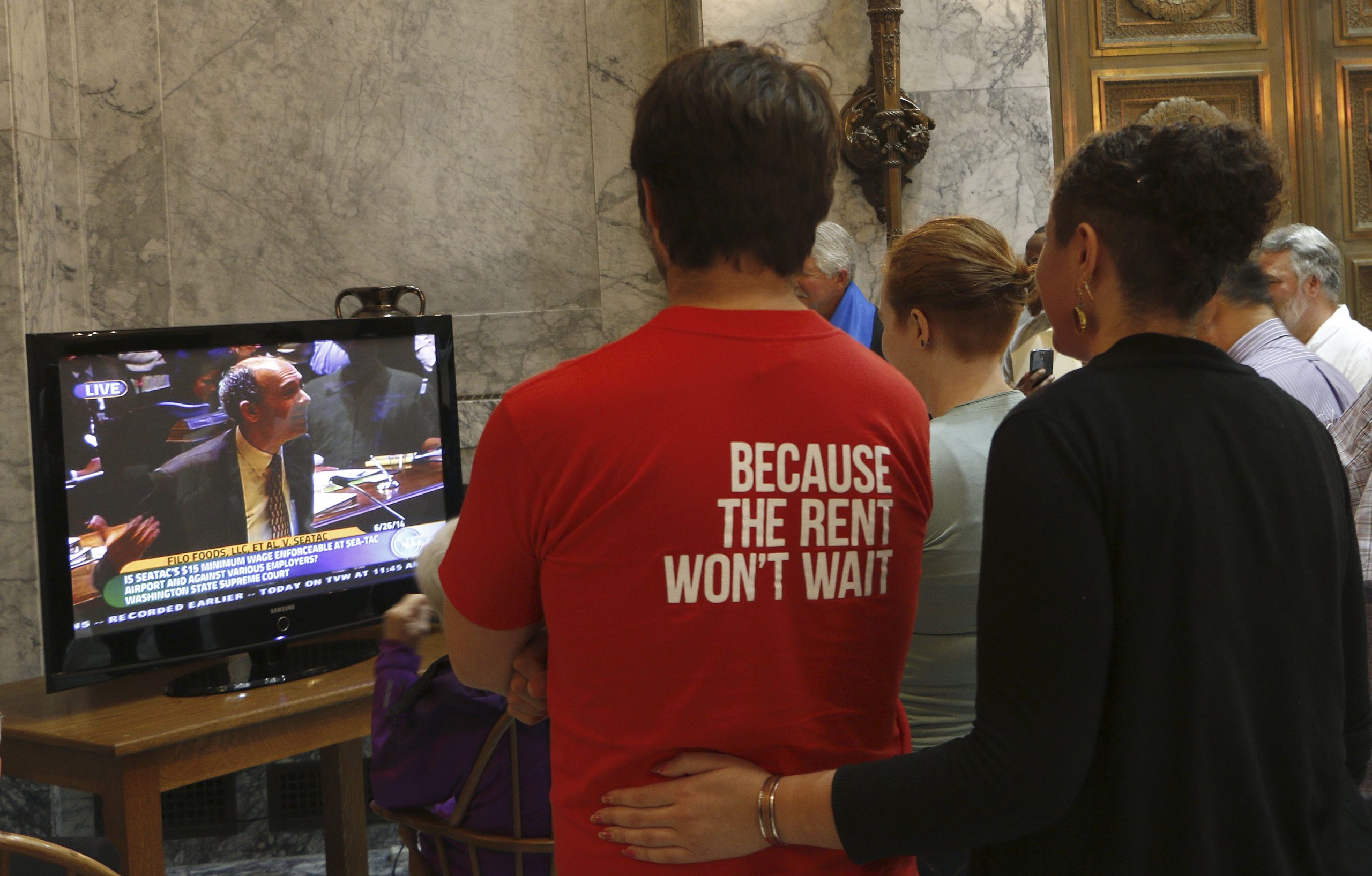
As congressional Democrats push to raise the federal minimum wage to $15 an hour, it’s worth asking where that figure came from. Why $15 (more than double the current federal rate of $7.25) and not, say, $10, $12, or even $16?
Unions picked $15 a decade ago because it was a “firm round number” that would help with organizing. The goal was not necessarily for workers to make that much, however, and, at least initially, they even offered a way around it. It worked like this: The unions pushed friendly local government leaders to raise their minimum wages to $15. These local ordinances included a major exception: Employers could avoid paying the minimum wage if those workers were unionized. In other words, the high minimum wage was intended as an incentive to get employers to not only drop opposition to unions but to seek them out so the companies could negotiate deals to pay workers less.
Stay informed.Stay ahead.
Join Washington Examiner for unlimited access to the news, analysis, and commentary that matter most.
Already a member? Log in
