

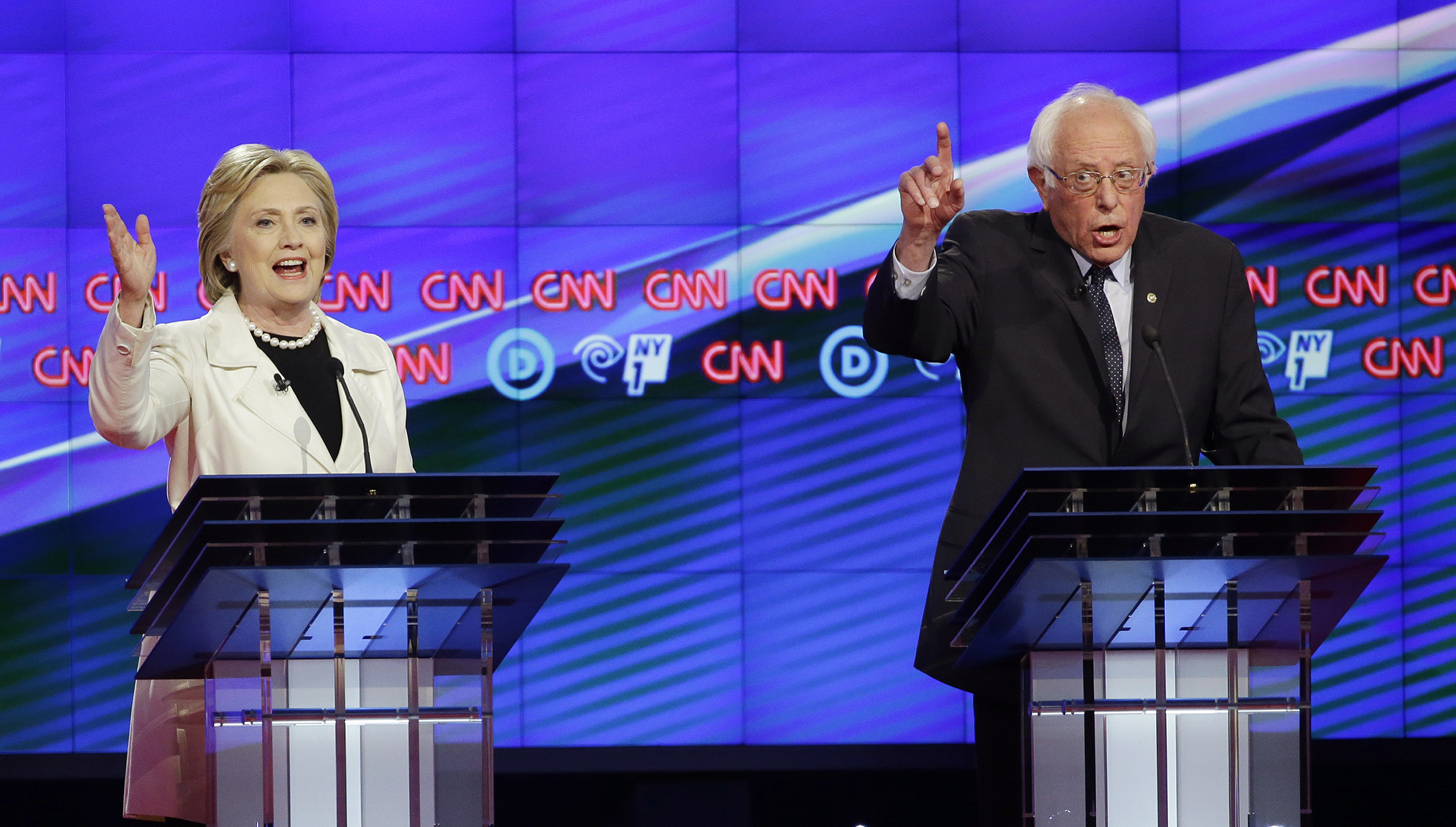
Of all the liberal reactions to the 2016 election result, that of the New York Times’ Frank Bruni was the most brutally honest. Within it, he pointed to a major quandary Democrats face.
“After Election Day, one Clinton-weary Democratic insider told me: ‘I’m obviously not happy and I hate to admit this, but a part of me feels liberated. If she’d won, we’d already be talking about Chelsea’s first campaign. Now we can do what we really need to and start over.'”
Recommended Stories


It’s true that by the time Bruni wrote this, Chelsea Clinton’s congressional candidacy was already being floated as a trial balloon. But that is a mere footnote, for Bruni’s unidentified interlocutor is probably representative of many Democrats and their feelings after the election drubbing they just took.
On Monday, we discussed the calamity Democrats suffered by pushing common-sense Democrats such as Jim Webb out of their party. On Tuesday, we pointed out how time has proven President Obama’s agenda was too radical for anyone except the most skilled politicians to survive.
But the simultaneous end of Clinton’s and Obama’s careers obliges Democrats to choose between two political formulae that were once successful. It is unclear which, if either, would revive their electoral fortunes faster, or whether they should pursue something completely different.
One choice, Clintonism, is tarnished by Hillary’s complete failure, but the precise cause of that failure is a matter of debate. Was it that she was simply such a dreary and uninspiring candidate? Was it the Clinton clan’s unseemly self-enrichment and paranoia? Or was it actually the core strategy of their politics, which was corporatists, triangulating and getting cosy with Wall Street, all of which alienated the left?
An embrace of Clintonism is counterintuitive, and Democrats seem poised to choose Rep. Keith Ellison, of Minnesota, as chairman of the Democratic National Committee. He as one of the first members of Congress to endorse against Clinton in the 2016 primary.
Yet if the story of 2016 is that working white America abandoned the Democrats, is abandoning Clintonism wise? Bill Clinton, after all, had a strong appeal among working class voters, white and black.
But so did Barack Obama. Some people want to see the 2016 election as hinging on racial resentment, but this does not pass the smell test. Trump won several states and many counties that Obama carried in 2008 and 2012.
The obvious alternative to Clintonism is the more sharply left-wing brand that propelled Sen. Bernie Sanders, of Vermont, so strongly during the primaries. Many Democrats argue that the answer to Trump’s moderate-right populism is a left-wing populism.
This would shift the party leftward beyond even that point to which it was taken by Obama, and might well set the party on a similar course to the one that the British Labour Party took after it’s last election defeat. It lost because it was perceived as too left-wing, but it responded to defeat by moving further away from the mainstream and choosing as a leader Jeremy Corbyn, who is widely regarded as unelectable.
This choice poses just as many problems as does Clintonism. Perhaps today’s white working class is not as reflexively anti-socialist as it was during the Cold War, but hard-leftism doesn’t seem likely to help Democrats lure economically ascendant Hispanics. The class that “feels the Bern” most intensely is the wealthy, politically correct, white middle and upper-middle class, precisely those people whose attitudes made so many Trump voters feel excluded.
As much as Trump’s voters were motivated by economics, they were also motivated by resentment toward what they viewed as an aggressive culture war being waged against them by left-wing politicians. It seems highly unlikely that a more leftist Democratic Party will be more tolerant of the religious minority groups that just rejected them, including Catholics, who went not only for Trump but also for House Republicans by 7 points, according to exit polls.
If this year’s election teaches us anything, it is that neither political party can be counted out forever. There can be no obituary for the Democratic Party, which could well come roaring back.
But Democrats have just driven their party hard into a ditch, and their road to recovery isn’t obvious. How they react could determine how long they are stuck in their rut.
