

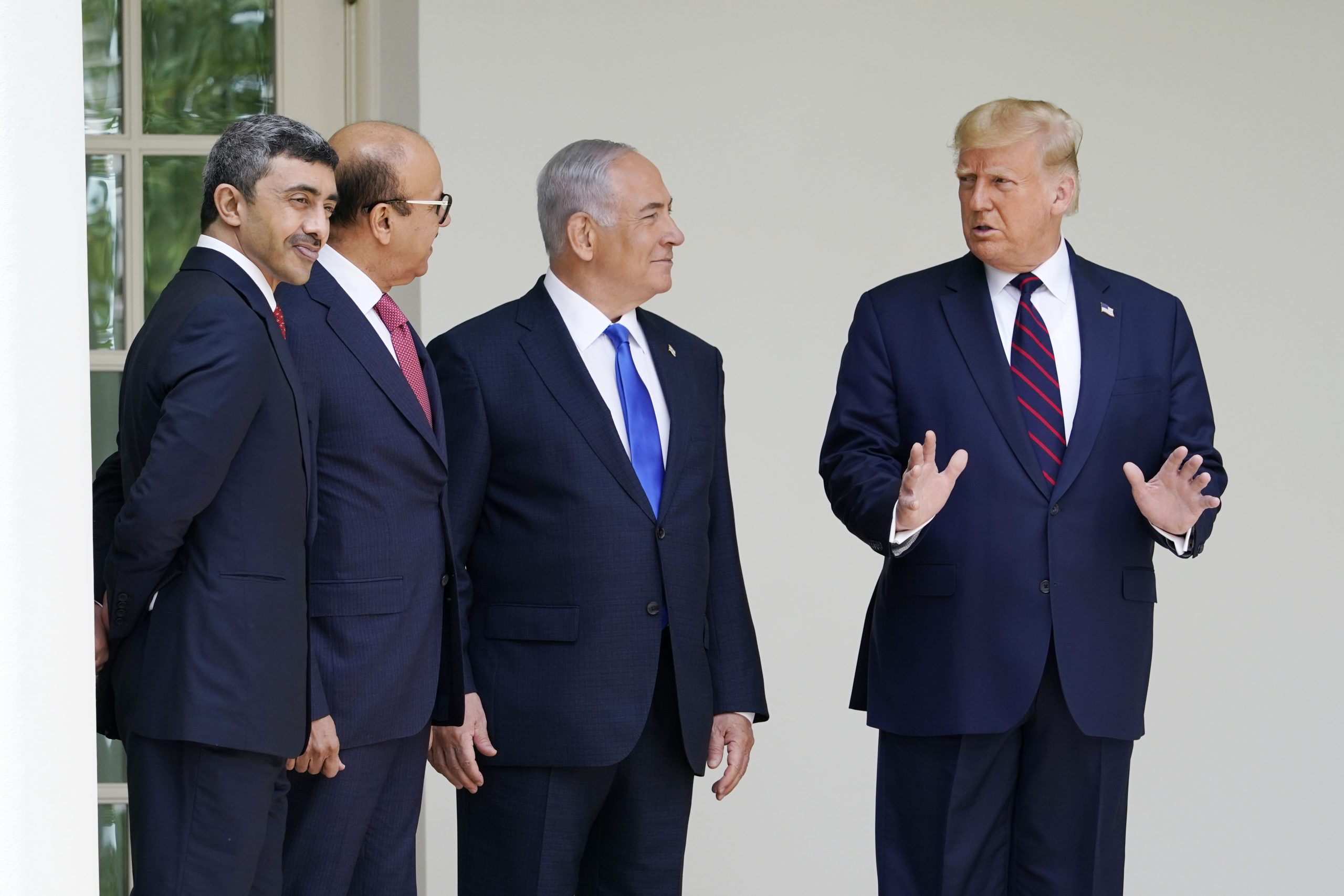
Two years ago this weekend, a phone call took place between Israeli Prime Minister Benjamin Netanyahu and Sheikh Mohammed bin Zayed al Nahyan, then crown prince of the United Arab Emirates. Arranged by President Donald Trump and senior adviser Jared Kushner, it set in motion normalization agreements now collectively known as the Abraham Accords. Though the call wasn’t so long ago, I’m comfortable calling what transpired afterward “extraordinary,” because, in international affairs, two years is a lifetime.
Recommended Stories



Since that fateful call, Israel has had two new prime ministers, and it’s headed toward yet another election. Sheikh Mohammed has been elevated to become ruler and president of his nation. Sudan has undergone several meaningful challenges to its stability. Morocco has a freshly minted government. The Kosovo-Serbia relationship has endured renewed tension. Islamic terrorists have launched over 4,900 rockets targeting civilians in Israel. And the Biden administration has relentlessly pursued the reinstatement of the Iran nuclear deal.
In the past, any one of these developments would have had a domino effect, knocking the Middle East back years in terms of progress. It turns out that the Abraham Accords not only are resilient themselves but also provide the Middle East with resilience. That’s because their framework and platform optimistically focus on the present and future and readily discard the failed conventions of the past. Participant nations have benefited in terms of economics and collaboration. Even Jordan and Egypt are beginning to enjoy the benefits of a warmer relationship with Israel.
But there is more work to be done — actually, much more is needed to be done. The current task is just getting back to neutral, as it took the current administration nearly two years to accept that the Accords are good for our allies and good for America.
Admittedly, President Joe Biden has come a long way since his State Department spokesman Ned Price pettily refused even to utter the words “Abraham Accords.” On his trip to the Middle East last month — his first since becoming president — Biden praised the Accords and touted the Kingdom of Saudi Arabia’s decision to lift restrictions on civilian air carriers as “historic.”
These are positive steps. However, the single most definitive action the United States could take to bring more peace, stability, and prosperity to the Middle East would be to return to the Trump administration’s policy on Iran immediately. Specifically, the Biden administration should hold the Islamic Republic to former Secretary of State Mike Pompeo’s 12 requirements for rejoining the community of nations.
The ongoing success of the Abraham Accords and the deterrence of Iran are inextricable. To ignore that fact is foolhardy at best and existentially dangerous to the United States and our allies at worst. I concede that the current administration will not view the Iran deal exactly the same way that Trump and Pompeo did, so I am making recommendations here that should present common ground and strengthen and empower the Abraham Accords.
On Sept. 15, the two-year anniversary of the White House signing ceremony of the Abraham Accords, Biden should host the leaders of the participant nations (even virtually, if in person is not possible) to thank them publicly for the courageous steps they took to better their nations, the Middle East, and America. This should be possible because the date coincides with the 77th session of the U.N. General Assembly, when most, if not all, the leaders will be in the U.S.
At the session, the White House should commit to the five actions. First, reopen the Abraham Fund to invest in (not donate to) platforms that stimulate economic growth between the Accord nations. Second, have the fund work with the administration to develop tax-free zones to encourage competitive reshoring of critical manufacturing away from China.
Third, have the fund invest in the south of Morocco to develop the nation’s natural resources as an economic driver for the entire region. Fourth, have the fund work with all the Accord nations on a 25-year food security initiative, turning Sudan, Morocco, and Egypt into the breadbasket of the region. Fifth, extend an invitation to the ambassadors of the Accords nations to the next State of the Union, where Biden will ask Members of Congress to rise and honor those nations that stand with Israel and for peace.
As for Israel, the turmoil of electoral turnover the past several years has produced even more bureaucratic red tape and overlapping communication than usual. This has been a source of frustration for those seeking to invest in and enhance the Abraham Accords. Every prospective prime minister should articulate plans for a ministry specifically dedicated to bolstering the Abraham Accords. The ministry should be well-funded and staffed to create a single point of contact for the Accord nations and allies around the world who wish to see this tremendous opportunity furthered.
Across the board, there is no better way to celebrate the two-year anniversary of the Abraham Accords than being bold and committing now to substantive action.
Aryeh Lightstone was a senior adviser to the U.S. Ambassador to Israel from 2017 to 2021 and was tasked with putting the Abraham Accords into action. He is the author of Let My People Know: The Incredible Story of Middle East Peace—and What Lies Ahead (Encounter Books). Follow him on Twitter: @lightstonea.
