

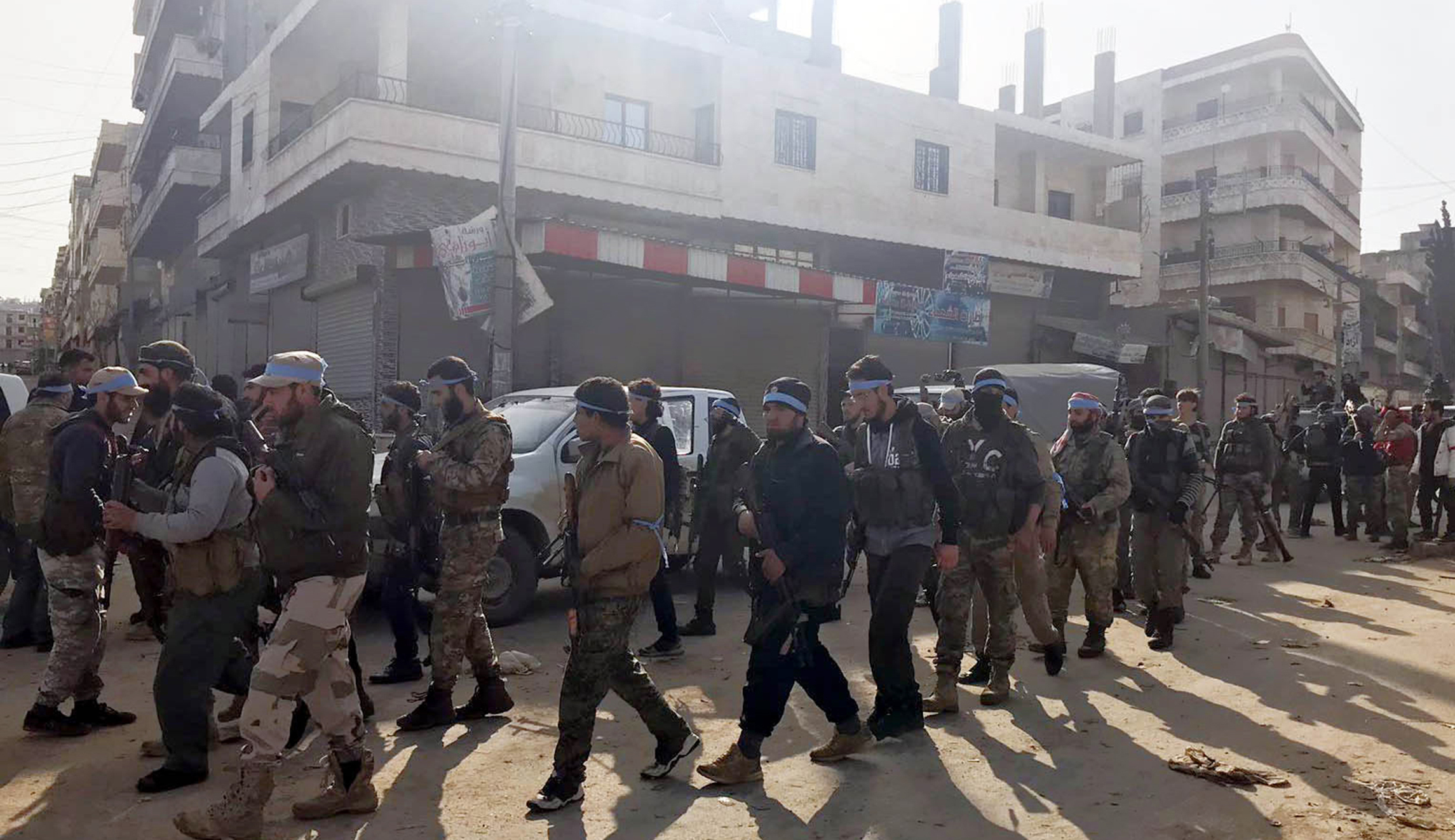
The Islamic State is regrouping in Syria.
Taking advantage of the redeployment of Kurdish forces to fight the Turkish army around Afrin in western Syria, ISIS has broken the momentum of the U.S.-led coalition opposing it. This has allowed Abu Bakr al-Baghdadi’s remaining forces to consolidate territory from the Iraqi border towards the Khabur River, a tributary of the Euphrates.
Recommended Stories



The picture below shows my understanding of ISIS’ offensive disposition at present.
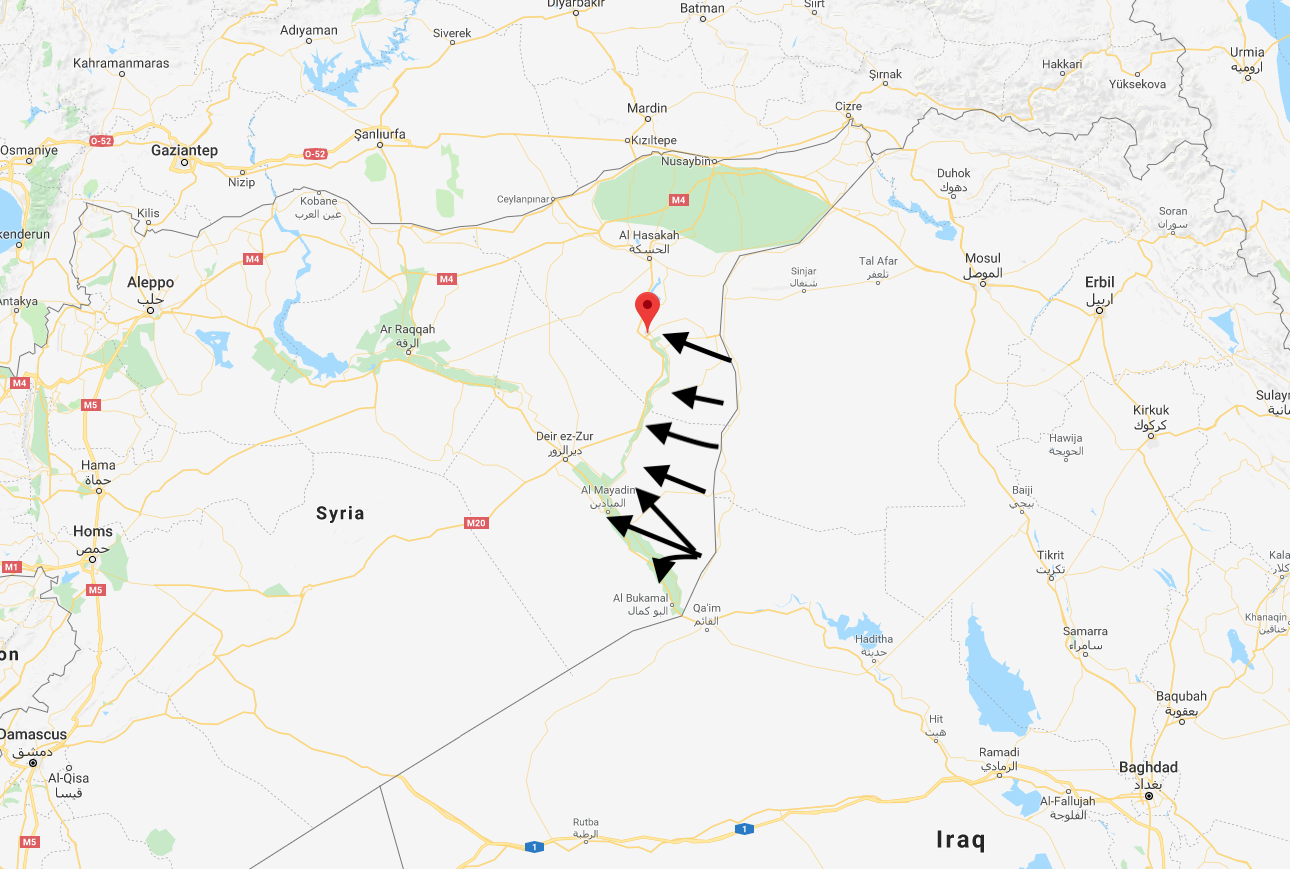
The problem here is clear.
For a start, by relieving ground force pressure on ISIS forces, the Kurdish redeployment has given the terrorist group a far greater ability to maneuver towards an offensive stance. Prior to the Turkish incursion towards Afrin, the Kurds — operating under the umbrella of the Syrian Democratic Forces — had provided the unrelenting ground element against ISIS, in cooperation with coalition air power.
That combination of forces had pushed ISIS into a functionally defensive stance in which the group was fighting skirmish operations and attempting to avoid encirclement.
But with so many SDF forces now around Afrin, those remaining have been pushed onto the defensive. Operating alongside a relatively limited number of coalition special operations forces, they are increasingly vulnerable to ISIS offensives.
These ground conditions better allow ISIS to seize territory and plot external attacks. That latter concern must not be discounted.
After all, ISIS has shown an impressive ability to operationalize highly advanced “spectacular” attacks as well as inspiring lone wolfs. Indeed, were it not for the Israelis in particular, hundreds of western civilians now alive would be six feet under.
The question, then, is how we deal with this situation.
Reflecting its concerns, the State Department released a statement on Monday stating that the “fighting in western Syria over the last two months, including in Afrin, has distracted from the Defeat ISIS campaign and provided opportunity for ISIS to begin reconstituting in some areas. This is a serious and growing concern.”
But while the U.S. would like the Turks to end their offensive and thus allow the SDF to reallocate their resources to fighting ISIS, others believe the U.S. has miscalculated.
Kyle Orton, a top analyst on the Syrian civil war and ISIS, told the Washington Examiner that “The U.S. was altering the balance of power and invited a backlash. The U.S. chose to partner with an actor, the YPG, that the Turks see as an existential threat — it would be like building up Hezbollah on Israel’s border. So the Turks struck where they could, in Afrin, where there is no danger of a direct collision with the U.S., to clear some of this danger and to get the Americans to pay more attention to their concerns.”
Analysts like Orton believe a broader deal between the U.S. and Turkey will be necessary before a sustainable cease-fire can be activated and SDF forces refocused towards the counter-ISIS fight.
I’m not so sure.
I believe Turkish President Recep Tayyip Erdogan’s Syria policy exists in deference to Russian President Vladimir Putin and that the U.S. thus has a limited ability to appease Turkey without suffering inordinate cost. The best option would be for the U.S. to pressure the Kurds to withdraw from Afrin, but they are unlikely to acquiesce to that effort.
My preference would be for the U.S. or the coalition to pick up the SDF slack by deploying more ground forces to eastern Syria, possibly from a Marine Expeditionary Unit or Airborne brigade to Syria. While that choice would fit with Defense Secretary Jim Mattis’ existing strategy, it might meet significant resistance in Congress.
Nevertheless, President Trump must not ignore this issue. The president rightly deserves credit for escalating against ISIS and throwing the Caliphate into disrepair. It would be a great tragedy if the president now allowed coalition gains to go to waste.
