

The federal government is already set to run a $3.7 trillion deficit for 2020, but both the Republican and Democratic establishments are coming together to spend more taxpayer money. The disagreement is just over how much and who gets it.
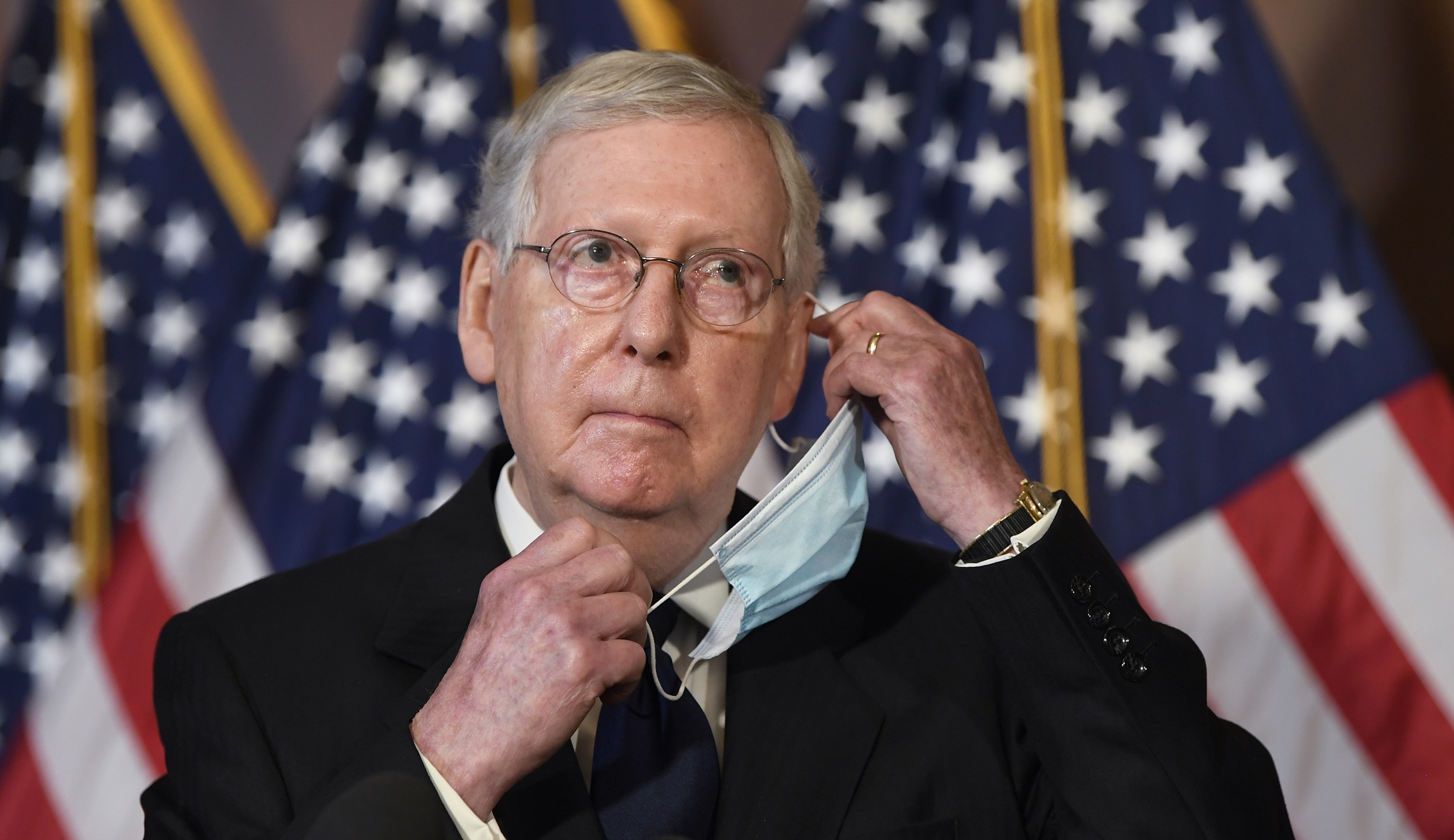
House Speaker Nancy Pelosi and her fellow Democrats passed a massive $3 trillion package, idealistically dubbed the HEROES Act, in May. Now, Senate Majority Leader Mitch McConnell is out with the Senate Republican Party’s counterproposal, the HEALS Act, released on Monday evening as negotiations play out.
Recommended Stories



Here’s what’s in the new GOP bill and what to make of it.
First and foremost, the HEALS Act is hardly fiscally conservative. It comes in at a whopping $1 trillion in total cost, which might seem somewhat modest compared to the Democratic proposal but still amounts to roughly $7,000 per taxpayer. (Taxpayers are already on the hook for $26.5 trillion in debt and counting.)
Thankfully, a few Republican legislators still oppose this kind of massive deficit spending. Texas Sen. Ted Cruz, for example, said his vote was a “hell no” and slammed the proposal’s irresponsible burden-shifting to future generations. Meanwhile, Kentucky Sen. Rand Paul called the GOP push to spend another $1 trillion “insane” and warned that “we are ruining the country.”
The majority of Republicans are now no different than socialist Democrats when it comes to debt. They simply don’t care about debt and are preparing to add at least another trillion dollars in debt this month, combined with the trillions from earlier this summer.
— Senator Rand Paul (@RandPaul) July 21, 2020
Beyond the obscene cost, though, there are some good reforms included in the GOP package.
For one, the package would improve the seriously broken unemployment insurance system currently in place, thanks to the relief bill Congress passed in March. That bill set up a broken system in which the federal government augmented preexisting state-level unemployment benefits with $600 extra per week, leading to a bizarre situation in which roughly 70% of those unemployed can earn more money by staying on benefits than by returning to work.
These skewed incentives pose an obvious obstacle to economic recovery. The new GOP bill addresses this by reducing the federal bonus to $200 per week immediately and then phasing into a system in which benefits will be capped at 70% of income. This change is well-warranted and much needed.
Workers in the restaurant industry aren’t returning to work because they can make more money on unemployment insurance through the CARES Act. Senate Republicans tried to fix the loophole in the bill, but Democrats blocked the proposed amendment. pic.twitter.com/B7QIwH3tqT
— Heritage Action (@Heritage_Action) April 21, 2020
McConnell’s package also includes liability protections for businesses so that lawsuit-happy attorneys can’t bury entrepreneurs with COVID-19 lawsuits over a virus that isn’t his or her fault. The liability shield included in the legislation would protect businesses from being liable to customers who claim they contracted COVID-19 at their business — something very hard to avoid and nearly impossible to prove — unless they can show the company was “grossly negligent” in its precautions.
This is a fundamentally reasonable move that will allow more small businesses without the resources to weather a legal storm to reopen.
However, there’s also much in the HEALS Act that supporters of small government and fiscal conservatism should find concerning. For one, the bill would once again send out money indiscriminately through $1,200 stimulus checks to any person who earns under $75,000, regardless of how they’ve been affected by the coronavirus. The last batch of checks took months to arrive for some people and wasn’t targeted to help those who are actually most in need.
Oh, and don’t forget — Congress sent billions of taxpayer dollars to dead people. What people need now is to get back to work, not another batch of failed “stimulus” checks.
The bill also includes a few bizarre provisions, such as a tax subsidy for restaurant meals and funding for a new FBI office (and the bill is apparently so large that McConnell himself didn’t know about the FBI provision).
.@LACaldwellDC asks Mitch McConnell why the GOP coronavirus aid bill includes money for a new FBI building. He looks perplexed. “I’m not sure that it is. Is it?”
(It is.) pic.twitter.com/wkdSocln8I
— Sahil Kapur (@sahilkapur) July 27, 2020
Despite President Trump supporting the restaurant provision, it doesn’t make much sense. The reason people aren’t going out to eat is the pandemic, not the tax code, and loopholes such as this only serve to distort the market unfairly in favor of certain businesses at the expense of others. Regardless of whether the FBI needs a new office, putting such a provision in an emergency pandemic bill is swampy and sketchy.
Principled small-government conservatives and fiscal hawks in Congress should follow Cruz’s lead and vote “hell no” on another behemoth, big-government package. It might be better than Nancy Pelosi’s disaster of a bill, but there are only a few key provisions in the GOP’s bill that are independently worthy of conservative support.
Brad Polumbo (@Brad_Polumbo) is a fellow at the Foundation for Economic Education and is a contributor at the Washington Examiner. His views are his own.
